



A hydraulic actuator valve combines a hydraulic power unit, cylinder or rotary actuator, and a control package with an industrial valve to automate on/off or modulating flow. For B2B buyers in oil and gas, power generation, and water treatment, choosing between hydraulic, pneumatic, and electric actuation is a critical engineering decision. Hydraulic actuator valves win when the application demands very high torque, positive fail-safe action, and reliable performance in harsh environments. This guide explains the trade-offs and shows when hydraulic is the right choice over pneumatic or electric alternatives.

Short answer: Choose hydraulic actuator valves when your application demands very high torque, reliable emergency shutdown, or dependable performance in harsh, explosive, or low-temperature environments. Choose pneumatic actuators when clean instrument air is available and torque is moderate. Choose electric actuators when low noise, simple wiring, and moderate torque are the priorities.
Key Takeaways
- Hydraulic actuator valves deliver the highest torque density of the three actuation technologies, making them the first choice for large-diameter, high-pressure isolation valves.
- Pneumatic actuators are fast, simple, and cost-effective when a reliable instrument-air supply already exists.
- Electric actuators excel at remote, low-power sites and where precise modulating control is required.
- Fail-safe spring-return or accumulator packages make hydraulic actuators a preferred option for ESD systems.
- Total cost of ownership includes air supply infrastructure, electric wiring, hydraulic power units, and maintenance access—not just the actuator list price.
Need a Custom Actuator Valve Package?
Sedelon designs and supplies API/DIN valves with hydraulic, pneumatic, and electric actuation for oil & gas, power, and water projects.
What Is a Hydraulic Actuator Valve?
A hydraulic actuator valve is an industrial valve package that uses pressurized hydraulic oil to move the valve stem or quarter-turn shaft. The package usually combines the valve body, the actuator (linear cylinder, rack-and-pinion, or scotch-yoke), a hydraulic power unit, and control accessories such as solenoid valves, limit switches, and positioners. When the control signal calls for movement, hydraulic fluid is directed into one side of the actuator, generating force that opens or closes the valve.
Hydraulic systems can develop far higher pressures than typical plant air lines. While a pneumatic actuator normally runs on 5.5 to 7 bar (80 to 100 psi) instrument air, hydraulic systems routinely operate at 70 to 210 bar (1,000 to 3,000 psi) and higher. That pressure advantage translates directly into torque or thrust, which is why hydraulic actuator valves are selected for the largest, highest-pressure isolation valves.
The technology is not limited to one valve family. Sedelon supplies hydraulic packages on gate valve, ball valve, butterfly valve, and globe valve configurations, with actuation engineered to API 6D, ISO 5211, and DIN mounting standards. One relevant reference is our existing post on a hydraulic actuator operated DIN standard gate valve.
How Hydraulic, Pneumatic, and Electric Actuators Compare
Before selecting an actuator, engineers compare torque, speed, control, power source, environment, and lifecycle cost. The table below summarizes the differences from a B2B procurement perspective.
| Factor | Hydraulic Actuator | Pneumatic Actuator | Electric Actuator |
|---|---|---|---|
| Typical torque range | Very high to extremely high (50,000+ N·m) | Low to high (up to ~50,000 N·m with large cylinders) | Low to medium-high |
| Power source | Hydraulic power unit / accumulator | Instrument air (5.5–7 bar typical) | Electric motor (single or three phase) |
| Stroke speed | Fast to very fast, adjustable | Fast | Slower than fluid power |
| Control precision | Excellent with servo/proportional valves | Good for on/off; moderate for modulating | Excellent for modulating service |
| Hazardous area suitability | Excellent (no spark risk, ATEX/IECEx packages available) | Good (no sparks, depends on solenoid rating) | Requires certified enclosures |
| Maintenance | Seal and fluid maintenance required | Low (cylinder seals, air quality critical) | Low (motor and electronics) |
| Operating noise | Moderate (pump and relief) | High exhaust noise | Low |
| Total cost picture | Higher first cost, lower cost per unit torque at large sizes | Lower first cost if air exists | Medium first cost; wiring only |
The table explains why hydraulic actuator valves are common in refineries, offshore platforms, LNG terminals, and hydroelectric stations, while pneumatic and electric actuators dominate HVAC, general water, and smaller process skids.
When to Choose Hydraulic Actuator Valves
1. Extreme torque requirements
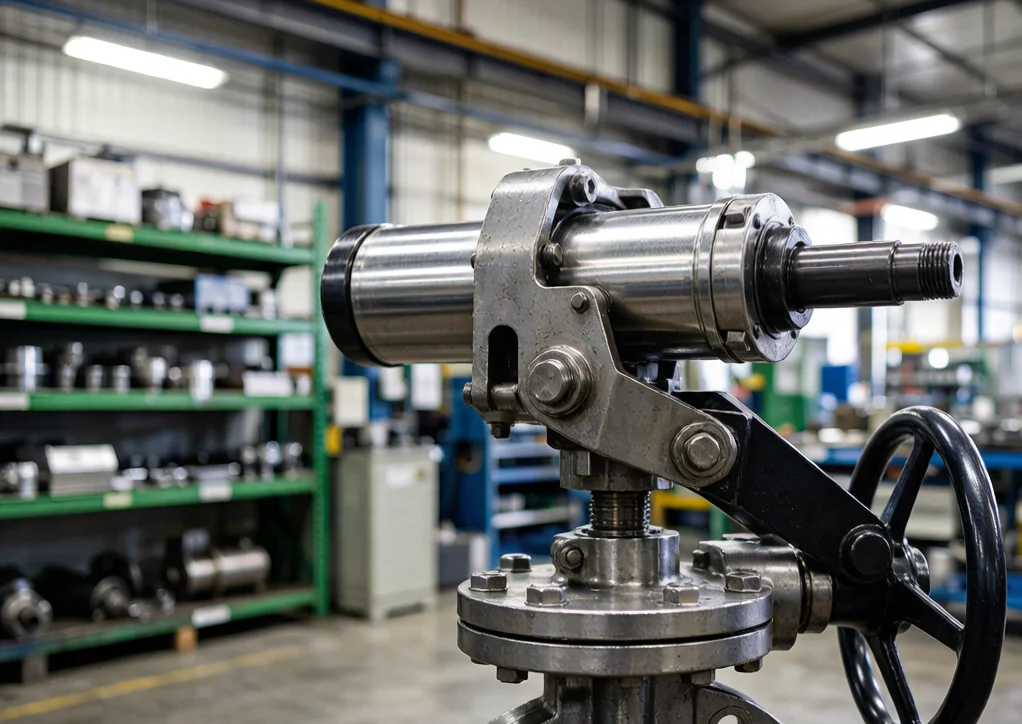
Large ball valve and butterfly valve installations in high-pressure pipelines can require torque far beyond what a compact pneumatic cylinder or electric motor-gearbox can deliver. Hydraulic actuators scale torque by increasing fluid pressure and piston area, so they can produce hundreds of thousands of newton-meters in a package that is still practical to mount on a valve. For very large quarter-turn valves, scotch-yoke hydraulic actuators are the industry default because the mechanism matches the torque curve of butterfly and ball valves: high break torque at the start of travel and lower seating torque at the end.
2. Fail-safe and emergency shutdown (ESD) systems
Safety-critical applications need a valve to move to a predetermined safe position on loss of power, signal, or air. Spring-return pneumatic actuators can do this, but spring size becomes impractical above a certain torque. Hydraulic actuators solve the problem with stored-energy accumulators or spring-return hydraulic cylinders. When the ESD signal fires, pressurized fluid is released to stroke the valve in milliseconds. That is why hydraulic actuator valves are specified for pipeline ESD, compressor anti-surge, and turbine trip systems.
For large isolation valves, a gate valve with hydraulic fail-safe is often the final line of defense, as shown in our hydraulic actuator operated DIN standard gate valve reference.
3. Harsh, high-cycle, or hazardous areas
Hydraulic fluid does not compress the way air does, so hydraulic actuators resist stiction and provide smooth, repeatable motion even in dirty, dusty, or corrosive atmospheres. Because the power source can be located away from the valve, the actuator itself has no electric motor spark risk and can be built for ATEX/IECEx zones. In marine, offshore, and chemical environments, hydraulic packages paired with corrosion-resistant valve bodies such as bronze valve and duplex stainless-steel options deliver decades of service.
4. Large valve diameters and long pipelines
As valve size grows, the force required to unseat a closed valve under full differential pressure grows with the square of the diameter. Electric actuators become disproportionately large and slow, and pneumatic systems require oversized cylinders or air receivers. Hydraulic actuator valves keep the package compact relative to output, which simplifies installation on above-ground pipelines, pump stations, and tank farms.
When Pneumatic or Electric Actuators Still Win
Hydraulic actuation is powerful, but it is not always the lowest-cost or simplest choice. Honest evaluation of the application usually points to one of the alternatives.
1. Clean instrument air already available
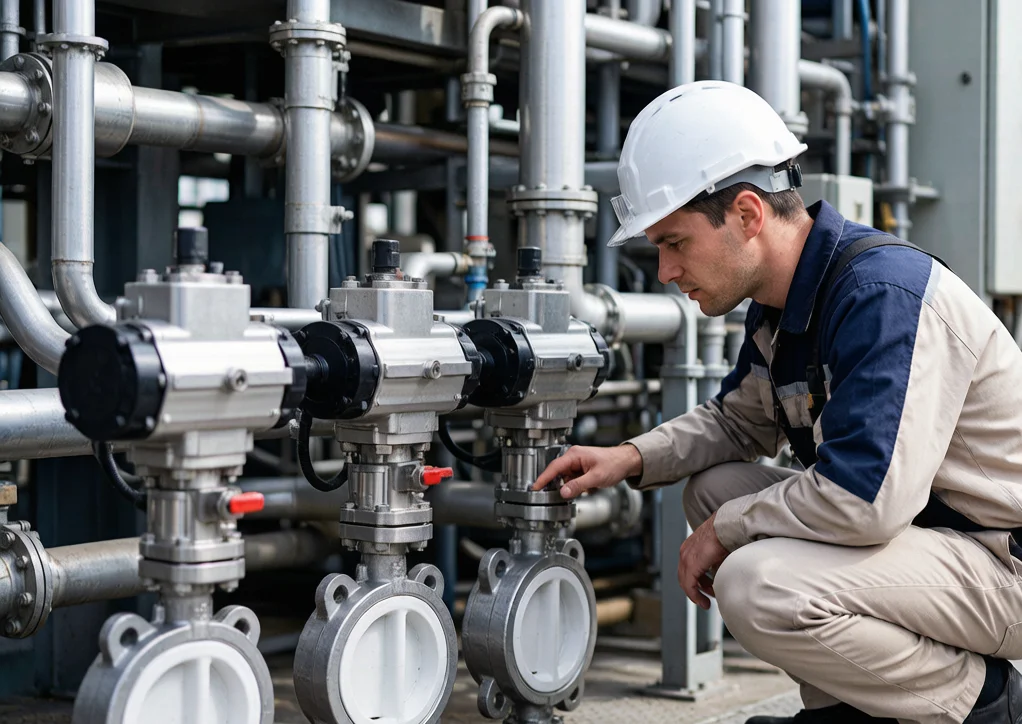
If the plant has a reliable instrument-air system, pneumatic actuators are fast, simple, and well understood. A Sedelon pneumatic ball valve is a proven package for moderate-torque isolation and switching duty. Pneumatic systems also exhaust air rather than returning fluid, which simplifies actuator layout in some skids. Our article on pneumatic valve accessories covers the solenoids, positioners, and limit switches that complete the package.
2. Low-power or remote sites
Solar- or battery-powered sites often favor electric actuators because they only draw power during movement. Hydraulic systems need a running pump and may consume more standby energy. In remote water distribution networks or pipeline valve stations without a continuous power supply, electric actuators with smart controls and low-voltage motors are usually the practical choice.
3. Smaller valves and tight CAPEX
For valves below DN200 or NPS 8 with modest differential pressure, the hydraulic power unit, reservoir, and hoses add cost and footprint that are hard to justify. Pneumatic or electric actuators are more economical in this range and are easier for maintenance crews to service without hydraulic training.
Specifying a Hydraulic Actuator Valve: Sizing Checklist
Once you have decided on hydraulic actuation, the next step is to specify the actuator and valve as an integrated package. The checklist below prevents the most common specification errors.
| Specification Item | What to Confirm |
|---|---|
| Valve torque | Request break, running, and seating torque at maximum differential pressure and include a safety factor (typically 1.25 to 1.5). |
| Actuator type | Quarter-turn ball or butterfly valves use rack-and-pinion or scotch-yoke actuators; gate and globe valves use linear hydraulic cylinders. |
| Fail-safe method | Specify spring-return, accumulator, or hydraulic lock; define safe position (open or closed) and required stroking time. |
| Control interface | Confirm signal (4–20 mA, 0–10 V, on/off), feedback requirements, and limit switches and proximity switches selection. |
| Pressure and flow | Match hydraulic power unit pressure and flow to actuator stroke time; allow for cold-start viscosity and filter cleanliness. |
| Materials and environment | Select seals and coatings for temperature, corrosion, and hazardous-area classification; match valve trim to the medium. |
| Mounting standard | Verify ISO 5211 flange dimensions, stem dimensions, and drive type so the actuator mates with the valve without adapters. |
Get a Hydraulic Actuator Valve Spec Sheet
Send your valve size, pressure class, medium, and stroking-time requirements. Sedelon will match an actuator package to your specification.
Sedelon Manufacturing Edge for Actuated Valves
Sedelon Valve Company has manufactured industrial valves in Wenzhou, China, since 1998. Our product range covers API/DIN gate valve, globe valve, check valve, ball valve, butterfly valve, bronze valve, and special alloy valves. We hold API 6D, CE, ISO 9001, and TS certifications, and our quality control covers fire testing, fugitive-emission testing, and hydrostatic testing.
For actuated packages, we work with recognized actuator suppliers and can supply valves pre-machined to ISO 5211 mounting dimensions, pre-wired with accessories, and pressure-tested as a complete assembly. You can learn more about our capabilities on the about Sedelon page, review our Sedelon quality control processes, or download our Sedelon valve API certificates reference. Distributors and EPC contractors can also explore our agent program.
Frequently Asked Questions
What is the main advantage of a hydraulic actuator valve over a pneumatic actuator valve?
The main advantage is torque density. Hydraulic actuator valves generate much higher force and torque from a compact package because hydraulic oil operates at far higher pressure than instrument air. They are the standard choice for large, high-pressure isolation valves and ESD systems.
Are hydraulic actuator valves more expensive than electric actuators?
Initial cost is usually higher because a hydraulic package includes a power unit, reservoir, hoses, and controls. However, on a torque-per-dollar basis at large sizes, hydraulic actuators are often more economical than electric motor-gearbox systems, and their lifecycle cost is competitive when high reliability reduces downtime.
Which valve types pair best with hydraulic actuators?
Ball valves, butterfly valves, and plug valves use quarter-turn hydraulic actuators (rack-and-pinion or scotch-yoke). Gate valves and globe valves use linear hydraulic cylinders. The actuator type must match the valve torque curve and mounting interface.
How fast can hydraulic actuator valves stroke?
Stroke time depends on actuator volume, hydraulic flow rate, and valve torque. Quarter-turn hydraulic actuators commonly stroke in 0.5 to 5 seconds for small to medium valves, while large isolation valves may take 10 to 60 seconds. Speed is adjustable via flow controls.
Can hydraulic actuators be used in hazardous or explosive environments?
Yes. Because hydraulic actuators do not rely on an electric motor at the valve, they are inherently easier to certify for ATEX/IECEx zones. The power unit can be located in a safe area, with only hydraulic lines routed to the valve.
How do I size a hydraulic actuator for my valve?
Start with the valve manufacturer’s torque data at maximum differential pressure, add a safety factor, then select an actuator that delivers that torque at the available hydraulic pressure. Confirm stroking time, fail-safe requirements, ISO 5211 mounting, and control-interface compatibility with your plant system.
Conclusion
Hydraulic actuator valves are the right choice when torque, speed, fail-safe reliability, and harsh-environment performance matter more than the lowest possible first cost. By comparing hydraulic, pneumatic, and electric actuation against your plant’s air supply, power infrastructure, and safety requirements, you can size a package that will run for decades with predictable maintenance. Sedelon supplies the valve side of that package—engineered, tested, and documented to the standards your project demands.
Talk to Sedelon About Your Next Project
Whether you need a hydraulic, pneumatic, or electric actuated valve package, Sedelon can quote the valve, coordinate the actuator, and deliver a tested assembly.
Related Resources
- Hydraulic actuator operated DIN standard gate valve
- Sedelon pneumatic ball valve
- Types and selection of pneumatic valve accessories
- Difference between limit switches and proximity switches
- API 600 standard valves seating surface material classification and characteristics
- Sedelon valve API certificates