




🍪 This website requires cookies to provide all of it's features. Please enable your browser cookies.
Accept All Decline All 1.Available with plug disc, needle disc, parabolic disc, ball type disc, etc.
2.Available in structure of Y type, angle type, straight type, etc.
3.Simple structure, easy to repair and replace
4.Regulating flow in the pipeline
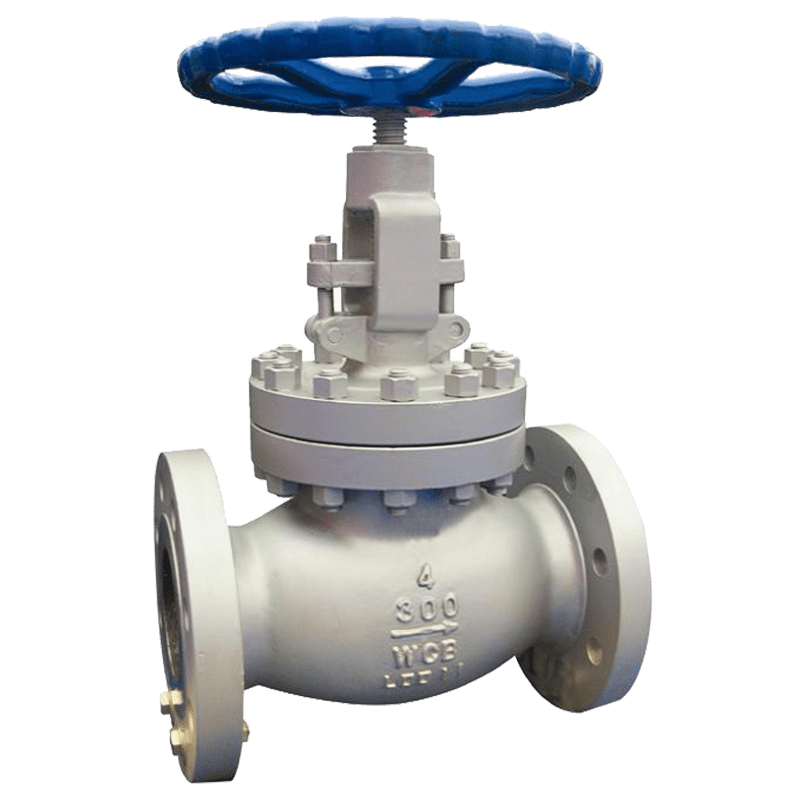
Sedelon® Globe valves are designed for the control of fluid flow, including opening, closing, and throttling. These valves come in various materials such as Forged Steel, Stainless Steel, Carbon Steel, and special alloys like Hastelloy and Duplex Stainless Steel to handle corrosive environments. The valves can be operated manually by hand wheels, through gears for larger sizes, or by actuators (electric, pneumatic, or hydraulic).
Sedelon® offers Globe valves with different connections like flanged, screwed, and welded, and also provides specialized types such as high-temperature, cryogenic, and pressure-seal Globe valves.
Widely used across industries handling fluids in high and low temperature environments, corrosive conditions, and where leakage prevention is critical, including LNG and LPG industries.
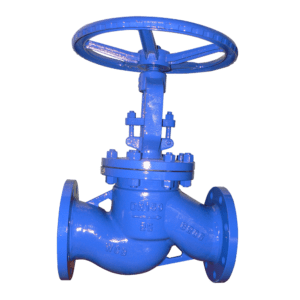
In European industrial projects based on the PN pressure-rating system, mistakenly supplying ANSI-dimensioned globe valves for DIN-standard pipelines can result in completely incompatible face-to-face dimensions and flange bolt-hole spacing. On-site modifications such as re-drilling flanges or altering pipelines can cost several times more than the valve itself. DIN 3356 globe valves are fully compatible with European standard dimensions and can be installed directly without any field modifications.
This series is manufactured in accordance with DIN 3356 / EN 13709, covering DN15–500 and PN10–PN160. Valve bodies are available in cast steel and bronze, and every valve is pressure-tested in accordance with DIN 3230.
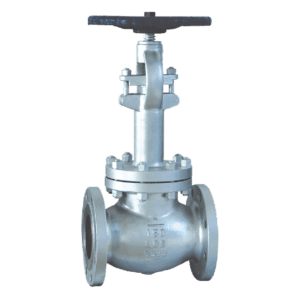
Cryogenic pipelines often require both reliable shutoff and flow regulation. Gate valves are not suitable for throttling, while soft seats in ball valves may lose their elasticity under cryogenic conditions. Globe valves are therefore a preferred solution for cryogenic applications requiring both positive isolation and precise flow control.
This series is designed and manufactured in accordance with BS 1873, with face-to-face dimensions conforming to ANSI/ASME B16.10, flanged ends to ASME B16.5, and butt-welding ends to ASME B16.25. The product range covers NPS 2–12 and Class 150–1500. Depending on the operating temperature, valve materials include LCB, LC1–LC3, and CF8/CF8M austenitic stainless steel. Shell and seat leakage tests are performed in accordance with API 598.
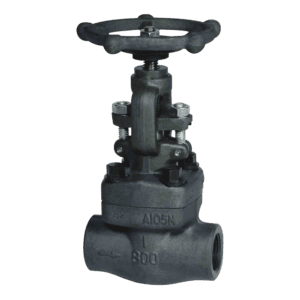
A gate valve is designed primarily for fully open or fully closed service; operating it in a partially open position can cause high-velocity flow to erode the wedge sealing surfaces. A globe valve is the isolation valve designed for flow regulation, with the disc moving vertically to control the flow area precisely. Sedelon manufactures API 602 forged steel globe valves in NPS ½–2 and Class 150–2500, including the API 602-specific Class 800 rating, with materials including A105, F304/F316, LF2, F11/F22, and F51/F53. Each valve is pressure-tested in accordance with API 598.
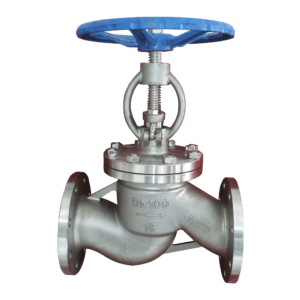
Face to Face Dimensions: EN558-1/DIN3202 F2
Flange end Dimension : EN1092-1/DIN2545
Design and Manufacture:EN 13709/DIN3356
Pressure Test:EN12266/DIN3230
Materials:WCB 、WC6 、WC9 、CF8、 CF8M、 CF3、 CF3M 、CN7M、LC1LC2、LC3、LCB、LCC、Monel、20# Alloys、4A、5A、C95800、C95500, ect.
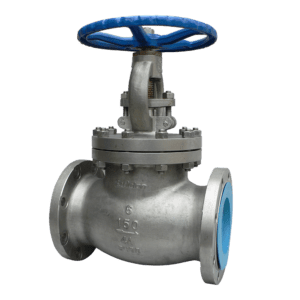
Alloy globe valves are designed for high-temperature hydrogen service and highly corrosive process applications. The disc moves along the seat centerline and closes against the seat through conical surface contact. The short operating stroke enables reliable shutoff and allows limited flow regulation where required. Face-to-face dimensions comply with ANSI B16.10, flange dimensions with ASME B16.5, butt-weld ends with ASME B16.25, design and manufacture with BS 1873, and pressure testing with API 598. The range covers NPS 2–12 and Class 150–900, with body materials including WC6, WC9, CF8M, CN7M, and Monel.
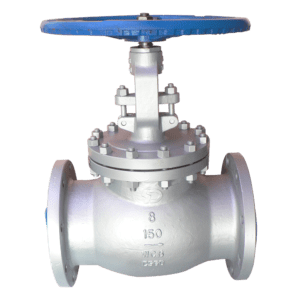
Face to Face Dimensions:ANSI B16.10
Flange end Dimension :ANSI B16.5
Butt Welded Dimensions:ANSI B16.25
Design and Manufacture:BS1873
Pressure Test:API598
Materials:WCB、WC6 、WC9 、CF8、 CF8M、 CF3、 CF3M 、CN7M、LC1LC2、LC3、LCB、LCC、Monel、20# Alloys、4A、5A、C95800、C95500, ect.
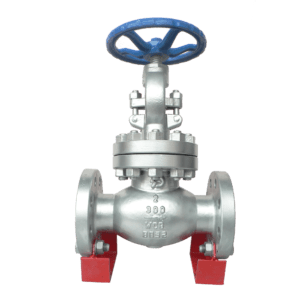
A fugitive emissions certificate is never a single document, but rather three—this is the area where procurement specifications are most prone to errors. ISO 15848-1 conducts type testing on the entire valve using helium mass spectrometry; API 622 evaluates only the packing itself; and API 624 subjects the packing to actual cycling when installed in straight-through valves (gate valves and globe valves). This series is manufactured in accordance with BS 1873, in NPS 2″–12″ and Class 150–1500, with all three documents provided, and each unit is pressure-tested in accordance with API 598.
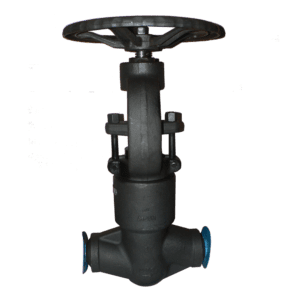
Forged steel globe valves are designed for on/off control and throttling in small-bore, high-pressure pipelines. Their forged bodies offer a dense, compact metal structure, making them suitable for high-pressure service and flammable or toxic media.
Face-to-face dimensions comply with ANSI B16.10, flanged ends comply with ANSI B16.5, butt-weld ends comply with ANSI B16.25, design and manufacturing comply with API 602, and pressure testing complies with API 598. The valves cover NPS 1/2–2 and Class 150–600, with body materials including A105, F304, F316, F11, F22, and F51.
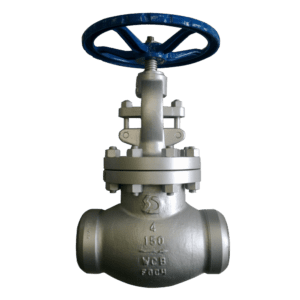
Butt-weld globe valves are connected directly to the pipeline by welding rather than flanged joints. This eliminates flange gaskets as a potential external leakage path, making them suitable for high-temperature, high-pressure service and applications where external leakage must be minimized.
Face-to-face dimensions comply with ANSI B16.10, butt-welding ends with ANSI B16.25, design and manufacture are in accordance with BS 1873, and pressure testing is performed in accordance with API 598. The product range covers NPS 2–12 and Class 150–1500. Available body materials include WCB, WC6, CF8M, CN7M, LCB, and other grades.
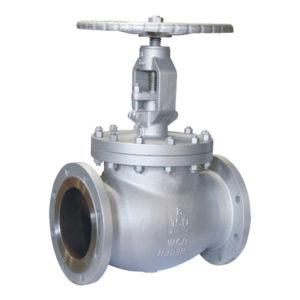
Flanged globe valves are designed for steam, boiler feedwater, and process piping systems where periodic inspection and maintenance of the valve disc are required. The disc moves along the centerline of the seat, while flanged end connections allow the entire valve to be removed from the pipeline for servicing.
Face-to-face dimensions comply with ANSI B16.10, flange dimensions with ASME B16.5, butt-weld ends with ASME B16.25, design and manufacture with BS 1873, and pressure testing with API 598. The range covers NPS 2–12 and Class 150–1500, with body materials including WCB, WC6, WC9, CF8M, CN7M, and Monel.
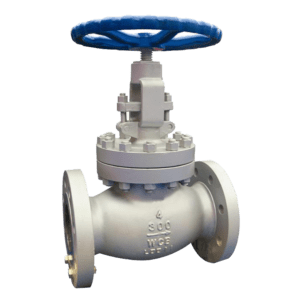
Globe valves close by using the stem to press the disc against the seat along the seat centerline. Their S-shaped flow path makes them well suited for throttling applications. However, in high-pressure steam service, they have two common weak points: high-velocity steam can erode grooves into the sealing surfaces, and heat conducted through the bonnet can cause high-temperature packing degradation and external leakage. This series is designed and manufactured in accordance with API 623 / BS 1873. Face-to-face, flange, and butt-welding end dimensions comply with ANSI B16.10 / B16.5 / B16.25. The range covers NPS 1/2–12 and Class 150–1500, with shell and sealing tests performed in accordance with API 598.
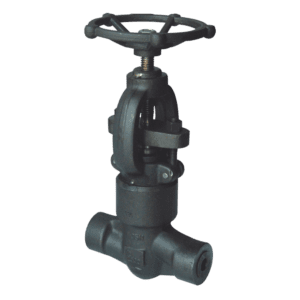
For small-bore, high-pressure instrumentation and steam lines, threaded connections are prone to loosening and leakage under high-temperature vibration. Socket weld forged globe valves are manufactured from forged bodies, with the socket-weld ends welded directly to the pipeline to form an integral connection with no threaded leakage path. They are one of the most widely used globe valve designs for small-bore, high-pressure service at Class 800 and above.
This series is manufactured in accordance with API 602, covering NPS 1/2–2 and Class 800–2500. Valve bodies are forged steel, and every valve undergoes pressure testing in accordance with API 598.
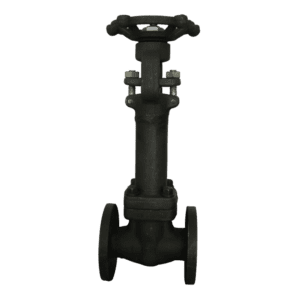
Flanged-end forged steel globe valves are designed for on/off service and throttling in small-bore, high-pressure pipelines. The valve body is machined from a forging, while the flanged ends facilitate removal, maintenance, and inspection.
Face-to-face dimensions comply with ANSI B16.10, flange dimensions with ANSI B16.5, and butt-welding ends with ANSI B16.25. Design and manufacture are in accordance with API 602, and pressure testing is performed in accordance with API 598. The product range covers NPS 1/2–2 and Class 150–600. Available forged body materials include A105, F304, F316, F11, F22, F51, and other grades.
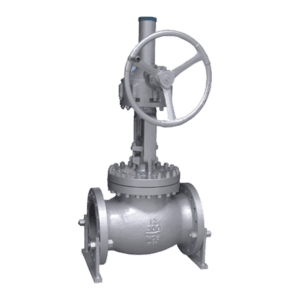
The flow control accuracy of large-diameter globe valves is largely limited by the operating torque. A globe valve regulates the flow rate by raising and lowering the disc along the centerline of the seat and is one of the few valve designs suitable for continuous throttling service. As valve size increases, fluid forces rise significantly, making it difficult to achieve proper seating and precise adjustment with a long manual lever. Repeated stem movement can also cause the packing to loosen. By adding a gear reduction mechanism, the operating torque is reduced according to the reduction ratio, allowing the valve to be reliably positioned at the required opening even in large-diameter applications. This series is designed and manufactured in accordance with BS 1873, covering NPS 2–12 and Class 150–900, with each valve pressure-tested in accordance with API 598.

Low-temperature globe valves are used in cryogenic and low-temperature pipelines for liquefied natural gas (LNG), ethylene, liquid ammonia, and air separation units. The valve body is made of low-temperature-grade steel, and an extended bonnet keeps the packing gland away from the cryogenic zone.
Face-to-face dimensions comply with ANSI B16.10, flange dimensions with ANSI B16.5, and butt-weld ends with ANSI B16.25. Design and manufacturing comply with BS 1873, and pressure testing is performed in accordance with API 598. The valves cover NPS 2–12 and Class 150–1500, with body materials including LCB, LCC, LC3, CF8M, and CN7M. The minimum applicable temperature is as low as -46°C, depending on material selection.
Sedelon is your reliable industrial valve manufacturer. We have a trusted supply network as well as we offer the latest production and assembly machinery. Here are the reasons why you should choose us as your industrial valve supplier.
Sedelon supports many industrial applications because we manufacture an extensive range of industrial valves,including butterfly, ball, check, gate, globe, plug, and actuated valves.
We offer tailor-made industrial valves to ensure that our product fits your application standards and demand.Sedelon is lSO, APl, MSS and ASME compliant to guarantee you the highest product quality.
Our industrial valves and services comply with international standards and specifications to make sure that we only produce the best and highest quality products and services to our clients.
As a business partner, Sedelon makes sure that we commit to our clients’ requested deadline because we very much understand the importance of adhering to the timeline required.
Corporate Mission: Create Value for Clients, Create Opportunities for Staff, Create Efficiency for Corporate, Create wealth for Society.Quality+Service=Satisfaction.
 Optimized by Seraphinite Accelerator