


In the world of industrial engineering, the integrity of a high-pressure system is only as strong as its weakest component. Whether you are managing an offshore oil rig, a hydrogen refueling station, or a complex chemical processing plant, the ability to control, isolate, and direct fluids under immense force is a matter of both operational efficiency and fundamental safety. Among the various types of hardware available, the high pressure ball valve has emerged as the definitive industry standard for reliability.
At Sedelon Valve, we understand that “high pressure” is more than just a rating—it is a condition that demands precision engineering and uncompromising material quality. A ball valve designed for these environments must withstand pressures ranging from 3,000 PSI to upwards of 15,000 PSI without a hint of leakage or mechanical fatigue. This guide explores why high pressure ball valves are the superior choice for demanding systems and how they provide the ultimate “peace of mind” for engineers worldwide.
Material Integrity: Forged for Strength
The primary reason high pressure ball valves excel in extreme environments is their construction. Unlike standard valves that may be cast from molten metal, high-performance valves for high-pressure systems are typically forged. The forging process compresses the grain structure of the metal, eliminating internal voids and creating a body that is significantly denser and more resistant to structural failure under stress.
Material selection is the first line of defense. High-pressure systems often involve not just force, but also corrosive chemicals or extreme temperatures. Selecting a valve with the wrong metallurgy can lead to stress corrosion cracking or “pitting,” which eventually causes a catastrophic burst.
Table 1: Material Comparison for High-Pressure Applications
| Material Type | Pressure Range (Typical) | Best Application | Key Advantage |
| Forged Carbon Steel (A105) | Up to 6,000 PSI | Oil, Gas, Steam | Cost-effective; excellent structural strength. |
| 316 Stainless Steel | Up to 10,000 PSI | Chemical, Marine, Lab | Superior corrosion resistance; handles wide temp ranges. |
| Duplex / Super Duplex | Up to 15,000 PSI | Offshore, Desalination | High mechanical strength; resists chloride stress cracking. |
| Inconel / Monel Alloys | 15,000+ PSI | Ultra-Deepwater, Acid | Exceptional resistance to “sour gas” (H2S) and extreme heat. |
As shown in the table above, the material must be matched to the specific environmental threats of the system. For instance, while Forged Carbon Steel is a workhorse in the oil industry, a marine environment requires 316 Stainless Steel or Super Duplex to prevent saltwater from eating away at the valve body. At Sedelon Valve, we meticulously source our raw materials to ensure that the “bone” of the valve is as resilient as the system it protects. By using forged materials, we ensure that our high pressure ball valves can handle sudden pressure spikes—often referred to as “water hammer”—which would shatter inferior cast valves.
Design Excellence: Floating vs. Trunnion Mounted
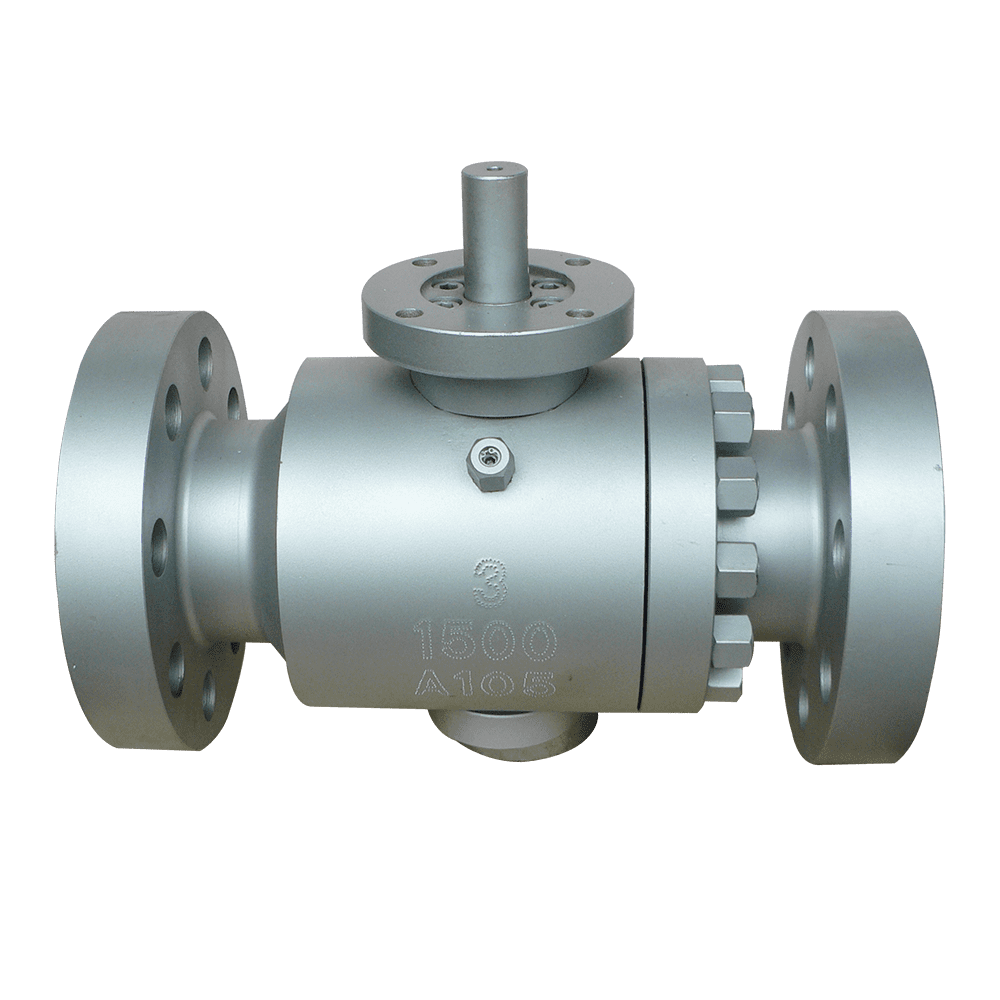
High-pressure systems exert massive lateral forces on the internal components of a valve. If a valve is not designed to distribute this load, the ball can become “wedged” or the seals can be crushed, making the valve impossible to operate. This is why the architectural design of the ball—either Floating or Trunnion Mounted—is a critical factor in performance.
In a floating design, the ball is held only by the seats. When pressure is applied, the ball “floats” slightly downstream, pressing against the seat to create a seal. This is perfect for smaller bores and moderate high pressures. However, in larger pipes or extremely high PSI, a Trunnion Mounted design is required. In this setup, the ball is fixed on a top and bottom shaft (the trunnion). The pressure forces the seats against the ball, rather than the ball against the seats.
Table 2: Floating vs. Trunnion Design for High-Pressure Systems
| Feature | Floating Ball Valve | Trunnion Mounted Ball Valve |
| Pressure Handling | Best for small-to-medium PSI | Designed for extreme high-pressure loads |
| Operating Torque | Torque increases with pressure | Consistent, low torque regardless of pressure |
| Seal Mechanism | Downstream sealing (ball moves) | Upstream sealing (seats move) |
| Typical Size | Usually 1/4″ to 4″ | Usually 2″ to 48″+ |
| Best For | Lab systems, hydraulics, gas lines | Pipelines, offshore rigs, refinery mains |
Understanding the distinction in Table 2 is vital for system longevity. A Trunnion Mounted high pressure ball valve from Sedelon Valve is the “perfect solution” for large-scale infrastructure because it maintains a low operating torque. This means that even under 10,000 PSI, the valve can be opened or closed easily, reducing the wear and tear on actuators and preventing the “seizing” that often plagues lower-quality valves. Furthermore, Trunnion designs often include “Double Block and Bleed” (DBB) capabilities, allowing for the safe venting of pressure in the cavity between the seats.
Advanced Sealing Technology: Metal vs. Soft Seats
The “seal” is where the battle against leakage is won or lost. High-pressure fluids are aggressive; they can find even the most microscopic pathway to escape. For a high pressure ball valve to be effective, the seating material must be able to withstand the physical “scrubbing” of the fluid and the crushing force of the pressure.
We generally categorize seals into Soft Seats and Metal Seats. Soft seats use high-performance polymers like PEEK, Devlon, or Nylon. These materials offer “bubble-tight” shut-off, meaning zero leakage. However, if the fluid is abrasive (containing sand or scale) or extremely hot, a Metal-to-Metal seat is the only solution. These seats are often coated with Stellite or Tungsten Carbide to create a surface harder than the base metal, ensuring that the valve remains functional even after thousands of cycles.
The choice of seal is a balance between the “tightness” of the seal and the “durability” of the material. At Sedelon Valve, we often recommend PEEK for high-pressure gas applications because it maintains its structural integrity at high temperatures while providing a flexible enough interface to stop tiny gas molecules. For the “Perfect Solution,” we also integrate “Spring-Loaded” seats. These internal springs keep a constant pressure between the seat and the ball, ensuring that the valve seals perfectly even when the system pressure is low or fluctuating.
The Quarter-Turn Advantage: Speed and Reliability
In a high-pressure emergency, every second counts. The high pressure ball valve is a quarter-turn valve, meaning it only requires a 90-degree rotation to go from fully open to fully closed. This is a massive advantage over gate valves or globe valves, which require multiple turns of a handwheel.
This speed is not just about convenience; it’s about automation and safety. Quarter-turn valves are significantly easier to automate with pneumatic or electric actuators. Because the travel distance is short, the “Shut-Down” time is minimized. In high-pressure hydraulic systems or volatile gas lines, the ability to “slam” a valve shut in milliseconds can prevent a minor leak from becoming a major explosion. This mechanical simplicity also means there are fewer moving parts to fail, contributing to a lower “Total Cost of Ownership” (TCO) for the plant operator.
Safety Features: Blowout-Proof and Fire-Safe
When dealing with high pressure, “safety” is not a luxury—it is a requirement. High pressure ball valves from Sedelon Valve are engineered with multiple redundant safety features. One of the most critical is the Blowout-Proof Stem. In this design, the stem (the shaft that turns the ball) is inserted from the inside of the valve body. This means that the system pressure actually helps hold the stem in place; it is physically impossible for the pressure to “shoot” the stem out of the valve like a bullet.
Another vital feature is the Fire-Safe Design (API 607). In the event of a fire in a refinery, soft seats will eventually melt. A fire-safe valve is designed with a secondary metal “lip” that catches the ball once the soft seat is gone, providing a secondary metal-to-metal seal that prevents the fuel from feeding the fire. These layers of protection make the high pressure ball valve the most trusted component in hazardous environments.
Industry Standards and Compliance
Buying a valve for a high-pressure system is an exercise in trust. You must know that the valve has been tested to meet the rigorous demands of global standards. At Sedelon Valve, we adhere to the most stringent international benchmarks to ensure every valve we ship is “Perfect” for its application.
Table 3: High-Pressure Valve Standards and Certifications
| Standard | Purpose | Why It Matters |
| API 6D | Specification for Pipeline Valves | The “Gold Standard” for oil and gas infrastructure. |
| API 598 | Valve Inspection and Testing | Ensures every valve is pressure-tested before leaving the factory. |
| ISO 15848 | Fugitive Emission Testing | Ensures zero leakage of harmful gases into the atmosphere. |
| ASME B16.34 | Valves – Flanged, Threaded, Welding End | Defines the pressure-temperature ratings for the body. |
As indicated in Table 3, these certifications are the “ID Card” of a high-quality valve. When a valve carries an API 6D certification, it means it has been engineered to withstand the grueling conditions of a cross-country pipeline. At Sedelon Valve, we perform “Hydrostatic” and “Pneumatic” testing on 100% of our high-pressure inventory. This means we subject the valve to 1.5 times its rated pressure to ensure there are no microscopic cracks in the metal or failures in the seals. This level of quality control is what separates a “valve” from a “Sedelon Solution.”
Why Choose Sedelon Valve for Your High-Pressure Needs?
Selecting a valve supplier is a strategic decision. At Sedelon Valve , we have spent decades refining our manufacturing processes to meet the evolving needs of high-pressure systems. We don’t just sell off-the-shelf parts; we provide engineered solutions.
-
Precision Engineering: Our CNC machining centers ensure that the “roundness” of the ball and the “flatness” of the seats are accurate to within microns.
-
Customization: Need a valve for liquid hydrogen at -250°C? Or a valve for a deep-sea oil well at 15,000 PSI? We specialize in custom alloys and specialized seal configurations.
-
Global Reach: From North America to the Middle East, our valves are used in the world’s most critical infrastructure.
-
Comprehensive Testing: We provide full MTRs (Material Test Reports) and pressure test certifications with every order, ensuring total transparency.
FAQs
1. What pressure is considered “High Pressure” for a ball valve?
In most industrial contexts, ball valves are considered “high pressure” when they exceed 3,000 PSI. However, in specialty fields like hydraulics or offshore drilling, high-pressure valves can be rated for 6,000 PSI, 10,000 PSI, or even 20,000 PSI.
2. Can high pressure ball valves handle both liquids and gases?
Yes. High pressure ball valves are versatile. However, for high-pressure gas, the selection of the seat material is even more critical because gas molecules are smaller and more prone to leakage than liquids. Sedelon Valve offers specialized “Gas-Tight” testing for these applications.
3. What is the benefit of a “Blowout-Proof” stem?
A blowout-proof stem is a safety feature that prevents the valve stem from being ejected under high pressure. The stem is designed with an internal shoulder that prevents it from passing through the valve body, using the system’s own pressure to keep the seal tight.
4. How often should a high pressure ball valve be maintained?
Maintenance frequency depends on the “cycle rate” and the “media” (the fluid inside). For “clean” fluids like water or oil, a valve might last for years with minimal maintenance. For “dirty” or corrosive fluids, we recommend annual inspections of the seals and lubricating the seats to ensure smooth operation.
5. Why are forged valves preferred over cast valves for high pressure?
Forged valves are created by mechanically deforming metal, which creates a continuous grain flow. This makes the metal much tougher and less likely to have internal defects like “porosity” (tiny air bubbles) which are common in cast valves and can lead to leaks under high pressure.
Conclusion: The Ultimate Solution for High-Pressure Reliability
The high pressure ball valve is the unsung hero of modern industry. By combining the structural strength of forged metals, the mechanical intelligence of Trunnion mounting, and the speed of quarter-turn operation, it provides a level of security that other valve types cannot match. Whether you are managing the transition to clean energy with hydrogen or maintaining the backbone of the global economy through oil and gas, a high-quality ball valve is the “Perfect Solution” for your high-pressure challenges.
High pressure ball valves offer a unique combination of speed, durability, and zero-leakage safety. By utilizing forged materials and trunnion-mounted designs, these valves handle extreme PSI loads while maintaining low torque. When you choose a certified valve from a trusted partner like Sedelon Valve, you ensure the safety of your workers and the longevity of your infrastructure.
Ready to secure your system with the best?
Visit Our Web today to explore our full range of high pressure ball valves, or contact our engineering team for a customized quote. Ensure your high-pressure system is built for the future with Sedelon Valve—where quality meets the force of nature!