



Introduction
Selecting the right industrial valve is vital for pipeline safety and efficiency. While both ball valves and gate valves are essential for flow control, their designs suit different needs. A ball valve offers rapid, quarter-turn operation, whereas a gate valve provides a straight-through flow with minimal pressure drop. As a leading manufacturer, Sedelon provides high-quality solutions, including API 6D ball valves and API 600 gate valves, tailored for the oil, gas, and power industries. This guide compares their performance and costs to help you find the perfect fit for your project.
Exploring Sedelon Ball Valves: Precision & Efficiency
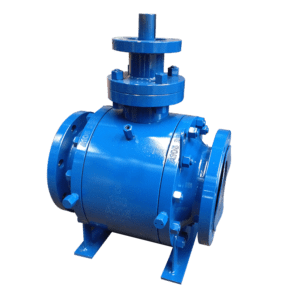
Ball valves utilize a spherical disc to control flow. When the handle is turned 90 degrees, the hole aligns with the pipe for an immediate open or closed status. This mechanism makes them the premier choice for applications requiring rapid isolation and tight sealing.
At Sedelon, our ball valve range is engineered for high-performance environments:
Floating Ball Valves: Best for low-to-medium pressure systems requiring a compact design.
Trunnion Mounted Ball Valves: Ideal for high-pressure, large-diameter industrial pipelines.
Metal Seated Ball Valves: Specialized for abrasive media or extreme temperatures where soft seats cannot survive.
Exploring Sedelon Gate Valves: Robustness & Low Flow Resistance
Gate valves operate by moving a wedge-shaped gate vertically into the flow stream. They are primarily designed for isolation rather than regulation, excelling in systems where the valve stays open or closed for long periods.
Sedelon offers a robust selection of gate valves for heavy-duty service:
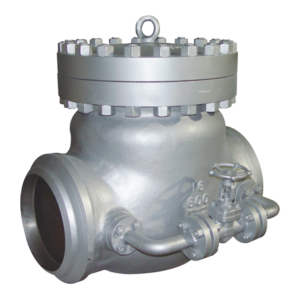
Cast Steel Gate Valves: The industrial standard for refinery and mainline isolation.
Forged Steel Gate Valves: Superior strength for small-bore, high-pressure, and high-temperature services.
Bellow Seal Gate Valves: Features a double-seal design to ensure zero leakage for hazardous or toxic media.
Compliance with International Standards
Reliability stems from strict adherence to global engineering standards. Sedelon’s ball valves are designed according to API 6D and BS 5351, while our gate valves meet API 600, API 603, and DIN standards. These certifications guarantee that wall thickness, pressure-temperature ratings, and material integrity meet the highest safety requirements of the petrochemical industry.
Head-to-Head Comparison: The Key Differences
To help you choose between Sedelon Ball Valves and Sedelon Gate Valves, refer to the technical comparison below:
| Feature | Ball Valve | Gate Valve |
| Operation | Quarter-turn (Fast Action) | Multi-turn (Slower Action) |
| Flow Resistance | Low (Full Port) | Minimal (Zero restriction) |
| Sealing | Excellent (Bubble-tight) | Good (Metal-to-metal) |
| Installation Space | Horizontal lever space required | Vertical clearance required |
| Typical Product | Trunnion Mounted Ball Valve | Cast Steel Gate Valve |
| Best Application | Emergency Shut-down (ESD) | Mainline Oil & Gas Isolation |
Maintenance and Service Life Considerations
Long-term operational costs are a key factor in valve selection. Ball valves generally require less maintenance because their seats are protected from the flow in both the open and closed positions. Gate valves, while often more economical for large diameters, are more susceptible to seat wear and stem leakage if operated too frequently. Choosing a Bellow Seal Gate Valve can significantly extend service life in critical environments by preventing fugitive emissions.
FAQs: Addressing Common Industry Concerns
Q1: Can I use a gate valve for throttling (regulating flow)?
No. Gate valves are designed for full on/off service. Using them for throttling causes high-velocity fluid to vibrate the gate, which can damage the seats and the disc.
Q2: Which valve is better for emergency shut-down (ESD)?
Ball valves are superior for ESD. Their 90-degree rapid action allows for nearly instantaneous isolation in the event of an emergency.
Q3: Are ball valves more expensive than gate valves?
In sizes above 2 inches, ball valves are generally more expensive due to their complex internal machining. However, their lower maintenance costs often provide better value over time.
Q4: Does Sedelon provide customized materials for corrosive environments?
Yes. Sedelon offers both valve types in various alloys, including Stainless Steel, Duplex Steel, and Monel, to ensure durability in corrosive or acidic media.
Conclusion
The choice between a ball valve and a gate valve depends on your specific flow requirements, space, and budget. Choose a Ball Valve for speed and tight sealing; choose a Gate Valve for high flow efficiency and cost-effectiveness in large systems.
Explore the full range of Sedelon Industrial Valves or contact our engineering team today for a technical consultation.