



Introduction
When designing or maintaining an industrial piping system, one of the most critical decisions you’ll make is selecting the right type of valve. While countless options exist, two of the most common and versatile are the ball valve and the globe valve. Both are essential for controlling fluid flow, but their underlying designs and ideal applications are fundamentally different.This guide provides a comprehensive valve comparison to help you understand the core differences between a ball valve vs globe valve, empowering you to make the best choice for your specific needs.
Differences in structural principles
Ball Valve
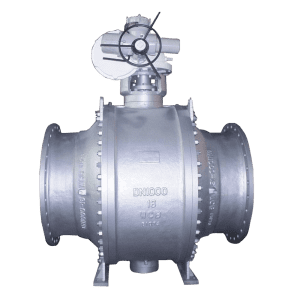
A ball valve is a quarter-turn valve that uses a hollow, perforated, and pivoting ball to control flow. When the valve is open, the hole in the ball is aligned with the pipeline, allowing fluid to pass straight through with minimal obstruction. When the handle is turned 90 degrees, the hole is perpendicular to the flow path, effectively blocking it. This simple, elegant design is why ball valves are known for their fast operation.
globe valve
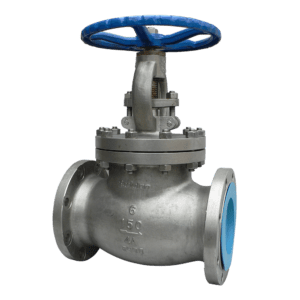
A globe valve uses a linear motion to regulate flow. Inside the valve body, a movable disc or plug rises and falls to control the flow rate by throttling the fluid as it passes through an opening called the seat. This design forces the fluid to change direction, creating a more tortuous flow path. The name “globe valve” comes from its often spherical body shape.
Differences in Flow Control Capability
Ball Valve
A ball valve excels as an on/off or isolation valve. Its design offers minimal resistance when fully open, resulting in a very low-pressure drop and high flow efficiency. While some specialized ball valves can be used for light throttling, they are not ideal for precise flow control. Partially open ball valves can experience wear on the seat and a high-velocity flow that can cause damage and noise.
globe valve
A globe valve is the master of flow control and regulation. The linear movement of the disc allows for precise and consistent throttling. You can fine-tune the flow rate by adjusting the disc’s position relative to the seat. However, this design comes at a cost: the non-linear flow path causes significant pressure drop and reduces overall flow capacity compared to a ball valve of the same size.
Sealing performance and maintenance characteristics
Ball Valve
Ball valves are known for their exceptional sealing performance, often providing a “bubble-tight” shutoff. The soft seats (e.g., PTFE) compress against the ball, creating a leak-proof seal. Their simple, robust design means they require minimal maintenance and are highly durable, especially when used strictly as on/off valves.
globe valve
The perpendicular action of the disc on the seat provides a good seal, but it’s generally not as tight as a ball valve. Over time, throttling can cause wear on the seating surfaces, which may require more frequent maintenance, such as resurfacing or replacing the disc and seat.
Applicable scenarios
Ball Valve Applications:
- Systems requiring quick on/off action.
- Applications where low-pressure drop and high flow capacity are critical.
- Isolation points in pipelines.
- High-pressure, low-temperature liquid or gas systems.
Globe Valve Applications:
- Any system requiring precise flow regulation and throttling.
- Steam lines, boiler feed water, and cooling water systems.
Applications where tight shutoff is needed, but throttling is the primary function.
Advantages and Disadvantages
| Feature | Ball Valve | Globe Valve |
| On/Off Speed | Very fast (Quarter-turn) | Slower (Multi-turn) |
| Flow Control | Poor (Primarily on/off) | Excellent (Precise throttling) |
| Pressure Drop | Very low | High |
| Sealing | Excellent (Bubble-tight) | Good |
| Maintenance | Low | High |
| Size & Weight | Compact and lightweight | Larger and heavier |
| Cost | Generally more cost-effective | More expensive per size |
When comparing Ball Valves and Globe Valves, it’s important to consider their specific features. Ball valves are known for their very fast on/off speed, typically requiring just a quarter-turn to operate. However, their flow control is limited, mainly functioning as an on/off valve. In terms of pressure drop, ball valves have a very low resistance. Their sealing capabilities are excellent, with bubble-tight shutoff, making them ideal for applications where a leak-proof seal is critical. Additionally, ball valves are compact, lightweight, and generally more cost-effective than globe valves, with low maintenance requirements.On the other hand, globe valves operate at a slower speed, requiring multiple turns to open or close fully. They excel at precise flow control, making them the ideal choice for applications that require throttling. However, globe valves come with a higher pressure drop compared to ball valves. Their sealing capabilities are also good, though not as tight as ball valves. Maintenance for globe valves tends to be higher, and they are generally larger, heavier, and more expensive than ball valves, especially when considering the cost per size.
How to Choose Between Ball Valve and Globe Valve?
To make the right valve selection, you must first understand the primary function of the valve in your system. Ask yourself these key questions:
- Do you need to regulate flow, or just turn it on and off? If you need precise control (Best Valve for Control), a globe valve is the only choice. If it’s just for isolation and on/off, a ball valve is superior.
- Is pressure drop a concern? If minimizing pressure drop and maximizing flow efficiency is your priority, choose a ball valve.
- How often will you operate the valve? For frequent on/off cycles, the fast-acting ball valve is ideal.
- What is your budget and maintenance capacity? Ball valves are typically a more economical choice with lower maintenance needs.
FAQs
What is the main difference between a ball valve and a globe valve?
A ball valve uses a rotating ball to control flow (on/off), while a globe valve uses a movable disc to regulate flow (throttling).
When should I choose a ball valve over a globe valve?
Choose a ball valve for quick shutoff, compact spaces, low maintenance, or handling viscous/particulate fluids.
When is a globe valve a better choice?
Opt for a globe valve when precise flow control, steam/high-temperature applications, or frequent throttling is required.
Can I use a ball valve for throttling applications?
Not recommended—long-term throttling can erode the ball and seat, reducing lifespan.
Are globe valves good for bidirectional flow?
No, most globe valves are designed for unidirectional flow. For bidirectional sealing, a ball valve is preferable.
Which valve is more cost-effective for small pipelines (DN < 100mm)?
Ball valves are generally cheaper for small diameters.
Which valve requires less maintenance?
Ball valves, due to their simple, modular design and fewer wear-prone parts.
Conclusion
Choosing between a ball valve and a globe valve is a classic engineering decision that highlights the trade-offs between different designs. There is no single “better” valve—only the right one for a specific job. Ball valves are the ideal choice for quick, high-flow isolation with minimal pressure drop. Globe valves are the undisputed champion for precise flow control and throttling.
By understanding their unique characteristics, you can make an informed decision that will lead to more efficient, reliable, and durable industrial piping systems. For a full range of high-quality valves and expert advice, contact our team today to ensure you get the perfect solution for your application.