



A swing check valve plays a crucial role in many fluid systems, especially in industrial and commercial applications where preventing reverse flow is essential. When you’re sourcing valves for your pipeline, reliability, maintenance cost, and long-term efficiency matter. This guide helps you understand how a swing check valve works, where it fits best, and how to choose the right one for your operation — in a friendly, practical way that supports your purchasing decisions.
Understanding the Swing Check Valve
You’re not just purchasing a product; you’re selecting a piece of system stability. If a valve fails, you get downtime, pressure surges, water hammer, and sometimes — costly damage. So let’s look at what you’re actually investing in.
What Exactly Is a Swing Check Valve?
A swing check valve is a type of one-way valve that allows fluid to flow in only one direction. When the flow moves forward, the valve swings open. When the flow reverses, the valve swings closed using gravity or backpressure. You don’t need any manual control, sensors, or electrical input — it evaluates flow direction on its own.
Core Working Principle
Imagine a door in a hallway that only opens in one direction. If you push it forward (forward flow), it opens. If someone pushes from the other side (reverse flow), it shuts. That’s how a swing check valve behaves, except instead of hinges and a doorknob, you have a disc pivoting inside a valve body.
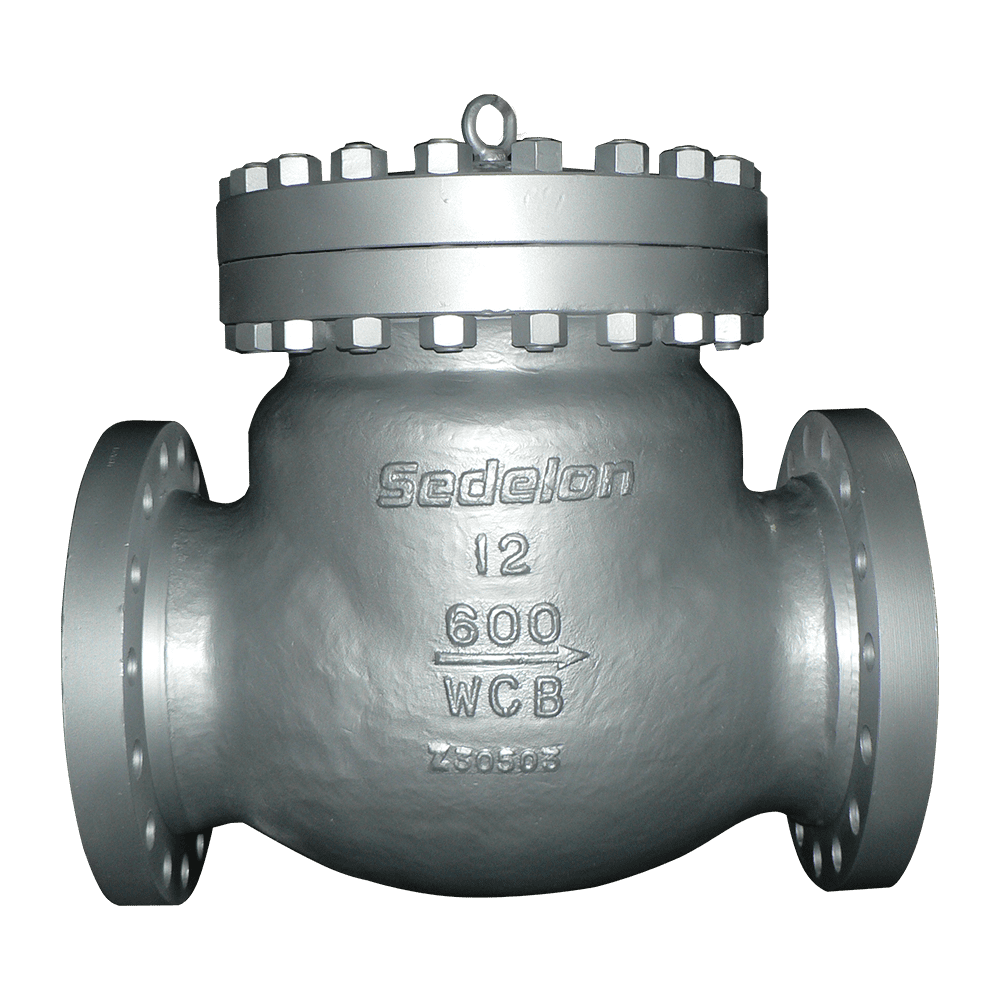
Components of a Swing Check Valve
Components vary slightly depending on materials and industrial standards, but the basic construction remains steady.
| Part Name | Function | Typical Material | Importance | Notes |
|---|---|---|---|---|
| Valve Body | Outer structure | Cast iron / Carbon steel / Stainless steel | Defines durability & pressure rating | Corrosion resistance matters |
| Disc | Opens or closes to allow/stop flow | Stainless steel / Alloy steel | Core operational part | Disc weight affects performance |
| Hinge Pin | Allows disc to swing | Heat-treated steel | Ensures smooth movement | Must resist wear |
| Seat | Contact surface for sealing | Bronze / Stainless steel | Controls leakage performance | Precision machining improves sealing |
| Bonnet | Covers internal parts | Same as valve body | Enables maintenance | Bolted or pressure-sealed |
| Gasket | Prevents leakage at connections | Graphite / PTFE | Sealing reliability | Must match temperature rating |
Types of Swing Check Valves
Not all are identical — your application determines your ideal choice.
Metal Seated Swing Check Valve
You’ll see these in high-temperature steam or gas lines. They’re rugged, stable, and built to take a beating. Perfect for heavy-duty industries like refineries and boiler systems.
Soft Seated Swing Check Valve
These are for water, oil, and lower temperature systems. The soft seat (often rubber or PTFE) gives superior sealing performance — especially where leakage cannot be tolerated.
Wafer Swing Check Valve
Slim, lightweight, and fits between flanges. If your project values compact installation, this is where you look.
How the Swing Check Valve Works — Step by Step
Let’s make it practical:
When your system pushes fluid forward:
The flow lifts and swings the disc open. You get smooth flow with minimal resistance.
When the flow decreases or reverses:
Gravity and backpressure push the disc back to the closed position.
This protects the pump, prevents contamination, and avoids backward circulation.
Think of a real case:
A water circulation pump in an HVAC cooling system.
When the pump stops, the reverse flow could push hot water backward, causing turbulent pressure. But the swing check valve stops it — efficiently and quietly.
Key Benefits
Prevents Reverse Flow
Your pipeline stays protected from reverse pressure spikes.
Automatic Operation
No need for monitoring — this saves labor and reduces system complexity.
Low Pressure Drop
Smooth internal passage means minimal energy loss.
Reliable and Durable
With the right material selection, you get years of stable performance.
Versatile Across Industries
From water plants to petrochemical pipelines — it adapts easily.
Where You’ll Use Swing Check Valves
You’re likely encountering one of these industries:
Municipal Water Supply Systems
Preventing reverse contamination is legally mandated here.
Boiler and Steam Lines
Stops dangerous pressure surges.
Oil and Gas Transfer Systems
Protects expensive pump equipment and ensures controlled flow.
Chemical Processing
Ensures batch purity and prevents chemical mixing errors.
HVAC Pumping Systems
Reduces energy loss and mechanical wear.
In each case, the goal is the same: protect flow integrity and prevent damage.
Choosing the Right Swing Check Valve
This is where your purchasing decisions matter.
Material Compatibility
If you’re handling corrosive fluid — stainless steel is your friend.
Water systems? Ductile iron or bronze may offer the perfect balance of performance and value.
Pressure and Temperature Ratings
Match valve rating to pipeline maximum conditions, not average conditions.
Connection Type
Flanged, threaded, wafer — choose based on pipeline design.
Brand and Manufacturer Reliability
This is where trust and reputation live or die. You want a valve that’s been proven.
A conversation I once had with a procurement manager in Dubai is still memorable:
“Cheap valves look profitable on purchase orders, but failures cost us three times more later.”
He now specifies long-term suppliers only — because trust is cheaper than outages.
Recommended Manufacturer — Sedelon
If you want a supplier experienced in industrial valve production with globally recognized testing standards, Sedelon is a strong candidate.
Check product details here:
https://www.sedelon.com/products/swing-check-valve
Sedelon focuses on durable structure, precise sealing, and inspection standards that guarantee reliability. When you’re sourcing valves across multiple project timelines, having a consistent product line can simplify procurement and engineering compatibility.
Conclusion
A swing check valve may be a small part of your piping system, but it protects the entire network from costly reverse flow problems. By understanding how it works and choosing the right materials, design, and manufacturer, you ensure efficient, reliable, low-maintenance system operation. If you’re evaluating suppliers for long-term purchasing stability, Sedelon’s swing check valve product line is worth reviewing.
You can explore specifications, request a quotation, or ask for engineering support directly on our website.
The right valve is not just a purchase — it’s an investment in operational continuity.
FAQs
What makes a swing check valve different from other check valves?
Its hinged disc mechanism allows smoother operation and lower pressure drop than lift check valves.
Can I install a swing check valve vertically?
Only if flow goes upward; otherwise disc closure may fail.
What materials work best for corrosive media?
Stainless steel or alloy materials are preferred for chemical resistance.
Do swing check valves require maintenance?
Low maintenance, but periodic internal inspection prevents disc wear issues.
How do I avoid water hammer with swing check valves?
Choose a valve with damping or assisted closure features when high flow velocity exists.