



Introduction
API 609 sets key specifications for industrial butterfly valves for petrochemical, power and offshore projects. Improper material selection for valve components triggers seal aging, internal leakage and unplanned downtime. The wafer api 609 butterfly valve enjoys great cost‑performance among connection types. Global EPCs and buyers need a trustworthy api 609 butterfly valve supplier and api 609 butterfly valve manufacturer. Sedelon supplies api 609 Category A butterfly valves and hard‑seal models with butterfly valve non‑destructive testing for project‑ready technical references.
Core Comparison: Soft Seal vs. Metal Hard Seal API 609 Butterfly Valves
Basic Structure and Performance Comparison
Before determining valve technical specifications, it is necessary to clarify the core performance gap between Class-A soft sealing and Class-B metal hard sealing in API609 butterfly valves.
| Comparison Item | Soft Sealing API609 Butterfly Valve (Type A) | Type B Metal Hard Sealing API609 Butterfly Valve |
| API609 Classification | Type A: Concentric, Zero Eccentricity Structure | Type B: Double/ Triple Eccentric High-Performance Structure |
| Main Seat Material | EPDM, NBR, Viton (FKM), PTFE | Stellite Alloy Weld Overlay, Laminated Metal Seat |
| Shut-off Performance | VI Grade Bubble-Tight Zero Leakage | IV–V Grade, Allowable Minor Leakage |
| Operating Temperature Range | -20°C to +150°C (depending on rubber material) | -29°C to +600°C |
| Common Connection Types | Wafer-type API609 Butterfly Valve, Lug-type | Lug, Double Flange |
| Typical Applications | Circulating Water, Sewage, HVAC, Fire Protection Lines | Refining Steam, High-Temperature Process Media, Flue Gas Desulfurization |
| Relative Cost | Economical | Higher Procurement Cost |
Working Principle Explanation
- API 609 Class A butterfly valve (Class A soft sealing): concentric zero offset structure, butterfly plate 90° rotation throughout contact with elastic valve seat, relying on rubber compression to achieve bubble-level zero leakage, suitable for clean medium, normal temperature public engineering pipeline.
- Class B metal hard seal butterfly valve: adopts a double-offset or triple-offset geometric structure; the butterfly plate only contacts the valve seat at the fully closed position, greatly reducing friction and wear, suitable for high-temperature steam, particle-containing media, and petrochemical fire prevention conditions.
Sedelon API 609 Butterfly Valve Step-by-Step Material Selection Framework
Valve Body Material Selection
The butterfly valve body of Sedelon API609 provides a variety of casting materials in compliance with ASTM standards:
- Ductile iron: Commonly used in soft-seal clamp-type api 609 butterfly valves, normal temperature water treatment, circulating water pipelines, general conditions with high cost performance;
- WCB carbon steel: Medium temperature oil and gas, process pipelines, soft sealing, and metal hard sealing can be adapted;
- CF8/CF8M stainless steel: Corrosive medium, salt water, weak acid and alkali chemical pipeline;
- Duplex steel: Seawater, high chloride ion marine platform, strong corrosive working conditions.
Soft Seal Series Valve Seat Material Selection
For API 609 Class A butterfly valve with soft sealing, the elastomer should be selected according to the medium and temperature:
- EPDM: -20 ℃ ~ + 120 ℃, clean water, sewage, circulating water, excellent anti-aging performance of water system;
- NBR: resistant to oil, suitable for ordinary oil-containing media below 90 ℃;
- Viton (FKM): resistant to oil and chemicals, up to +150°C, suitable for hydrocarbons and weak chemical media;
- PTFE/RPTFE: Resistant to strong chemical corrosion, suitable for acid and alkali conditions, and has a better temperature range than ordinary rubber.
Class B Metal Hard Seal Internal Component Selection
B class metal hard seal API609 butterfly valve for high temperature, abrasion, and petrochemical fire prevention conditions:
- Stellite 6 / Stellite 12 hard alloy welded butterfly plate – valve seat contact surface, wear-resistant and anti-high temperature oxidation;
- Stainless steel stacked metal valve seat assembly for use in high-temperature steam circulation pipelines.
Butterfly Plate and Valve Stem Matching Principles
Soft sealing Class A: Cast iron corrosion-resistant coating butterfly valve; CF8M stainless steel butterfly plate is selected for corrosive conditions; The valve stem is made of 416/ 316 stainless steel;
Class B metal hard seal: CF8M / dual-phase steel butterfly valve; High-strength alloy valve stem resists high-temperature creep deformation.
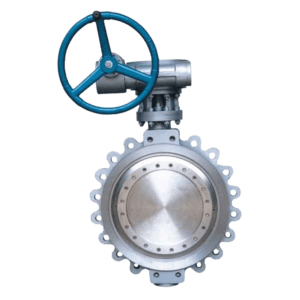
End Connection Type Selection: Wafer/Lug/Double Flanged
Wafer Type API 609 Butterfly Valve
The most widely used clamp-type API 609 butterfly valve strictly follows the API 609 standard structure length and is clamped between two pipe flanges. Suitable for circulating water, water treatment, low-pressure public pipelines; It is not suitable for single-sided removal of flanges, which still requires pipeline isolation.
Lug Type API 609 Butterfly Valve
The valve body is equipped with a threaded flange, which can realize the isolation of the pipeline on one side. The flange valve on one side can be removed without falling off, which is suitable for fire protection and process pipelines that need to be repaired in sections.
Double Flanged API 609 Butterfly Valve
High-strength full flange connection, commonly used in large-diameter, high-pressure B-class metal hard seal butterfly valve, suitable for petrochemical and power plant main process circuit.
Factory Quality Assurance: Sedelon Factory Inspection and Non-Destructive Testing of Butterfly Valves
As a regular API 609 butterfly valve manufacturer and API 609 Butterfly Valve supplier, Sedelon strictly follows the API609 and API598 inspection specifications and carries out the inspection process for every batch of products:
- Appearance and dimension inspection: Verify API609 structure length, flange size, valve body identification completeness;
- Non-destructive testing of butterfly valve: PT penetrant inspection of castings to detect surface cracks; Key weld RT X-ray inspection; Large-diameter thick-walled castings add UT ultrasonic inspection;
- Shell water pressure strength test: 1.5 times the rated pressure of the shell water pressure test to verify the pressure strength of the valve body;
- Valve seat sealing test: Class A soft seal meets bubble level zero leakage; The leakage rate determination of Class B metal hard seal is carried out according to API598;
- Fire test and PMI material composition testing can be provided according to customer requirements.
Sedelon can provide a complete ITP inspection plan, material report, and test certificate to meet EPC project bidding and on-site inspection.
Typical Working Condition Material Selection Reference
Different industrial working conditions face different temperatures, pressures, and corrosion degrees of media, and improper material matching will shorten the service life of the valve and lay hidden safety hazards.
| Operating Conditions | Recommended Butterfly Valve Type | Suggested Material Combination | Preferred Connection Type |
| Power Plant Circulating Water / Sewage | API 609 Class A Soft Seated Butterfly Valve | Wafer-type API 609 Butterfly Valve | Wafer-type API 609 Butterfly Valve |
| General Oil-containing Utility Lines | Class A Soft Seated | WCB Body + Viton Seat | Wafer or Lug |
| Refinery High-Temperature Steam Lines | Class B Metal Hard Seated | WCB Body + Stellite Welded Seat | Lug or Double Flange |
| Offshore Saltwater Corrosion Lines | Class B High Performance | Duplex Steel Body + Metal Hard Seal | Double Flange |
| Fire Protection Isolation Lines | Class A Soft Seated | Ductile Iron + EPDM | Lug-type |
FAQs
Q1: What are the main differences between API 609 Class A butterfly valves and Class B butterfly valves?
A1: Class A is a concentric soft seal, used for clean media at normal temperature; Class B is an eccentric high-performance metal hard seal, suitable for high-temperature, abrasive, petrochemical, and fire-resistant applications.
Q2: What connection types does the Sedelon API609 butterfly valve offer?
A2: We offer three structures: wafer type, lug type, and double flange type, all conforming to API609 dimensional standards.
Q3: What non-destructive testing (NDT) items are included in the testing of Sedelon API609 butterfly valves?
A3: PT penetrant testing, RT radiographic testing of welds; UT ultrasonic testing is added for large-diameter, thick-walled castings.
Q4: As an API 609 butterfly valve supplier, can Sedelon provide a complete set of project acceptance documentation?
A4: Yes, as an API 609 butterfly valve manufacturer, Sedelon can deliver ITP, PMI, hydrostatic, and NDT reports for project acceptance.
Q5: Can a soft-seal API609 butterfly valve be used for high-temperature steam above 200℃?
A5: Not recommended. For temperatures exceeding 200℃, a Class B metal hard-seal eccentric butterfly valve should be selected.
Conclusion
Proper material and type matching determines reliable service of API 609 butterfly valves. The api 609 category A butterfly valve fits clean ambient‑temperature media, while hard‑seal versions suit high‑temperature and abrasive working conditions. As a professional api 609 butterfly valve manufacturer and api 609 butterfly valve supplier, Sedelon delivers butterfly valve non‑destructive testing, diverse configurations and full documentation. Work with Sedelon to get compliant valves customized for your actual pipeline requirements.