



Introduction
Selecting the right industrial valve is about more than just controlling flow—it’s about safeguarding your infrastructure. While gate and ball valves are operated manually or via actuators, the check valve serves as the “silent guardian” of the pipeline. Its primary job is to ensure fluid flows in only one direction, automatically preventing the catastrophic effects of backflow.
As a leading manufacturer, Sedelon provides high-performance solutions, including API 594 and API 6D check valves, designed to protect pumps, compressors, and sensitive equipment in the oil, gas, and water treatment industries.
How Check Valves Work: Understanding “Cracking Pressure”
Unlike most valves, check valves are self-actuated, meaning they do not require an external power source or manual operation. They rely on the pressure differential within the fluid itself.
A critical concept for any beginner is Cracking Pressure. This is the minimum upstream pressure required to open the valve disc and allow fluid to pass. Once the pressure drops below this level or flow reverses, the valve automatically closes, creating a tight seal to prevent backflow. It is important to note that the valve’s response time is directly linked to the spring tension or disc weight, which must be carefully calibrated to your system’s specific flow dynamics.
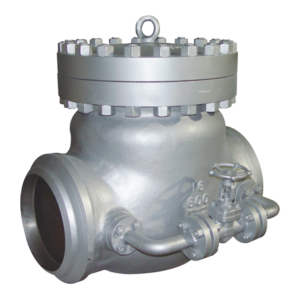
Common Types of Sedelon Check Valves
Different piping layouts and flow velocities require specific valve structures. Sedelon offers a diverse range of configurations to meet these needs:
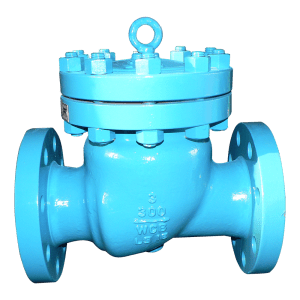
Swing Check Valves
Features a disc that swings on a hinge. It is the most common type for full-flow applications where low pressure drop is essential.
Lift Check Valves
Similar in structure to a globe valve, these are ideal for high-pressure services and are often used in steam or air systems.
Dual Plate Check Valves
Also known as “butterfly” check valves, these are compact, lightweight, and designed to minimize “slamming,” making them a preferred choice for space-limited projects.
Tilting Disc Check Valves
Engineered for rapid closing, these valves excel in minimizing the destructive effects of water hammer.
Critical Functions: Why Your System Needs Them
A system without a reliable check valve is a system at risk. Here is how a Sedelon check valve protects your investment:
Preventing Water Hammer: Rapid flow reversal can cause pressure surges that rupture pipes. Our “non-slam” designs are optimized to close quickly and quietly before the backflow can gain momentum.
Protecting Rotating Equipment: Reverse flow can cause a pump’s impeller to spin backward, leading to motor burnout or catastrophic mechanical failure in expensive rotating equipment.
Maintaining System Prime: By preventing drainage when a pump is turned off, check valves keep the system ready for immediate restart, saving energy and reducing wear.
Head-to-Head Comparison: Check Valve Types
| Feature | Swing Check Valve | Lift Check Valve | Dual Plate Check Valve |
| Flow Resistance | Very Low | Moderate | Low |
| Closing Speed | Moderate | Fast | Very Fast (Non-Slam) |
| Installation Space | Large | Moderate | Compact / Space-saving |
| Typical Standard | API 594 | ||
| Best Application | General Industrial | High-Pressure Steam | Water & Oil Pipelines |
 Technical Analysis of Selection Results
As shown in the table above, the Swing Check Valve is the classic choice for low-velocity systems where maintaining flow volume is the priority. However, its larger footprint and slower closing speed make it less suitable for high-frequency cycling. Conversely, the Dual Plate Check Valve represents a modern engineering triumph—offering a much shorter “face-to-face” dimension. This not only reduces the overall weight of the piping structure but also utilizes spring-assisted plates to close almost instantaneously, which is the most effective way to combat the shockwaves of water hammer in long-distance water transmission.
Installation and Maintenance Best Practices
To ensure the longevity of your Sedelon Check Valves, proper installation is just as important as selecting the right material. One of the most common mistakes is installing a check valve too close to a pump outlet or an elbow. Turbulent flow near these components can cause the valve disc to “chatter,” leading to rapid wear of the hinge pins and seats. As a rule of thumb, always allow for at least five pipe diameters of straight pipe upstream.
Furthermore, maintenance schedules should include a periodic inspection of the seating surfaces. Even a small amount of debris trapped between the disc and seat can prevent a bubble-tight seal, allowing “leak-back” that compromises system efficiency. Sedelon’s valves are designed with easy-access bonnets, allowing for in-line inspections that minimize downtime and labor costs.
Selection Criteria: Choosing the Right Style
To find the perfect fit, consider these factors:
Flow Velocity: Higher velocities might require a tilting disc or dual plate valve to prevent wear.
Installation Orientation: While swing check valves are great for horizontal lines, certain spring-loaded Lift Check Valves are better for vertical flow.
Media Compatibility: Sedelon provides various materials, from Bronze for seawater to Stainless Steel for corrosive chemicals.
FAQs: Addressing Common Beginner Questions
Q1: Can check valves be installed vertically?
Yes, but it depends on the type. Swing check valves are generally for horizontal lines, while spring-loaded lift check valves or dual plate valves are often used for upward vertical flow to ensure gravity assists the closing mechanism.
Q2: What causes a check valve to “slam” or be noisy?
Slamming occurs when the valve closes too slowly after the flow stops, allowing reverse velocity to build up. Choosing a Sedelon “non-slam” dual plate design can solve this issue by closing the valve before the reverse flow gains speed.
Q3: Do check valves require an external actuator?
No. Check valves are completely self-contained and automatic. They react solely to the pressure and direction of the media within the pipe.
Q4: Does Sedelon provide certification for these valves?
Absolutely. All Sedelon check valves undergo rigorous pressure testing and comply with international standards like API, CE, and ISO, ensuring safety in high-stakes industrial environments.
Conclusion
A check valve is a small but vital investment that protects the most expensive components of your pipeline. Whether you need the robust simplicity of a Swing Check Valve or the compact efficiency of a Dual Plate design, Sedelon has the engineering expertise to help you choose correctly.
Browse the full Sedelon Check Valve Catalog or contact our technical team today for a professional sizing consultation and technical quote.