



The choice between a swing check valve and a lift check valve is decided by flow velocity, pressure and the cost of a water hammer event: swing checks suit low-velocity horizontal lines, while lift checks suit high-velocity vertical runs and tighter shut-off. Both are automatic non-return valves with no actuator, but their internal mechanics set very different operating limits. At Sedelon, a valve manufacturer since 1998 with API 594, API 6D, ISO 9001 and ISO 15848-1 certifications, we build swing, lift, tilting-disc and dual-plate check valves for water, oil and gas, power and process service. In this guide we compare the two designs and explain how to specify the right check valve for backflow prevention.
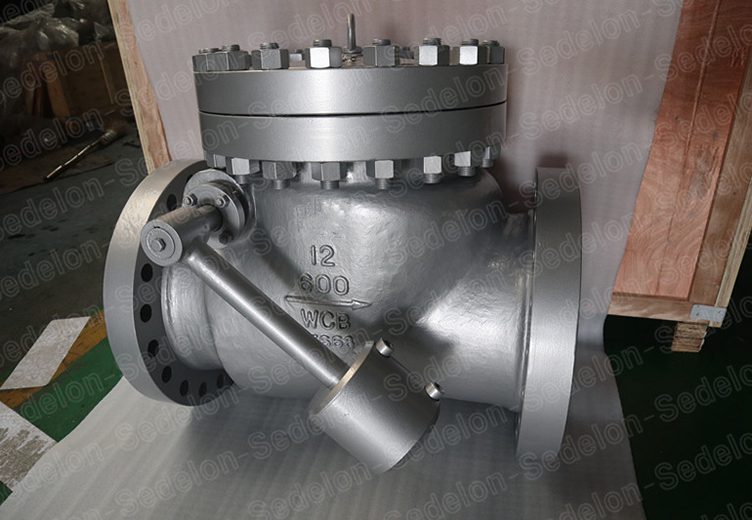
How a Check Valve Works
A check valve allows flow in one direction and closes automatically when flow reverses, protecting pumps, compressors and upstream equipment from backflow. It has no handwheel or actuator; the disc or clapper is moved by the fluid itself. The two most common geometries are the swing check, where a hinged clapper swings open and closed, and the lift check, where a disc lifts vertically along a guide and drops back onto a seat by gravity or spring.
Swing Check Valve
A swing check valve uses a clapper hinged at the top of the body. Forward flow swings the clapper open; flow stop or reversal lets the clapper fall back onto the seat. Swing checks have a short, straight flow path with very low pressure drop, which makes them ideal for pump discharge, water distribution and large-bore lines. They are most reliable in horizontal piping with the hinge above the seat. Sedelon’s swing check valves are built to API 594 and API 6D, in wafer, lug and flanged styles, with metal or soft seats.
Lift Check Valve
A lift check valve has a disc that moves vertically in a guide and seats like a globe valve. Forward flow lifts the disc; reverse flow plus gravity (or a spring) seats it. Because the disc returns squarely onto the seat, lift checks give a tighter shut-off and are well suited to vertical upward flow, high-velocity lines and steam service. A spring-loaded lift check also closes faster, reducing water hammer. For high-integrity duties, Sedelon also offers tilting-disc check valves that combine fast closure with low head loss.
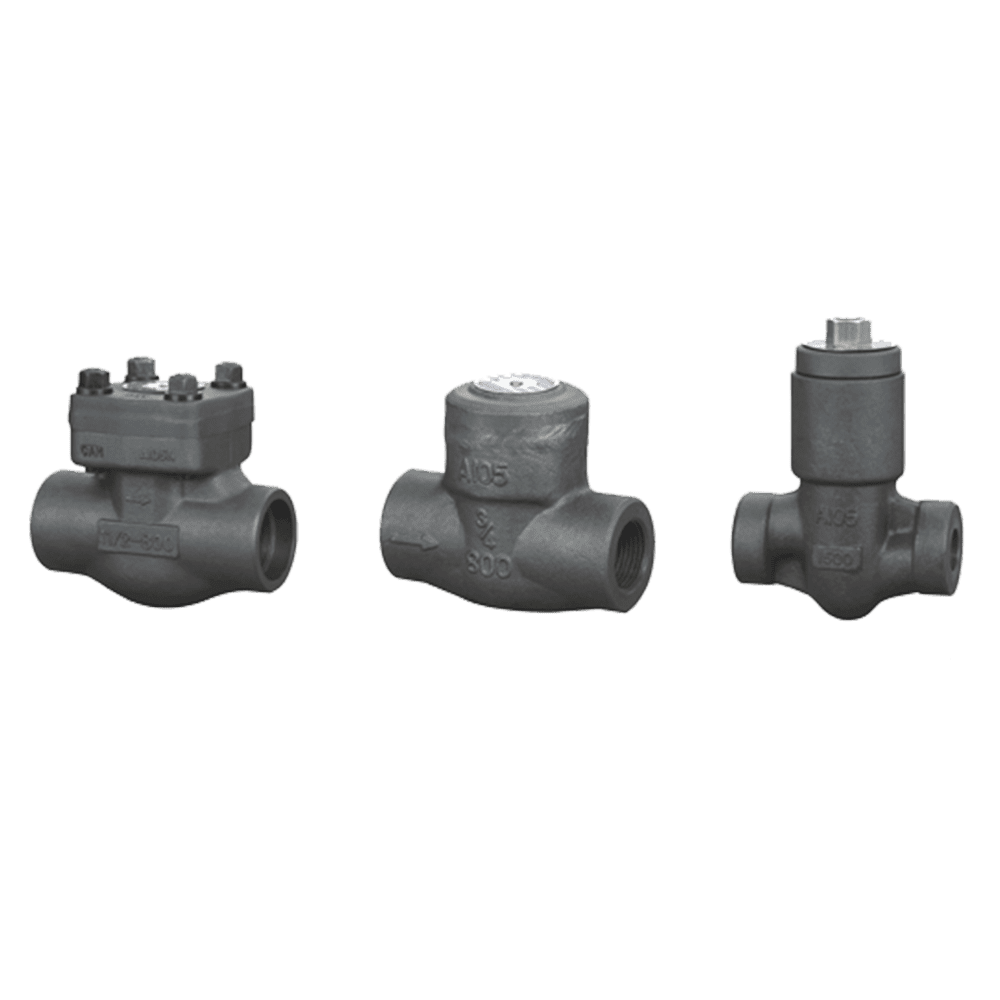
Swing Check vs Lift Check: Key Differences
| Feature | Swing Check Valve | Lift Check Valve |
|---|---|---|
| Closure element | Hinged clapper (swings) | Vertical-guided disc (lifts) |
| Pressure drop | Very low (straight flow) | Higher (tortuous path) |
| Best orientation | Horizontal (hinge on top) | Vertical (flow up) or spring-loaded |
| Shut-off tightness | Good; sensitive to low velocity | Tighter; square seating |
| Water hammer | Higher risk (slow slam) | Lower (fast, spring-assisted) |
| Typical size | NPS 2 to 48+ | NPS 1/2 to 12 typical |
| Cost | Lower on large bore | Lower on small bore |
How to Choose for Backflow Prevention
1. Flow Velocity & Orientation
Swing checks need enough forward velocity to hold the clapper open and enough reverse velocity to seat it. In vertical lines or low, pulsing flows they can chatter and leak. Lift checks (especially spring-loaded) work in vertical runs and unstable flows because the disc is guided and the spring assists closure.
2. Pressure Drop Budget
For long water mains, cooling circuits and large-bore pump discharge where head loss drives energy cost, the swing check’s near-straight path saves more than a lift check. Where pressure drop is not critical but shut-off must be tight, a lift check is preferable.
3. Water Hammer Risk
A swing clapper can slam shut and cause water hammer when flow reverses suddenly. In high-velocity or column-separation-prone lines, a spring-loaded lift check or a tilting-disc check valve closes faster and cushions the surge. Add a dashpot or counterweight for severe pump trips.
4. Medium & Service
For clean water, sewage and utility liquids, swing checks are economical and reliable. For steam, high-pressure hydrocarbons and viscous or dirty service, lift checks (or piston checks) hold tighter seals and resist erosion. Always confirm the seat and trim suit the medium.
Typical Applications
Swing check valves protect pumps and protect against backflow on raw water intake, cooling water, fire water, ballast and large-diameter process lines. Lift check valves protect boiler feed, condensate, steam and vertical hydrocarbon lines where tight, fast closure matters. For piggable pipelines, a full-bore check is paired with API 6D ball valves for isolation. Browse the full check valve range for the right geometry.
Sedelon Check Valve Solutions
Sedelon has manufactured industrial valves since 1998. Our check valve programme covers swing, lift, tilting-disc, dual-plate and ball-check designs in wafer, lug, flanged and butt-weld ends, with carbon steel, stainless steel, duplex and special alloys. Every valve is tested in accordance with API 598 and API 594, and our quality lab performs hydrostatic, pneumatic, crack-pressure and fugitive-emission tests. With a dedicated stock factory launched in 2023, we support fast-track projects across the Middle East, Southeast Asia, Africa, the Americas, Russia and Australia.
Need the Right Check Valve for Backflow Prevention?
Send us your line size, flow direction, velocity and medium. Our engineering team will recommend a swing, lift or tilting-disc check valve with the correct seat and end connection.
Frequently Asked Questions
What is the main difference between a swing check and a lift check valve?
A swing check uses a hinged clapper that swings open and shut, giving very low pressure drop but slower closure. A lift check uses a vertically guided disc that lifts and drops onto the seat, giving tighter shut-off, faster closure and better performance in vertical or high-velocity lines.
When should I choose a swing check valve?
Choose a swing check for horizontal, large-bore, low-velocity lines such as pump discharge, water mains, cooling water and fire water, where low pressure drop and low cost matter more than ultra-fast closure.
Can a lift check valve be used in vertical piping?
Yes. Lift checks are the preferred choice for vertical upward flow because the guided disc seats squarely under gravity or spring force. A swing check in a vertical line tends to chatter and leak.
Which check valve reduces water hammer?
A spring-loaded lift check or a tilting-disc check valve closes faster and more softly than a swing check, reducing water hammer on flow reversal. For severe pump trips, add a dashpot or counterweight.
Does a swing check valve have high pressure drop?
No. The swing check has one of the lowest pressure drops of any check valve because flow passes through almost straight. This is why it is used on long water and cooling mains where head loss is expensive.
Are lift check valves better for steam service?
Yes. Steam and high-pressure hydrocarbon lines need tight, fast shut-off, which a lift or piston check provides. A swing check’s clapper can chatter and leak under steam’s varying velocity, so lift or tilting-disc designs are preferred.
Related Resources
- Sedelon Swing Check Valve Product Page
- Sedelon Tilting-Disc Check Valve Product Page
- Trunnion Mounted vs Floating Ball Valve: Selection Guide
- Ball Valve Soft Seal Materials Selection
- Butt Weld vs Socket Weld vs Flanged Valves
Conclusion
The choice between a swing check valve and a lift check valve is a trade between low pressure drop and tight, fast shut-off. For horizontal, large-bore, low-velocity lines, the swing check is economical and dependable. For vertical runs, high-velocity lines, steam and backflow where water hammer must be controlled, the lift or tilting-disc check is the safer specification. Sedelon supplies the full check valve range with the materials, testing and certifications needed for water, oil and gas, power and process projects worldwide. Contact our engineering team with your line size, flow direction and medium and we will recommend the right non-return valve for your system.