

A German EPC writes “body material 1.4308” into the valve datasheet, and your supplier quotes “CF8.” The buyer’s immediate question is the right one: are they the same metal? Mostly yes — 1.4308 and CF8 are both the cast version of 304 stainless — but “mostly” is exactly where cross-border valve procurement goes wrong. Grade names, chemistry tolerances, impact testing and inspection certificates differ between the ASTM and EN systems, and those small differences decide whether a valve is accepted at the factory acceptance test.
Why ASTM and EN Material Grades Collide on Valve Orders
Valve bodies are almost always castings, and the two dominant material systems use different naming, different chemistry bands and different proof documents. An American- or China-built valve is quoted to ASTM (A216, A217, A351), while a European project is written to EN (EN 10213 casting grades, with material numbers such as 1.0619 or 1.4308). Neither system is “wrong,” but they only line up after a deliberate cross-reference.

The Three Grades Buyers Ask About Most
WCB — cast carbon steel
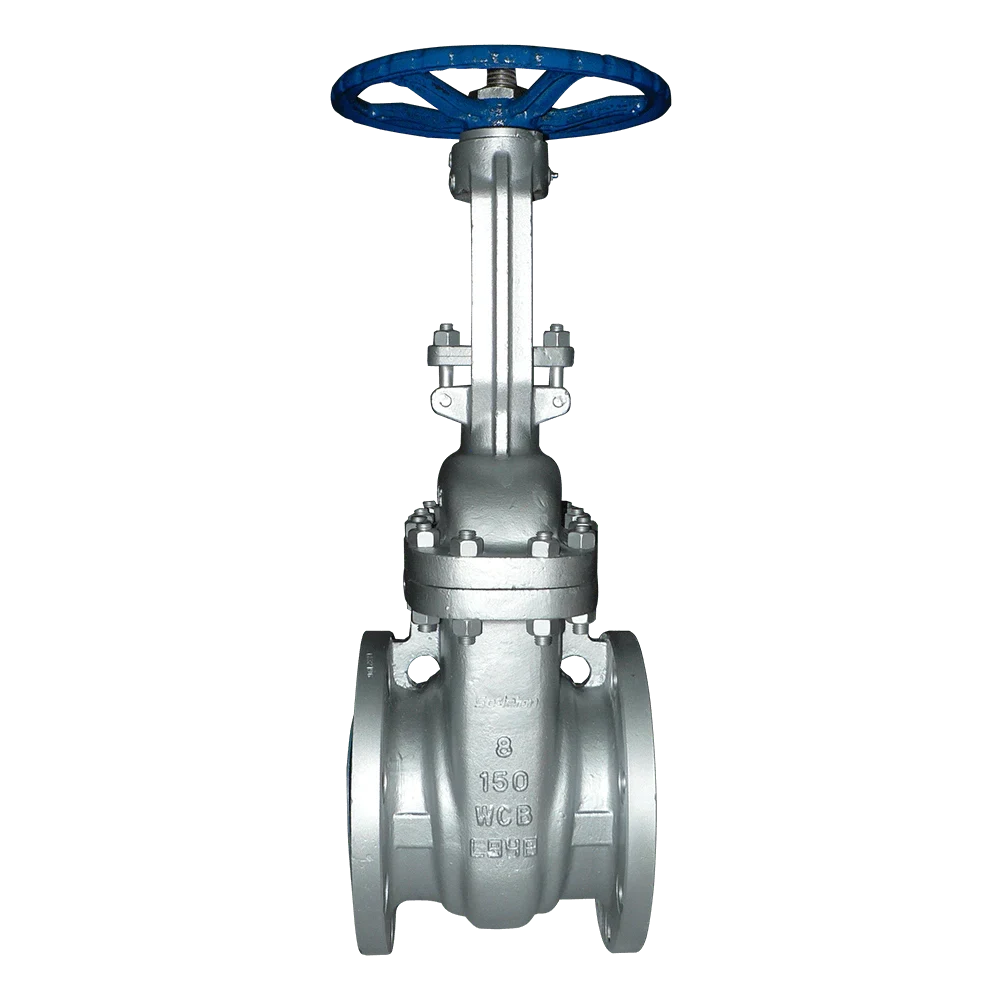
ASTM A216 Grade WCB is the default cast carbon steel for valves and fittings up to about 425 °C. It is the workhorse of refinery, power and general process piping. In the EN system the close cousin is GP240GH (material number 1.0619) under EN 10213, a cast carbon steel with a slightly tighter carbon ceiling and specified impact properties.
CF8 — cast 304 stainless
ASTM A351 Grade CF8 is the cast form of 304 stainless (roughly 18 % chromium, 8–10 % nickel, carbon capped at 0.08 %). Its EN casting equivalent is 1.4308 (GX 5 CrNi 19-9). CF8 is the standard corrosion-resistant body for mild chemicals, water and food-adjacent service.
CF8M — cast 316 stainless
ASTM A351 Grade CF8M adds 2–3 % molybdenum for pitting resistance in chlorides and marine duty. The EN equivalent is 1.4408 (GX 5 CrNiMo 19-11-2), the cast form of 316. When a line sees seawater, bleach or process chlorides, CF8M / 1.4408 is the grade the spec usually demands.
ASTM ↔ EN Cross-Reference at a Glance
| ASTM grade | EN casting grade | Rough wrought/type | Typical use |
|---|---|---|---|
| WCB (A216) | 1.0619 / GP240GH | Carbon cast steel | General carbon service |
| LCB / LCC (A352) | 1.0619 / G20Mn5 (impact) | Low-temp carbon | Sub-zero carbon |
| CF8 (A351) | 1.4308 | Cast 304 | Mild corrosion |
| CF8M (A351) | 1.4408 | Cast 316 | Chloride / marine |
| CF3M (A351) | 1.4409 | Cast 316L | Low-carbon weld/storage |
| WC6 (A217) | 1.7357 (G17CrMo5-5) | 1.25Cr-0.5Mo | High-temperature alloy |
This table is a starting cross-reference, not a substitution approval. The acceptance decision must always rest on the documented chemistry, heat treatment and impact requirements of the specific project specification.
Four Differences That Actually Reject Shipments
Chemistry tolerances are not identical
The grades look alike but the bands differ. CF8 allows up to 0.08 % carbon; 1.4308 typically caps it lower. Nickel and molybdenum ranges and the allowed residuals also shift between the two systems. For most duties the overlap is fine; for sour (NACE) or high-purity service those few tenths of a percent are the whole argument.
Impact testing and heat treatment
EN 10213 pressure-purpose castings are normally supplied against stated impact-energy values at a specified temperature, with normalized or quenched-and-tempered heat treatment. ASTM grades need supplementary requirements to prove the same thing — an impact test (S1), a low-temperature grade such as A352 LCB/LCC, or NACE supplementary sulphur limits. If the enquiry only says “CF8,” it may arrive without the impact evidence a European client expects.
Inspection certificates
European projects frequently require an EN 10204 3.1 (or 3.2) inspection certificate from the foundry, while ASTM supply is documented by a material test report (MTR). Both prove the melt, but the format, the witnessed parties and the acceptance route differ — and the missing 3.1 is a classic cause of customs and QA hold-ups.
Temperature limits follow the code, not the name
A “WCB” or “1.0619” body does not carry the same allowable stress at 400 °C in every design code. The usable temperature envelope is set by the governing code (ASME, EN 13480, API 520, etc.) and the actual chemistry, so confirm the allowable stress rather than trusting the grade label.
A Practical Buyer Checklist for Material Cross-References
- State the required grade system up front (ASTM or EN) in the enquiry.
- Request a written cross-reference naming both grades, the chemistry and the impact basis.
- Specify the inspection certificate required (EN 10204 3.1/3.2 or ASTM MTR).
- Add any supplemental need explicitly — low-temperature, NACE sour service, or post-weld heat treatment.
- Confirm the allowable temperature/pressure from the governing design code, not the grade name.
Tool suggestion: Keep a single-page ASTM↔EN valve-material cross-reference sheet (grade, chemistry band, impact requirement, certificate type) and attach it to every material-sensitive enquiry. It pre-empts the most common RFQ-to-FAT disputes.
Need a documented ASTM-to-EN material cross-reference?
Send us your project’s EN or ASTM material call-out and we will return the equivalent grade with chemistry, impact-test and certificate basis so your inspection team can clear it at the FAT.
Closing: Treat the Grades as Close Cousins, Not Twins
The practical takeaway for any valve buyer is to treat ASTM and EN grades as close cousins, not twins. WCB maps to 1.0619, CF8 to 1.4308 and CF8M to 1.4408, but the acceptance decision must rest on the written cross-reference — chemistry, heat treatment, impact energy and the inspection certificate — not the grade name alone. Hand that dossier to the supplier up front and the material question stops being a recurring source of rejected shipments at the FAT. Get the cross-reference on paper before purchase order release and the rest takes care of itself.
Frequently Asked Questions
Is CF8 the same as 1.4308?
They are the cast form of 304 stainless in two different systems and are used as equivalents, but the chemistry bands and impact requirements differ slightly. CF8 (ASTM A351) and 1.4308 (EN 10213) should be accepted only against a documented cross-reference that confirms chemistry and the required impact testing.
What is the EN equivalent of ASTM WCB?
The common EN casting equivalent of A216 WCB is GP240GH, material number 1.0619, under EN 10213. It is a cast carbon steel with a slightly tighter carbon limit and specified impact properties; for low-temperature duty an impact-tested 1.0619 or G20Mn5 is used instead.
Does CF8M equal 316 stainless?
CF8M is the cast version of 316 stainless and is cross-referenced to EN 1.4408. The molybdenum addition gives pitting resistance in chlorides and marine service. As with CF8, accept it only against the written chemistry and impact basis of the project specification.
How do ASTM and EN impact-test requirements differ?
EN 10213 pressure-purpose castings are normally supplied with specified impact-energy values at a stated temperature. ASTM grades reach the same proof only through supplementary requirements — an impact test, a low-temperature grade such as A352 LCB/LCC, or NACE limits — so an ASTM-only call-out may arrive without the impact evidence a European client expects.
Which grade do I use for low-temperature service?
For carbon steel use ASTM A352 LCB/LCC or an impact-tested EN grade such as 1.0619 or G20Mn5 with the correct sub-zero impact values. For stainless, use the low-carbon cast grades (CF3/CF3M, equivalent to 1.4309/1.4409) so welding and low-temperature toughness are maintained.
Why does the material certificate matter as much as the grade?
The grade name promises a chemistry; the certificate proves the actual melt met it. European projects often require an EN 10204 3.1 or 3.2 certificate, while ASTM supply is documented by an MTR. Without the requested certificate format, even a chemically correct valve can be rejected at inspection or customs.