



When a pump trips offline or a compressor suddenly unloads, the check valve is the last line of defence between a controlled shutdown and a water-hammer event that can split pipework and idle a whole unit for days. Among all check valve families, spring-loaded designs — the ones marketed as silent or non-slam — are what engineers specify when closure speed, noise and pressure surge matter.
This guide explains how spring-loaded check valves work, why the silent designation is earned rather than decorative, and where they outperform swing and dual plate alternatives. It closes with installation, sizing and specification guidance so piping designers and procurement teams can shortlist the right valve with confidence.
What Is a Spring-Loaded Check Valve?
A spring-loaded check valve is a self-acting, one-way valve in which a disc, piston or plate is held against the seat by a helical compression spring instead of relying on gravity or flow momentum alone. Forward flow must overcome the spring force — the cracking pressure — to lift the disc off its seat. The moment forward flow slows or reverses, the spring pushes the disc back onto the seat before the flow column can accelerate backwards.
Three construction details separate a properly engineered spring check from a commodity unit:
- Disc and seat geometry. Precision-machined sealing faces — often lapped, and in higher classes hardened or overlay-welded — determine how well the valve seals against reverse pressure over thousands of cycles.
- Spring selection. The spring defines cracking pressure (commonly 0.2 to 3 bar depending on design), closure speed and the minimum continuous flow the valve needs to stay fully open without chattering.
- Flow path. Axial-flow (nozzle-type) bodies streamline the passage around the disc, keeping permanent pressure loss low even in compact wafer forms.
Sedelon’s inline check valve is a typical example of this construction: a short-face wafer body, an internal spring-loaded disc and a metal or resilient seat, designed to sit directly between flanges where space and weight are limited.
Why “Silent”? The Physics of Non-Slam Closure
The noise and damage people blame on check valves is usually water hammer — a pressure spike created when a moving liquid column is stopped abruptly. In a conventional swing check valve, the disc hangs fully open in the flow stream. When the pump stops, the column decelerates, reverses, and slams the disc shut against a body that is now full of reverse-moving water. The kinetic energy of the column has to go somewhere, and it arrives as a sharp pressure transient that travels through the system.
A spring-loaded check valve closes through a fundamentally different sequence. Because the spring is always working, the disc begins travelling toward the seat at the earliest sign of flow decay — before the column has time to reverse and build velocity. The trapped liquid is decelerated gradually rather than stopped dead, so the pressure surge is dramatically smaller and the audible “clank” disappears. That is the entire origin of the silent label: the valve closes fast enough that there is nothing left to slam.
The same mechanism protects the valve itself. Swing discs that slam thousands of times eventually fatigue hinges, seat faces and nearby instrumentation. A non-slam design turns that fatigue duty into a low-stress spring cycle, which is why silent checks are routinely chosen for pump discharge duties with frequent starts.
Spring-Loaded vs Swing vs Dual Plate: Closure Behaviour Compared
All three families prevent backflow; they differ in how fast they close, how much they disturb the flow, and what maintenance they demand. The table below summarises the practical differences a specifier actually feels.
| Attribute | Spring-loaded / silent | Swing check | Dual plate (wafer) |
|---|---|---|---|
| Closure trigger | Spring-assisted, closes at first sign of decay | Gravity + reverse flow momentum | Torsion springs on twin plates |
| Slam / water hammer | Minimal — non-slam by design | High on long columns and vertical risers | Low to moderate |
| Cracking pressure | Defined by spring, typically 0.2–3 bar | Very low | Low |
| Pressure loss | Low in axial-flow bodies | Lowest in full-bore patterns | Moderate |
| Installation footprint | Short-face wafer, very compact | Long body, needs swing room | Short-face wafer |
| Best duty | Pump discharge, frequent starts, noise-sensitive lines | Low-velocity, infrequent cycling, water/wastewater | General process, space-limited lines |
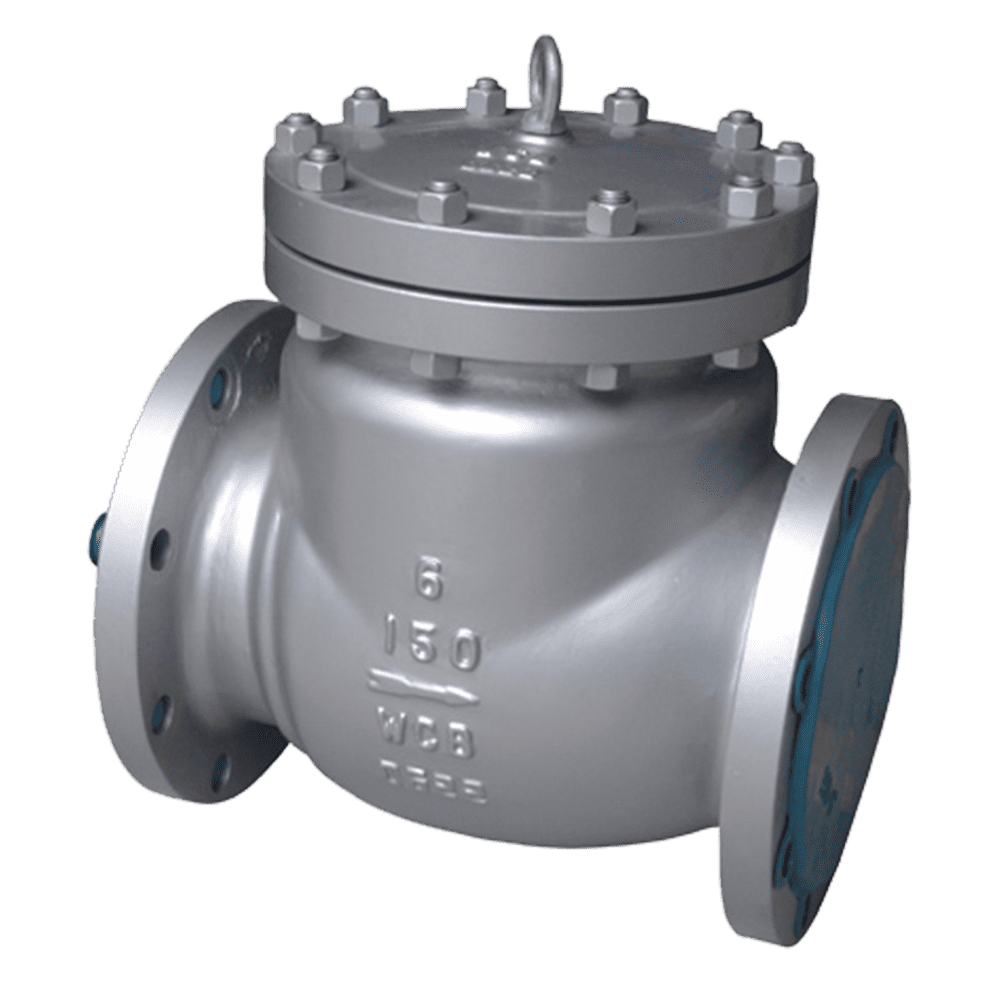
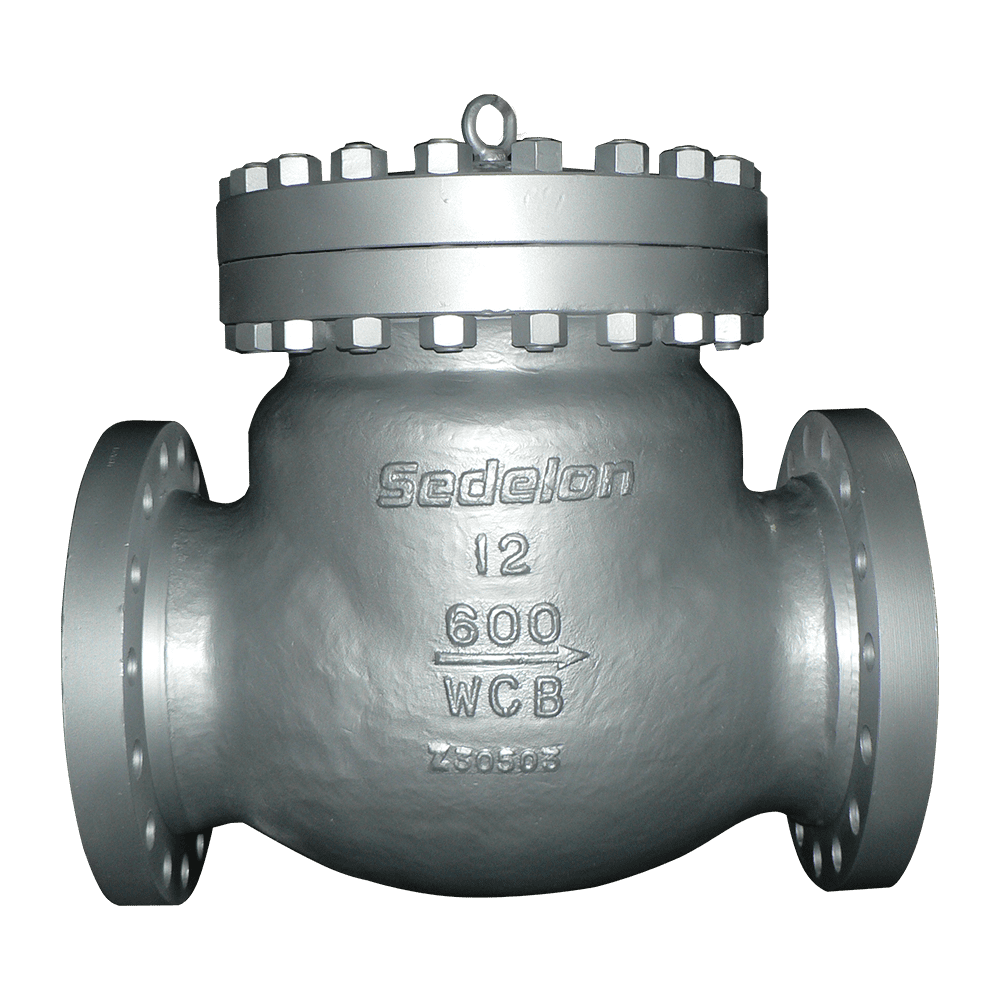
The choice also interacts with media and pressure class. On clean liquids and gases the spring design needs little attention; on slurry-laden service the spring cavity becomes a maintenance point, and a robust swing check valve with a replaceable seat ring often wins on lifecycle cost instead.
Where Spring-Loaded and Silent Check Valves Deliver the Most Value
Field experience keeps pointing to the same duty profiles where a spring-loaded design pays for its premium within the first year:
- Pump discharge on multi-pump installations. When one pump of a parallel set stops, a slow-closing check lets the standing column surge back into the idle machine, spinning it backwards. A silent check isolates the stopped pump almost instantly.
- High-rise and HVAC water systems. Basement plant rooms sit directly under occupied floors; a non-slam check removes the noise complaint and the water hammer risk in one specification line.
- Frequent-start process loops. Batch duties, dosing circuits and compressor recycle lines cycle the check valve dozens of times per shift — exactly the duty where spring closure avoids seat slamming damage.
- Compact skids and brownfield tie-ins. Short-face wafer spring checks fit where a long-pattern swing body physically cannot, a recurring constraint in retrofit projects.
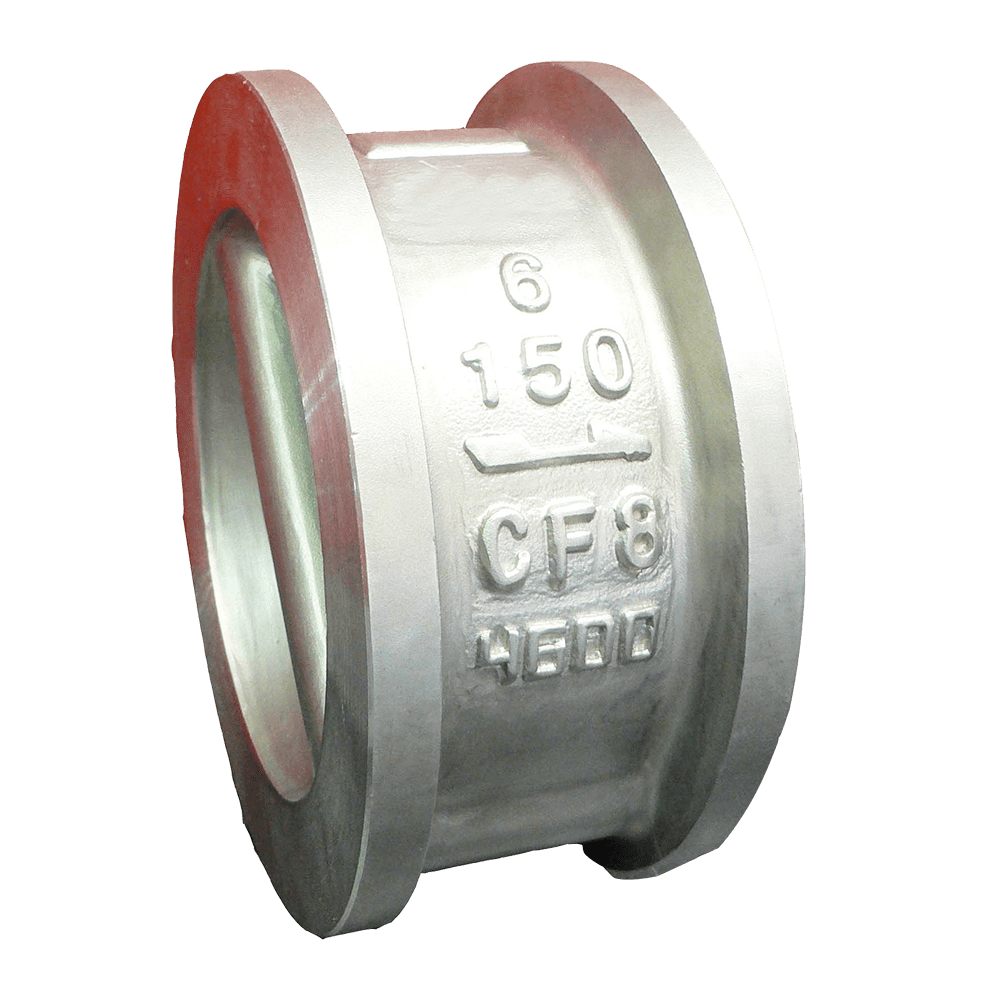
Where the priority shifts to large bore, low velocity and infrequent operation — long water transmission mains, for example — the calculus changes, and heavier constructions such as a wafer type dual plate check valve or a counterweighted swing valve become the more economical answer. Matching the closure characteristic to the pipeline profile matters more than any datasheet number in isolation.
Installation and Orientation Best Practices
Most field failures attributed to “a bad check valve” trace back to installation details. Three rules cover the majority of cases:
1. Respect the orientation rating. Many spring designs are rated for horizontal line mounting with vertical flow upward only, while some axial-flow bodies tolerate any orientation. Mounting a horizontal-only valve in a vertical downflow line causes the disc to sit partially open and hunt — audible chatter, premature seat wear, and eventually a valve that no longer seals. Confirm the orientation envelope before purchase, not after the noise complaint.
2. Give the valve developed flow length. Turbulence from an elbow or tee directly upstream skews the velocity profile, unseats the disc unevenly and induces flutter. A practical rule is 3 to 5 pipe diameters of straight pipe upstream, and similar on the downstream side where space allows.
3. Verify flow direction and full opening. Spring checks need the arrow on the body aligned with flow, and they need enough continuous flow to hold the disc fully open. A chronically half-open disc is the classic signature of an oversized valve — the root cause of most chatter reports.
Sizing and Cracking Pressure: Avoiding Chatter
Chatter — rapid rattling of the disc — happens when the valve runs below its minimum stable flow. Sizing a spring check is therefore less about line size and more about minimum flow through the valve. The working sequence used on recent projects:
- Establish the lowest continuous flow the line will ever see (not the design flow — the minimum).
- Pick a valve whose full-open requirement sits below that minimum, accepting a smaller body than the line if necessary.
- Confirm the cracking pressure is compatible with the pump shutoff head and any gravity static column.
- Check the permanent pressure loss at normal flow against the pump curve margin.
| Service profile | Recommended design | Key check before ordering |
|---|---|---|
| Clean water, frequent pump starts, noise limits | Axial-flow spring (silent) check | Minimum flow vs full-open flow; orientation rating |
| General process, space-limited, moderate velocity | Wafer dual plate | Plate spring torque vs reverse pressure |
| Slurry, wastewater, low velocity mains | Full-bore swing check | Seat material; access for disc maintenance |
| High class / high pressure hydrocarbon | Pressure-seal or forged spring check | NACE and fire-safe documentation; API test reports |
Need a silent check valve quoted against your real duty? Send Sedelon your line size, class, media and minimum flow — engineers will confirm the right spring, seat and orientation for your service.
Common Selection Mistakes to Avoid
- Sizing by line size alone. The valve must suit the minimum flow, not the pipe. A full-line-size spring check on a lightly loaded line is the most common cause of chatter.
- Ignoring cracking pressure in low-head systems. A 1-bar spring behind a low-head circulating pump can measurably throttle the circuit.
- Assuming every check is non-slam. “Check valve” is a family name, not a performance guarantee — closure behaviour must come from the design type and, ideally, from dynamic test data.
- Overlooking standards documentation. For hydrocarbon and pipeline duty, specify compliance evidence explicitly — API 594 for wafer checks, API 6D where pipeline service applies, ASME B16.34 for pressure-temperature ratings — and ask for the actual test reports, not just a brochure claim.
Frequently Asked Questions
1. What is a spring-loaded check valve and how does it work?
It is a one-way valve in which a compression spring holds the disc against the seat. Forward flow above the cracking pressure lifts the disc; when flow decays, the spring returns the disc to the seat before reverse flow develops, giving fast, non-slam closure.
2. Why are they called “silent” check valves?
Because the disc closes before the liquid column reverses and accelerates, there is no slamming contact at the end of the stroke. The water-hammer pressure spike — and the noise that goes with it — is largely eliminated, hence the industry nickname.
3. Spring check valve vs swing check valve — which should I choose?
Choose the spring design for pump discharge, frequent cycling, vertical risers and noise-sensitive areas. Choose a swing check for low-velocity, infrequently cycled lines and solids-laden media where a full-bore path and simple disc access matter more than closure speed.
4. What cracking pressure do I need?
It depends on system hydraulics. Typical springs give 0.2 to 3 bar. The valve must open fully at normal flow, yet its cracking pressure must not steal head from low-pressure circuits — share your pump curve and static head with the manufacturer and let them pick the spring.
5. Can a silent check valve be installed vertically?
Many axial-flow designs are approved for vertical upflow and some for any orientation, but horizontal-line-only models exist. Installing a horizontal-only valve in vertical downflow causes disc hunting and chatter. Always confirm the orientation rating on the datasheet.
6. How do I stop a check valve from chattering?
Chatter means the disc cannot find a stable position — usually because flow is below the full-open requirement, or turbulence from a nearby fitting is disturbing the disc. Correct by resizing to the minimum flow, adding upstream straight length, or selecting a spring better matched to the duty.
7. What standards apply to spring-loaded and wafer check valves?
Common references include API 594 for wafer and lug check valves, ASME B16.34 for pressure ratings, API 6D for pipeline service, and ISO 5208 for factory acceptance testing. Fire-safe and low-emission qualifications are frequently added for hydrocarbon duties.
Related Resources
- Swing Check Valve vs Lift Check Valve: Backflow Prevention Selection Guide — where the two classic designs fit, and where they do not.
- What Are Wafer Type Dual Plate Check Valves and Their Benefits — the compact middle ground between swing and spring designs.
- A Beginner’s Guide to Check Valves — the fundamentals of backflow protection across all families.
- Backflow Preventer vs Check Valve: Key Differences — when regulation demands more than a check valve alone.
- Low-Emission Valve Seal Systems — sealing and packing considerations for hydrocarbon service checks.
The Bottom Line for Specifiers
A spring-loaded check valve is not a premium accessory — it is a targeted engineering answer to closure dynamics. Wherever a decelerating liquid column can do damage, the spring closes the door before the surge forms, protecting pumps, pipework and the people working near them. Wherever velocity is gentle and media is unforgiving, simpler swing and dual plate constructions remain the honest choice.
If you are weighing a silent check against a swing or dual plate for a live project, the fastest path is a two-line conversation about minimum flow, orientation and pressure class. Sedelon manufactures the full check valve family — spring-loaded inline, wafer dual plate, swing and forged steel — in cast and forged materials up to high pressure classes, with the test documentation B2B buyers need for their own qualification files. Send the duty, get a valve that matches it.
Talk to a check valve engineer. Share your minimum flow, orientation and pressure class — Sedelon will confirm spring selection, cracking pressure and standards documentation before you commit.