



 Skip to content

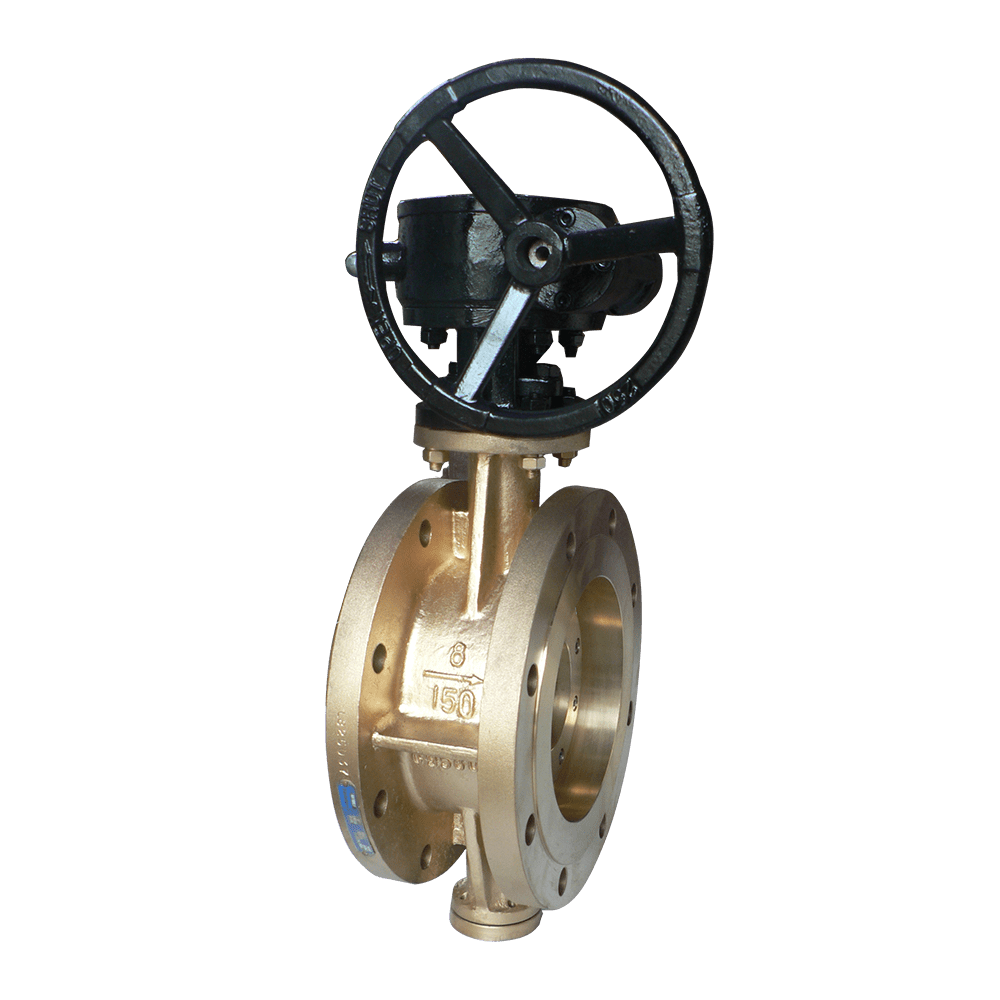
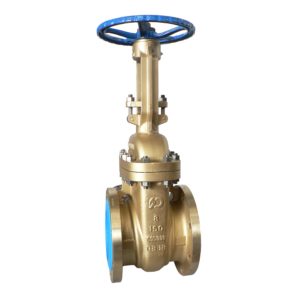
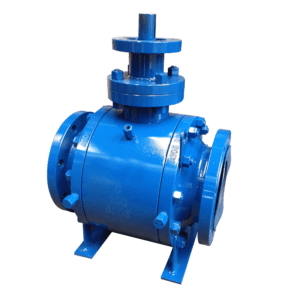
In the NPS 2″–24″ size range, butterfly valves outperform gate valves and ball valves in the areas that really matter: they weigh about one-third as much, have a much shorter face-to-face dimension, and cost about half as much for the same size. This is why butterfly valves are widely used in large-diameter seawater pipelines—and why bronze is the standard material—as copper ions inhibit the attachment of barnacles and mussels, preventing the valves from becoming overgrown with marine life; Bronze is similar to carbon steel in the galvanic series, allowing both to share the same cathodic protection system.
However, bronze butterfly valves have two strict limitations. First, the sealing surface is the outer edge of the disc—the point within the valve where flow velocity is highest. Consequently, sand-laden flow and high velocities will first erode the seat edges, rather than damaging the ball valve—the valve body grade should be determined by the sand content, not the pressure rating. Second, the elastic seat determines the actual temperature limit: EPDM at approximately 120 °C, NBR at approximately 80 °C, and PTFE at approximately 180 °C—all of which are far below the temperature resistance of the bronze material itself. Due to the use of a concentric disc (API 609 Type A configuration), pressure ratings are limited to Class 150 and 300; higher ratings require a switch to an eccentric metal hard-seal configuration.
The valve body and disc are cast from C95800, C95500, or C95600; the valve stem is made of C63200 deformable nickel-aluminum bronze or Monel. 316 stainless steel is not used—the latter forms a galvanic couple with the bronze valve body in seawater, accelerating corrosion at the gaps in the valve stem bore. End connections are available in wafer, lug, and double-flanged types, with face-to-face dimensions per ANSI B16.10 and bolt hole patterns per ANSI B16.5.
Seawater intake, outfall and pretreatment lines on desalination plants, where large low-pressure lines are built from butterfly valves in C95800.
Ship ballast, bilge, firemain and sea-chest systems, where bronze resists both seawater corrosion and marine growth.
Offshore platform and FPSO seawater lift, cooling and firewater headers, in C95800 for moving water and C95500 where sand is present.
Coastal power station circulating water and condenser cooling lines, the single largest use, up to NPS 24 at Class 150.
Seawater flue gas desulphurisation, where the medium is aerated, mildly acidic seawater and pitting risk is higher.
Chemical and petrochemical streams carrying salt or chloride, where a copper alloy undercuts nickel alloys at moderate severity.
Large-bore desalination concentrate outfall and water transmission lines, where chloride levels run several times the feed.
Material selection:Bronze butterfly valves are selected for seawater, desalination and offshore applications where corrosion resistance and long service life are required. C95800 and other aluminium bronze grades are preferred for marine environments with high salinity, erosion and corrosion risks.
Design and sealing selection:Concentric butterfly designs suit general isolation and flow regulation, while sealing materials should be selected according to medium temperature, pressure and leakage requirements. Soft-seated designs are suitable for common water service, while special seat materials are considered for more demanding applications.
Connection and service requirements:Wafer, flanged and other end connections should be selected according to piping standards and installation conditions. For chemical, offshore and critical service, specify suitable inspection requirements and material certification according to project specifications.
At CV. Bayu Gemilang’s municipal water distribution network upgrade project for Surabaya PDAM in East Java, Indonesia, conventional cast iron wafer butterfly valves with uncoated discs suffered corrosion and seizure in tropical underground environments, resulting in frequent pipeline failures and water supply interruptions. Flowork supplied 820 units of NPS 2–8, Class 150 bronze wafer butterfly valves featuring ASTM B62 C83600 bronze bodies and discs, 316 stainless steel through shafts, and fully vulcanized EPDM seats. Designed according to API 609 Category B and tested under API 598 requirements, the valves have operated since 2022 without corrosion-related failures. The solution reduced pipeline leakage incidents by 51%, lowered network leakage rates from 29% to 22%, and improved overall water supply reliability.
Question 1: Why are bronze butterfly valves limited to Class 150/300?
Answer: Because they feature a concentric, elastic seat design (API 609 Type A). The pressure of the medium acts across the entire area of the disc and must be supported by the elastic seat; exceeding Class 300 is neither economical nor reliable. For higher pressure ratings, an eccentric (Type B) metal hard-seal butterfly valve should be used instead.
Q 2: How do I choose between wafer-type, lug-type, and double-flanged types?
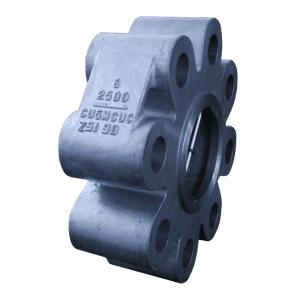
A: Select based on the pipeline, not the valve itself. Wafer-type valves are clamped by flanges on both sides of the pipeline; they cannot be used to seal the end of a pipeline, nor can they be removed from just one side. Lug-type valves can be used in both scenarios. Double-flanged valves are installed independently but are the heaviest. The face-to-face dimensions vary significantly among the three types—for NPS 2″, the dimensions are 43 mm versus 108 mm—so the end connection type must be confirmed before placing an order.
Question 3: How should the seat material be selected, and what is the maximum temperature limit?
Answer: Use EPDM for seawater (up to approximately 120 °C); NBR for oils and gases (up to approximately 80 °C); and PTFE for chlorine-containing or chemical media (up to approximately 180 °C). These upper limits are all well below the temperature that bronze itself can withstand, meaning that the seat—not the valve body—determines the operating temperature. For temperatures exceeding 120 °C, switch to an eccentric metal-to-metal hard-seal butterfly valve.
Question 4: Can marine organisms become lodged in a bronze butterfly valve?
Answer: They will not grow inside the valve. Copper ions released from the alloy inhibit the attachment of barnacles and mussels, which is the primary reason bronze is specified for seawater applications. However, marine organisms may still grow inside the pipelines on both sides of the valve; for valves that remain stationary in one position for extended periods, the disc should be actuated periodically to prevent the seat from being permanently deformed under pressure.
Class150 BronzeButterfly Valve
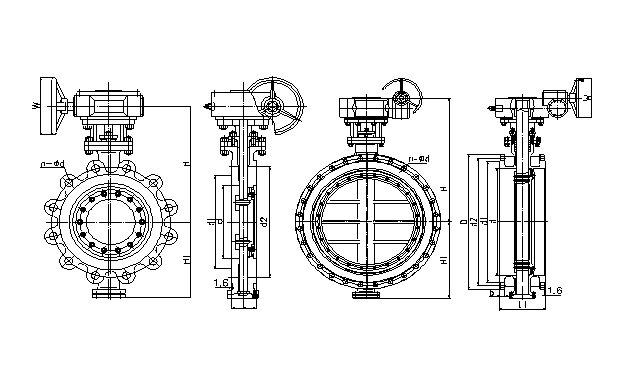
| NPS | in | 2 | 3 | 4 | 6 | 8 | 10 | 12 | 14 | 16 | 18 | 20 | 24 |
| d | mm | 51 | 76 | 102 | 152 | 203 | 254 | 305 | 337 | 387 | 438 | 489 | 591 |
| L(RF) | mm | 43 | 48 | 54 | 57 | 64 | 71 | 81 | 92 | 102 | 114 | 127 | 154 |
| \L1(RF) | mm | 108 | 114 | 127 | 140 | 152 | 165 | 178 | 190 | 216 | 222 | 229 | 267 |
| d1 | mm | 92 | 127 | 157 | 216 | 270 | 324 | 381 | 413 | 470 | 533 | 584 | 692 |
| d2 | mm | 120.5 | 152.5 | 190.5 | 241.5 | 298.5 | 362 | 432 | 476 | 540 | 578 | 635 | 749.5 |
| D | mm | 152 | 190 | 229 | 279 | 343 | 406 | 483 | 533 | 597 | 635 | 699 | 813 |
| b | mm | 16 | 19 | 24 | 26 | 29 | 31 | 32 | 35 | 37 | 40 | 43 | 48 |
| n-Фd | mm | 4-19 | 4-19 | 8-19 | 8-22 | 8-22 | 12-25 | 12-25 | 12-29 | 16-29 | 16-32 | 20-32 | 20-35 |
| H | mm | 225 | 255 | 285 | 332 | 386 | 427 | 498 | 510 | 540 | 585 | 642 | 693 |
| H1 | mm | 112 | 126 | 146 | 170 | 218 | 245 | 290 | 316 | 352 | 386 | 415 | 482 |
| W | mm | 300 | 300 | 300 | 300 | 300 | 300 | 500 | 500 | 600 | 600 | 600 | 600 |
Class300 Bronze Butterfly Valve
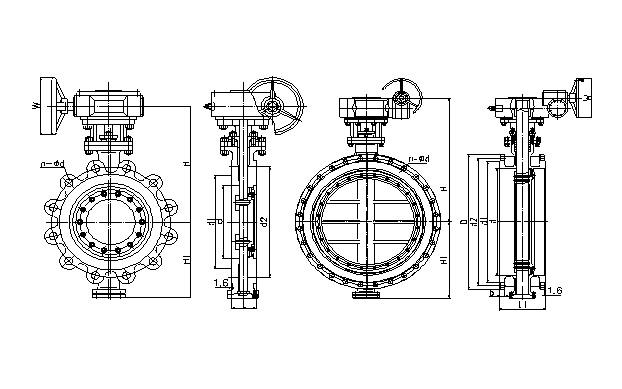
| NPS | in | 3 | 4 | 6 | 8 | 10 | 12 | 14 | 16 | 18 | 20 | 24 |
| d | mm | 76 | 102 | 152 | 203 | 254 | 305 | 337 | 387 | 432 | 483 | 584 |
| L(RF) | mm | 48 | 54 | 59 | 73 | 83 | 92 | 117 | 133 | 149 | 159 | 181 |
| \L1(RF) | mm | 114 | 127 | 140 | 152 | 165 | 178 | 190 | 216 | 222 | 229 | 267 |
| d1 | mm | 127 | 157 | 216 | 270 | 324 | 381 | 413 | 470 | 533 | 584 | 692 |
| d2 | mm | 168.5 | 200 | 270 | 330 | 387.5 | 451 | 514.5 | 571.5 | 628.5 | 686 | 813 |
| D | mm | 210 | 254 | 318 | 381 | 445 | 521 | 584 | 648 | 711 | 775 | 914 |
| b | mm | 29 | 32 | 37 | 42 | 48 | 51 | 54 | 58 | 61 | 64 | 70 |
| n-Фd | mm | 8-22 | 8-22 | 12-22 | 12-25 | 16-29 | 16-32 | 20-32 | 20-35 | 24-35 | 24-35 | 24-41 |
| H | mm | 265 | 290 | 355 | 418 | 456 | 498 | 547 | 582 | 651 | 704 | 780 |
| H1 | mm | 130 | 150 | 185 | 236 | 273 | 313 | 338 | 392 | 420 | 465 | 532 |
| W | mm | 300 | 300 | 300 | 500 | 500 | 600 | 600 | 600 | 600 | 600 | 600 |

 Optimized by Seraphinite Accelerator