



 Skip to content

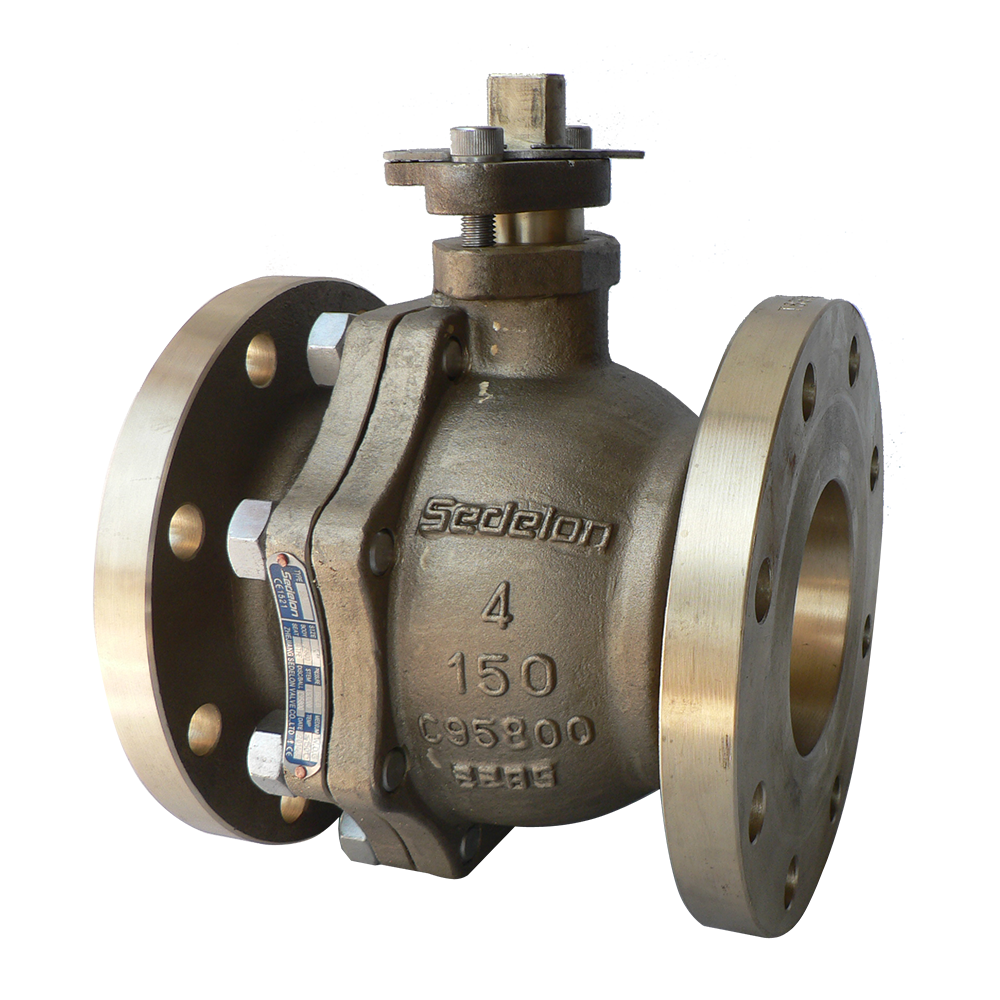
“Floating” describes a mechanical fact: the ball has no upper or lower support shafts; the valve stem drives the ball to rotate through a single slot at the top, transmitting torque without providing support; the ball is suspended between the two valve seats, with a slight amount of axial play.
This freedom of movement is what achieves the seal. The pressure differential in the pipeline pushes the entire ball toward the outlet-side seat; the higher the pressure differential, the tighter the seal, enabling bubble-tight zero leakage even at low pressures—this is the most direct advantage of the floating ball design.
The trade-off stems from the same mechanism. The thrust acting on the seat is equal to the pressure differential multiplied by the ball’s effective pressure-bearing area: In the dimension table on this page, the NPS 10 valve has a nominal diameter of 254 mm and a projected area of approximately 50,700 mm². Calculated based on the Class 150 rated pressure of 1.96 MPa, the thrust is approximately 99 kN, which is close to 10 metric tons; even an NPS 2 Class 300 valve exerts a thrust of about 1 metric ton. The operating torque increases in tandem with the thrust, and soft seats may even develop permanent indentations or cold-flow deformation.
This is precisely why the size chart on this page stops at NPS 10 (Class 150) and NPS 8 (Class 300)—it represents the inherent limit of the floating ball design, not a catalog-based compromise; for larger sizes or higher pressure ratings, a fixed-ball valve must be used, with the thrust supported by upper and lower bearings.
Because the ball is free to move, floating-ball valves naturally possess the ability to relieve pressure in the intermediate chamber: after the valve closes, when the fluid in the pipe sections sealed at both ends expands due to heat and the pressure in the intermediate chamber rises, this pressure pushes the ball away from the upstream seat, automatically relieving the pressure back into the upstream pipeline without the need for an external relief valve.
Seawater intake and outfall lines at desalination plants, where bronze resists the chloride and fits the small-bore, low-class duty where a floating ball seals best.
Reverse osmosis pretreatment — dosing, backwash and cleaning-in-place lines at Class 150 / 300, isolating chemical and rinse circuits.
Brine and permeate transfer headers, where the ball must hold tight on a low differential without demanding a trunnion valve.
Shipboard seawater cooling and ballast branches, the traditional bronze duty, with a handle and locking device.
Offshore platform and FPSO seawater lift and firewater branch lines, where bronze tolerates the marine atmosphere and needs no coating.
Material selection:Bronze floating ball valves are preferred for seawater, desalination and marine applications where corrosion resistance and long service life are required. Nickel aluminium bronze grades such as C95800 are selected for more demanding saltwater environments with improved resistance to corrosion and erosion.
Service and sealing selection:Floating ball designs suit isolation applications with moderate pressure and size ranges. PTFE seats are commonly used for clean water, oil and general chemical service, while special seat materials should be selected for higher temperature or aggressive media.
Connection and application requirements:Flanged ends are commonly selected for marine and process piping where maintenance access is required. For offshore, chemical and critical applications, confirm material certification and inspection requirements according to project specifications.
For the Cidade de Maricá FPSO operating in Brazil’s Santos Basin pre-salt field, floating ball valves installed in seawater utility systems faced chloride stress corrosion risks in harsh offshore environments. Flowork supplied NPS 1/2–2, Class 150 bronze floating ball valves featuring ASTM B62 C83600 tin bronze bodies, hard-chrome plated 316 stainless steel balls, and dual NBR/FKM O-ring stem sealing systems. The valves were ABS CDS certified and tested according to API 598 requirements. Since offshore commissioning in 2022, the valves have operated for three years without stress corrosion cracking or unplanned downtime, supporting reliable FPSO utility system operation.
Q: How do I choose between a floating and a trunnion-mounted ball valve?
A: Match the structure to the size and class. A floating ball serves the range on this page, NPS 2–10 in Class 150 and NPS 2–8 in Class 300, and is simpler, cheaper and self-relieving. Beyond that range the seat would have to carry too much thrust, so specify a trunnion-mounted ball, where upper and lower bearings carry the load and torque stays manageable.
Q: Does a bronze floating ball valve need an external cavity relief valve?
A: No. A floating valve is inherently self-relieving: the ball is not anchored, so if cavity pressure rises above the upstream line pressure, it pushes the ball off the upstream seat and vents back into the line. That is why API 6D cavity relief testing is applied to trunnion-mounted valves, where a double-piston-effect seat traps the cavity instead of relieving it.
Q: Why do the tables on this page stop at NPS 10 and NPS 8?
A: Because that is where the floating ball reaches its limit, not where the catalogue happens to end. Seat load is differential pressure times the ball’s seating area, so it grows with the square of the bore and linearly with the class. At NPS 10 in Class 150 the ball already presses the seat with close to ten tonnes, and operating torque follows. Larger or higher-rated valves move to a trunnion-mounted design.
Q: Which seat material should I specify for seawater?
A: PTFE covers seawater from about −29 to 200 °C and gives bubble-tight shut-off, which covers most desalination and marine duty. Above 200 °C, or where the differential is high enough to risk cold flow, specify PEEK or a metal seat. Note that a soft seat carries the full seat load, so check the seat against differential pressure and not temperature alone.
Q: Can bronze be used at higher classes or larger sizes?
A: No. Bronze bodies are grade-limited: the material’s allowable stress is far below carbon or stainless steel, so the practical envelope stays at Class 150–300 and small bore, which is also where the floating ball works best. For higher pressure or larger sizes in seawater, move to a duplex or super duplex body.
Class150
Bronze Floating Ball Valve
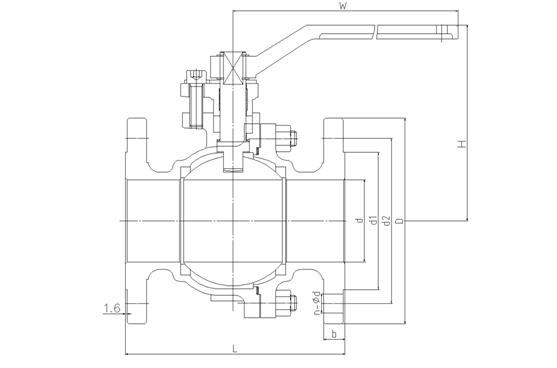
| NPS | in | 2 | 2 1/2 | 3 | 4 | 5 | 6 | 8 | 10 |
| d | mm | 51 | 64 | 76 | 102 | 127 | 152 | 203 | 254 |
| L(RF) | mm | 178 | 190 | 203 | 229 | 356 | 394 | 457 | 533 |
| d1 | mm | 92 | 105 | 127 | 157 | 186 | 216 | 270 | 324 |
| d2 | mm | 120.5 | 139.5 | 152.5 | 190.5 | 216 | 241.5 | 298.5 | 362 |
| D | mm | 152 | 178 | 190 | 229 | 254 | 279 | 343 | 406 |
| b | mm | 16 | 18 | 19 | 24 | 24 | 26 | 29 | 31 |
| n-Фd | mm | 4-19 | 4-19 | 4-19 | 8-19 | 8-22 | 8-22 | 8-22 | 12-25 |
| H | mm | 110 | 130 | 150 | 180 | 220 | 270 | 340 | 350 |
| W | mm | 200 | 290 | 290 | 360 | 600 | 800 | 1000 | 1200 |
Class300
Bronze Floating Ball Valve
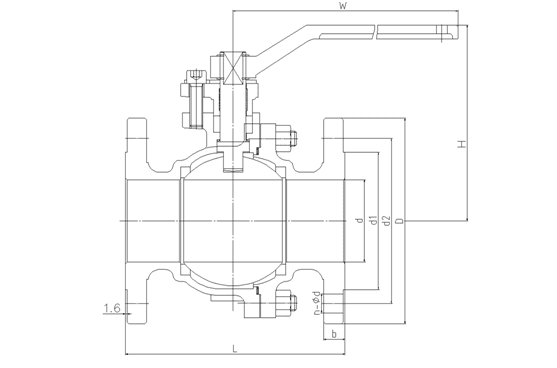
| NPS | in | 2 | 2 1/2 | 3 | 4 | 5 | 6 | 8 |
| d | mm | 51 | 64 | 76 | 102 | 127 | 152 | 203 |
| L(RF) | mm | 216 | 241 | 283 | 305 | 381 | 403 | 502 |
| d1 | mm | 92 | 105 | 127 | 157 | 186 | 216 | 270 |
| d2 | mm | 127 | 149 | 168.5 | 200 | 235 | 270 | 330 |
| D | mm | 165 | 190 | 210 | 254 | 279 | 318 | 381 |
| b | mm | 23 | 26 | 29 | 32 | 35 | 37 | 42 |
| n-Фd | mm | 8-19 | 8-22 | 8-22 | 8-22 | 8-22 | 12-22 | 12-25 |
| H | mm | 140 | 160 | 180 | 208 | 220 | 290 | 300 |
| W | mm | 200 | 290 | 290 | 360 | 600 | 800 | 1000 |

 Optimized by Seraphinite Accelerator