

Selecting a cryogenic ball valve for LNG, air separation and low-temperature process lines is less about the ball itself and more about how the valve handles thermal contraction, stem leakage and trapped liquid at temperatures down to -196°C. At Sedelon, a valve manufacturer since 1998 with API 6D, API 607, ISO 9001 and ISO 15848-1 certifications, we supply extended-bonnet cryogenic ball valves built and tested to BS 6364 and ISO 28921. In this guide we explain the design features that matter, the material choices that prevent brittle fracture, and how to specify the right cryogenic valve for your low-temperature service.
What Makes a Valve “Cryogenic”?
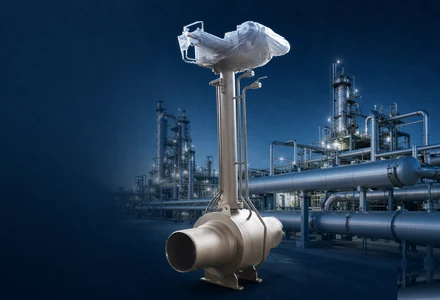
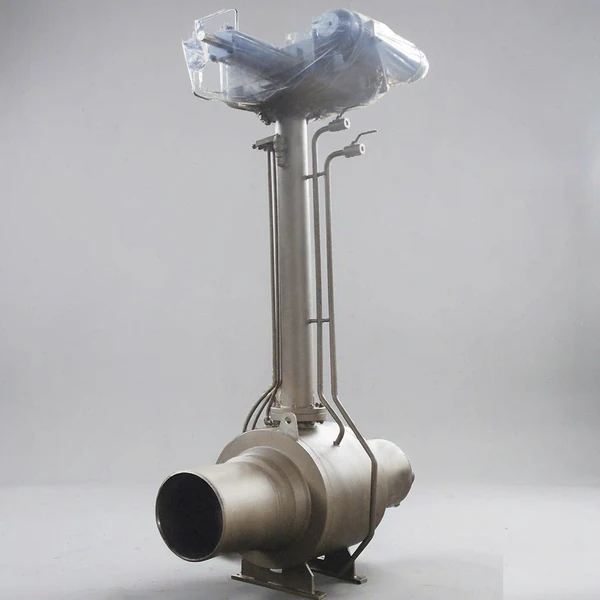
A cryogenic valve is engineered to operate safely at temperatures below -40°C, typically down to -101°C (forethane and CO2), -162°C (LNG) or -196°C (liquid nitrogen and oxygen). At these temperatures ordinary carbon steel becomes brittle and standard packing hardens and leaks. Cryogenic valves solve this with three design features: an extended bonnet that keeps the stem seal above the cold zone, a long stem that separates the gland from the cryogenic media, and low-temperature materials that retain toughness. Sedelon’s cryogenic ball valves use a bolted extended bonnet and are purged and pressure-tested at temperature before shipment.
Key Cryogenic Design Features
1. Extended Bonnet & Cold Stem
The extended bonnet raises the gland packing and stem seal into the ambient-temperature zone. This prevents the packing from freezing and keeps the stem bearing free to move. The stem length is calculated so that the seal sits well above the insulating enclosure. Without an extended bonnet, a standard valve would ice up at the gland and leak within a few cycles.
2. Anti-Blowout Stem
Thermal contraction changes clearances, so a fire-safe anti-blowout stem is essential. The stem shoulder is retained below the bonnet, so even if the gland fails the stem cannot be ejected. This is a requirement for LNG and oxygen service where a stem blow-out is both a safety and a fire risk.
3. Pressure-Relief in the Body Cavity
Liquid trapped in the body cavity expands violently as it warms. Cryogenic ball valves therefore need a cavity relief feature: a downstream seat with a relief path, or a set plug, so trapped liquid can vent to the line instead of over-pressuring the body. This is mandatory for LNG service.
4. Clean, Degreased & Oxygen-Safe Assembly
For liquid oxygen and air-separation units, every wetted part is degreased, cleaned to ASTM G93 / G4.1, and assembled in a controlled environment. Even trace hydrocarbons can ignite in high-pressure oxygen. Sedelon cleans cryogenic valves to oxygen-service standards when specified.
Material Selection for Low-Temperature Service
Material choice decides whether the valve survives thermal shock without brittle fracture. The governing rules come from impact-test requirements in API 6D, ASME B31.3 and the Charpy V-notch transition curve.
| Material | Typical Service Temp | Notes |
|---|---|---|
| LCB / LCC (Low-temp carbon steel) | -46°C to -60°C | Economical; impact-tested for moderate cryogenic duty |
| CF8 / CF8M (304 / 316 SS) | -196°C | Austenitic stainless; retains toughness at LNG temp |
| CF3 / CF3M (Low-carbon 304L / 316L) | -196°C | Lower carbon; preferred for welded cryogenic assemblies |
| LF2 / A350 (Forged low-temp carbon steel) | -46°C | Forged body; better impact resistance than cast LCB |
| Nickel alloy / 9% Ni steel | -196°C and below | Special LNG tank and membrane applications |
Cryogenic Ball Valve vs Standard Ball Valve
| Feature | Cryogenic Ball Valve | Standard Ball Valve |
|---|---|---|
| Bonnet | Extended, insulated | Standard short bonnet |
| Stem seal location | Above cold zone | At body |
| Materials | LCB, CF8M, 316L, 9% Ni | WCB, A105, standard SS |
| Body cavity relief | Required | Optional |
| Testing | BS 6364 / ISO 28921 at temp | Ambient API 598 |
Typical Cryogenic Applications
Cryogenic ball valves are specified on LNG liquefaction trains, LNG import and export terminals, marine carrier loading arms, air-separation units (oxygen, nitrogen, argon), ethylene and ethane handling, and semiconductor-grade gas lines. They are the standard isolation point on any line that sees liquid below -40°C. For high-pressure pipeline duties that do not reach cryogenic temperatures, a standard API 6D ball valve is normally used instead.
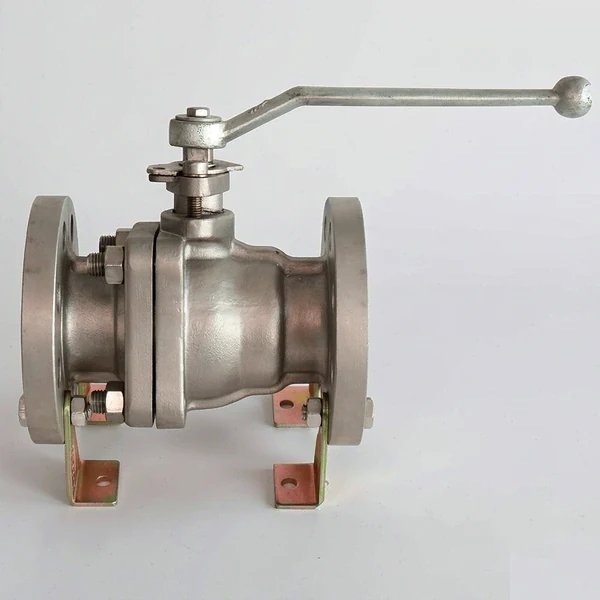
Sedelon Cryogenic Valve Solutions
Sedelon has manufactured industrial valves since 1998, with a low-temperature product line covering cryogenic ball valves, low-temperature gate and check valves, and low-emission ball valves. Our cryogenic valves are built to BS 6364 and ISO 28921, impact-tested to the relevant Code, and type-tested at temperature in our Lishui quality lab. With a dedicated stock factory launched in 2023, we support fast-track LNG and energy-transition projects across the Middle East, Southeast Asia, Africa, the Americas, Russia and Australia.
Need a Cryogenic Valve for Your LNG or Low-Temp Line?
Send us your medium, design temperature, pressure class and end-connection requirements. Our engineering team will recommend the right extended-bonnet cryogenic ball valve with the correct low-temperature material and cavity relief.
Frequently Asked Questions
What temperature is considered cryogenic for a ball valve?
Cryogenic service is generally defined as below -40°C. Common reference points are -46°C (LCB/LCC limit), -101°C (ethane and CO2), -162°C (LNG) and -196°C (liquid nitrogen and oxygen). Valves rated for these temperatures use extended bonnets and low-temperature materials.
Why does a cryogenic ball valve need an extended bonnet?
The extended bonnet keeps the stem gland and packing in the ambient-temperature zone, away from the cryogenic media. This stops the packing from freezing and keeps the stem free to operate. Without it, the valve would ice up and leak at the stem within a few cycles.
What material is used for LNG ball valves?
Austenitic stainless steels such as CF8M (316) and CF3M (316L) are the standard for LNG at -162°C because they retain toughness without becoming brittle. Forged low-temperature carbon steel (LF2 / A350) is used where the temperature stays above -46°C.
What standard covers cryogenic valve testing?
Cryogenic valves are type-tested to BS 6364 and ISO 28921, which require testing at the specified low temperature with measurement of stem and seat leakage. Production valves are also tested at temperature when the project specification demands it.
Do cryogenic ball valves need body cavity pressure relief?
Yes. Liquid trapped in the body cavity expands as it warms and can over-pressure the body. Cryogenic ball valves therefore include a cavity relief path so trapped fluid can vent to the line safely. This is mandatory for LNG service.
Can a standard ball valve be used for LNG service?
No. A standard valve has no extended bonnet, no low-temperature material and no cavity relief. At LNG temperatures its body could fracture and its stem would leak. Only a purpose-built cryogenic ball valve should be used below -40°C.
Related Resources
- Sedelon Cryogenic Ball Valve Product Page
- Trunnion Mounted vs Floating Ball Valve: Selection Guide
- Ball Valve Soft Seal Materials Selection
- Butt Weld vs Socket Weld vs Flanged Valves
- Gear Operated Ball Valve: Large-Bore & High-Pressure Control
Conclusion
A cryogenic ball valve is defined less by its ball and more by its extended bonnet, low-temperature materials and cavity relief. For LNG, air-separation and other sub -40°C lines, choose austenitic stainless or forged low-temperature bodies, demand BS 6364 / ISO 28921 testing, and confirm the anti-blowout stem and cavity relief are specified. Sedelon supplies extended-bonnet cryogenic ball valves with the materials, cleaning and certifications needed for LNG and energy-transition projects worldwide. Contact our engineering team with your temperature, pressure and medium data and we will match the right cryogenic valve to your specification.