



You specify the same resilient-seated butterfly valve you used on the cooling-water line for a 260 °C hot-oil header in a real operating plant. Six months later the seat has hardened, cracked and started to weep. The problem was never the brand — it was the geometry. A concentric, rubber-lined butterfly valve and an offset, metal-seated one share a disc-and-shaft silhouette but live in completely different service envelopes. Choose by offset geometry, not by habit, and the failure above disappears before commissioning.
Three Butterfly Geometries, Three Different Jobs
Butterfly valves are grouped by how far the shaft is offset from the disc and the bore. That single design choice decides the seat type, the temperature ceiling and the leak class.
| Geometry | Shaft offsets | Typical seat | Service ceiling |
|---|---|---|---|
| Concentric (zero-offset) | None | Rubber / resilient | ~ PN 16, elastomer temp |
| Double-offset | Two (axial + radial) | Resilient or metal | Higher P/T, fire-capable |
| Triple-offset (TOV) | Three (adds cone angle) | Metal-to-metal | Cryogenic to ~600 °C+ |
Concentric (Zero-Offset) Rubber-Lined Butterfly Valves
How the seat actually works
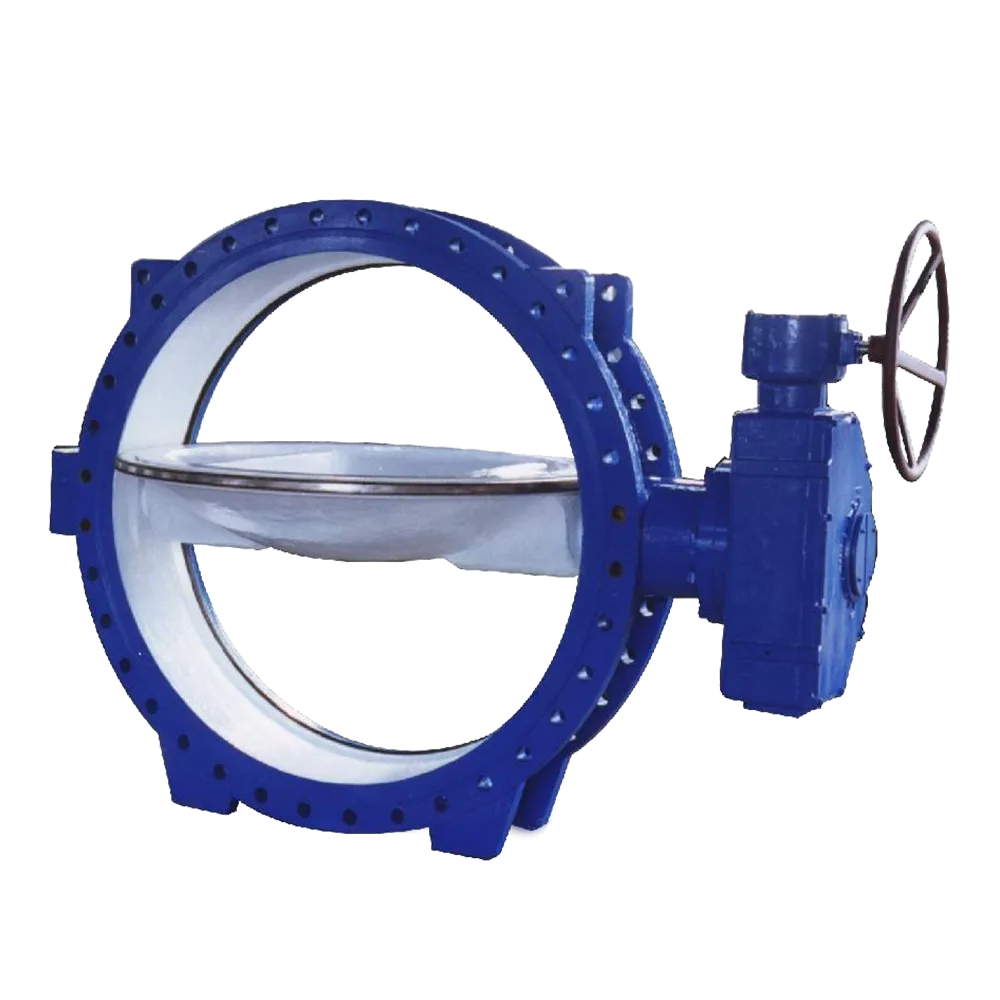
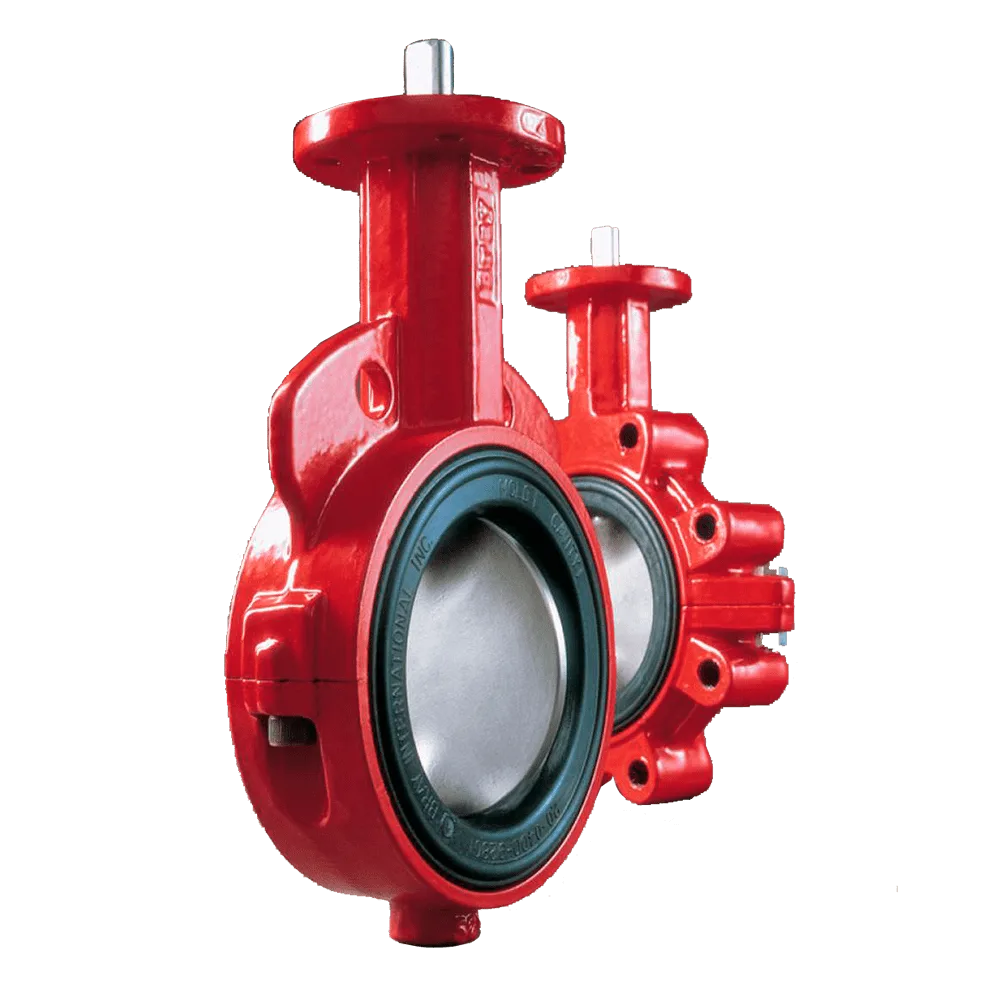
In a concentric design the shaft axis sits exactly on the centre of the disc and the centre of the bore — hence “zero-offset.” The disc edge travels through a full 360° resilient seat (typically EPDM, NBR or FKM moulded into the body, or a replaceable cartridge). Because the disc must push through that seat on every stroke, disc and rubber rub on the entire travel. The rubber is what gives bubble-tight shutoff, and it is also what limits the valve.
Where they win
This is the workhorse for water, HVAC chilled-water and seawater, slurry and air, and a wide range of mild chemicals. They run at modest pressures (commonly PN 6/10/16 and Class 150), offer very low operating torque, and are bidirectional. In those duties a rubber-lined concentric valve is the cheapest, lightest, most serviceable choice you can specify.
Where they stop
The ceiling is set by the elastomer. Above roughly 120 °C for EPDM (and around 180–200 °C for the best FKM grades) the seat hardens and loses memory; aggressive solvents and oils swell or attack it; and the pressure rating is modest. Push a concentric valve past those limits and you get the hot-oil failure at the top of this article.
Offset Designs — Double and Triple Eccentric
Double-offset (double eccentric)
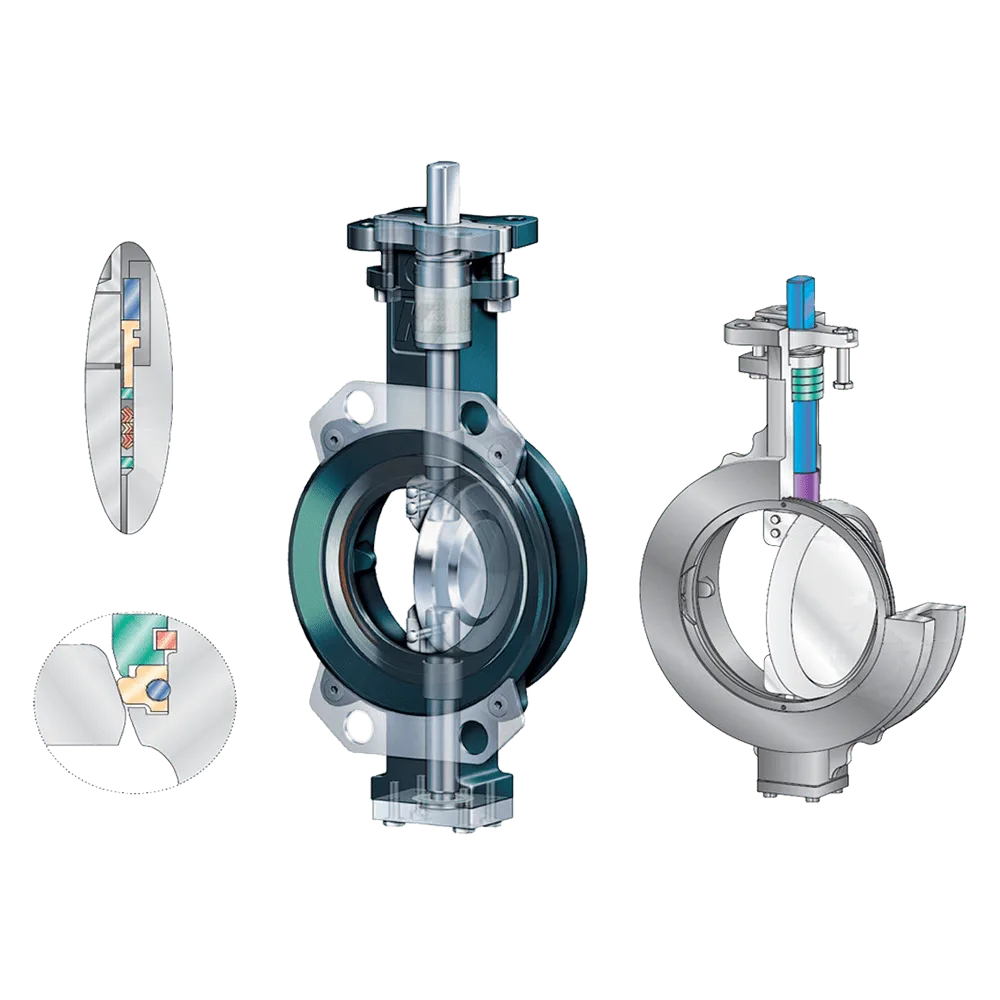
A double-offset valve moves the shaft off both the disc centreline and the bore centreline. The disc now cams off the seat early in the stroke, so it only touches the seat during the last few degrees of closure. Far less rubbing means the seat can be a higher-grade resilient material or a metal ring, lifting the pressure and temperature ceiling and making fire-safe versions practical. These “high-performance” butterfly valves are common on steam, gases and process lines that need more than a rubber seat can give.
Triple-offset (triple eccentric, TOV)
The third offset tilts the shaft so the seating surfaces form a cone. The disc meets the seat by a wedging, line-contact action with no rubbing at all until the final point of closure — and none on opening. That allows a pure metal-to-metal seat that is inherently fire-safe, handles cryogenic service up to roughly 600 °C and beyond, reaches high pressure classes, and still delivers bidirectional bubble-tight shutoff. They earn their place in oil & gas, power, petrochemical, LNG and high-temperature steam isolation.
Soft-Seat vs Metal-Seat: The Sealing Trade-off
| Factor | Rubber-lined (concentric) | Metal-seat (offset) |
|---|---|---|
| Shutoff | Bubble-tight, low torque | Bubble-tight, higher torque |
| Temperature | Limited by elastomer | Cryogenic to high-temp |
| Pressure | Moderate (PN 10/16) | High classes |
| Fire safety | Not fire-safe | Inherently fire-safe |
| Best for | Water, HVAC, slurry, air | Steam, hot oil, gas, severe |
A Five-Question Selection Shortcut
Rather than default to the valve you used last time, run the line through five questions:
- What is the maximum temperature? Above the elastomer limit, move to offset / metal seat.
- What is the pressure class? Beyond PN 16 / Class 150, lean toward double- or triple-offset.
- What shutoff class is required? Both can be bubble-tight; metal seats hold it at temperature.
- Is the media aggressive or abrasive? Rubber swells or wears; metal seats survive slurry and solvents.
- Is fire safety a requirement? Only offset metal-seated designs are inherently fire-safe.
Butterfly valve not holding up?
Send us the line temperature, pressure and media and we will recommend concentric, double- or triple-offset geometry.
Need a metal-seated TOV quote?
For steam, hot oil or fire-safe duties we supply triple-offset butterfly valves with conical metal seats.
Sizing, Ends and Actuation
The geometry choice is only half the specification. The same concentric or offset disc can ship as a wafer or lug body, and the end type changes how it is installed between flanges and whether it can be dead-ended. Pair the geometry with the right operator — our butterfly valve actuator selection guide covers torque, actuator type and sizing so the chosen seat is actually turned by something sized for it. For end connections, see wafer vs lug butterfly valves.
Closing: Match the Geometry to the Service
The rule is simple: keep rubber-lined concentric valves on the water, HVAC, slurry and air lines they were born for, and move to double- or triple-offset metal-seated designs the moment temperature, pressure, fire-safety or aggressive media push past the elastomer. A triple-offset valve is not “better” than a concentric one — it is built for a different envelope — and specifying the right offset is what keeps a hot-oil header tight long after startup. Get the offset wrong and you repeat the hot-oil failure above; get it right and the valve simply disappears into the plant.
Frequently Asked Questions
Can a rubber-lined butterfly valve handle steam?
Only low-pressure, low-temperature steam within the elastomer’s limit. Saturated steam at typical plant pressures quickly exceeds the EPDM or NBR temperature ceiling, so for steam service a double- or triple-offset metal-seated valve is the correct specification.
What is the temperature limit of a concentric butterfly valve?
It is set by the seat elastomer, not the body. EPDM is generally good to about 120 °C continuous, while FKM grades extend toward 180–200 °C depending on the compound and the medium. Above that, switch to an offset metal-seated design.
Is a triple-offset butterfly valve bidirectional?
Yes. The conical metal seat closes with a wedging, line-contact action that provides bidirectional bubble-tight shutoff, which is one reason triple-offset valves are used for isolation in oil & gas, power and LNG service.
Why does a rubber-lined seat wear faster than a metal seat?
In a concentric valve the disc rubs the full 360° seat on every stroke, so the elastomer is in continuous contact and friction. Offset designs lift the disc off the seat early in the stroke and metal seats avoid rubbing entirely until final closure, dramatically reducing wear.
Do offset butterfly valves need a soft seat at all?
Not necessarily. Double-offset valves may use a resilient or metal seat, while triple-offset valves are defined by their metal-to-metal conical seat. The metal seat is what gives them high-temperature, fire-safe and high-pressure capability.
When should I choose double offset over triple offset?
Choose double-offset when you need more than a rubber seat can deliver — higher pressure/temperature or fire-capability — but not the full severe-service envelope. Choose triple-offset for the highest temperatures, pressures, cryogenic duty or where zero leakage and fire-safety are mandatory.