



Choosing between a triple offset butterfly valve and a double offset butterfly valve comes down to one question: does the service need a fully metal-seated, zero-leakage, fire-safe isolation, or a resilient-seated throttling valve that is simply cheaper to run? Both are high-performance butterfly valves with offset stems, but only the triple offset design achieves bubble-tight shut-off with metal seats. At Sedelon, a valve manufacturer since 1998 with API 609, API 6FA, ISO 9001 and ISO 15848-1 certifications, we build both designs for power, petrochemical, LNG and desalination service. In this guide we explain how the offsets work, where each design wins, and how to specify the right one.
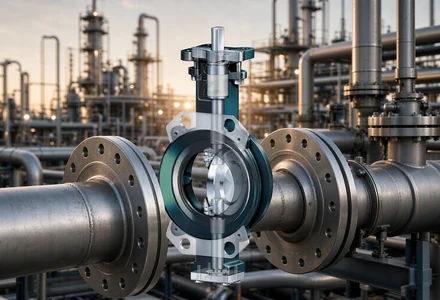
What Are the “Offsets” in a Butterfly Valve?
A centric (zero-offset) butterfly valve puts the stem through the centre of the disc. The disc wipes against the seat on every open and close cycle, which wears resilient seats quickly. The “offset” designs move the stem away from the disc centre to reduce this rubbing. A double offset (or double-eccentric) valve shifts the stem behind the disc face and off the centreline. A triple offset (triple-eccentric) valve adds a third geometry offset so the disc seats with a cam action and uses a conical metal seat.
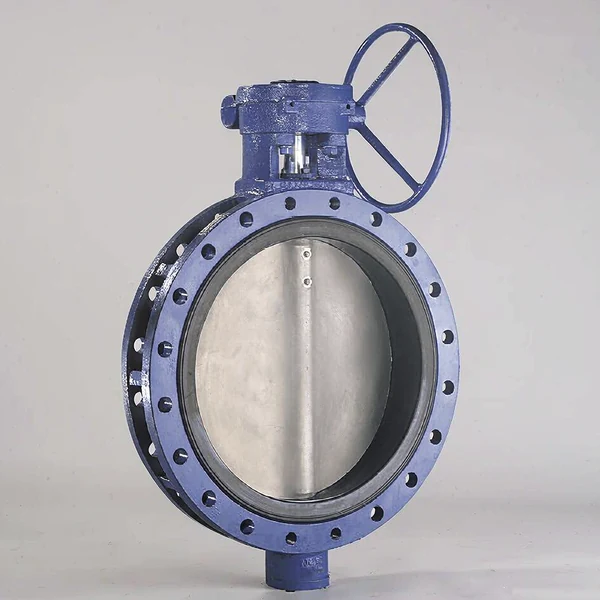
Double Offset Butterfly Valve
In a double offset butterfly valve the stem is offset both behind the disc and off the vertical centreline. This lets the disc clear the seat immediately after opening, eliminating the rubbing that destroys resilient seats in centric valves. Double offset valves are typically soft- or resilient-seated (PTFE, RPTFE, nitrile or EPDM) and are used for throttling and isolation in water, HVAC, mild chemicals and utility services. They are lighter, more compact and lower cost than triple offset valves, and they seal tightly at moderate temperatures and pressures.
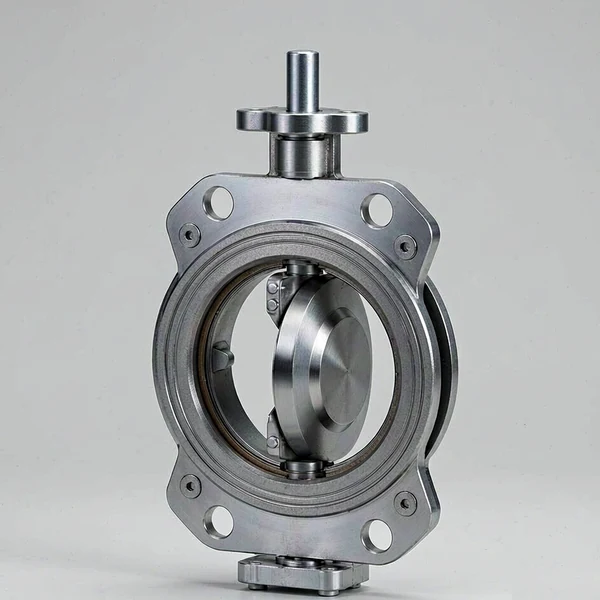
Triple Offset Butterfly Valve
A triple offset butterfly valve adds a third offset: the seat and disc are machined as cones with matching angles. As the valve closes, the disc engages the seat with a camming (rolling) motion rather than a rubbing slide, so the metal seat is never scrubbed. This gives a bubble-tight, bi-directional, fire-safe metal-to-metal seal that performs from cryogenic up to about 600°C. Sedelon’s triple offset butterfly valves are built to API 609, with stainless, duplex or Inconel overlays on the seat and disc, and are tested to API 598 and API 6FA.
Triple Offset vs Double Offset: Key Differences
| Feature | Double Offset Butterfly Valve | Triple Offset Butterfly Valve |
|---|---|---|
| Number of offsets | Two (stem behind disc + off-centre) | Three (+ conical seat geometry) |
| Seat type | Resilient (PTFE, RPTFE, EPDM) | Metal-to-metal (SS / Inconel overlay) |
| Sealing action | Disc wipes then contacts seat | Cam / rolling engagement, no scrub |
| Leakage class | Soft-seat tight; not ANSI VI metal | Bubble-tight, ANSI FCI 70-2 Class VI |
| Temperature range | -29°C to ~200°C (seat-limited) | -196°C to ~600°C |
| Fire safety | Limited (soft seat burns) | Fire-safe to API 6FA |
| Typical cost | Lower | Higher |
How to Choose for Severe Service
1. Temperature & Fire Risk
If the line sees steam, thermal oil, flare gas or any fire-risk hydrocarbon above ~200°C, the resilient seat of a double offset valve will fail. Choose a triple offset metal-seated valve. For cryogenic and LNG duties, triple offset valves also outperform because the metal seat avoids the embrittlement that kills soft seats.
2. Leakage Requirement
Where bubble-tight isolation is a code or safety requirement (toxic, flammable or valuable media), a triple offset valve rated to FCI 70-2 Class VI is the default. A double offset valve with a soft seat is tight only within its temperature band and cannot guarantee metal-seat leakage classes.
3. Throttling vs Isolation
Double offset valves are well suited to modulating control in water and utility systems. Triple offset valves are primarily on/off isolation valves; they can throttle but the metal seat wears if cycled in the throttling band. For tight shut-off plus occasional modulation, triple offset is still preferred in severe service.
4. Pressure Class
Both designs cover Class 150 to 600 and larger. Above Class 600 and for main steam or high-pressure hydro-carbon lines, the metal-seated triple offset valve is the safer choice. For general utility and process piping up to Class 300, a double offset valve is usually sufficient and more economical.
Typical Severe-Service Applications
Triple offset butterfly valves dominate main steam isolation, boiler blow-down, refinery heater outlets, FCCU lines, LNG loading, cryogenic tanks, desalination SWRO and sour-gas service. Double offset valves remain the workhorse for cooling water, HVAC, fire water, ballast and mild chemical throttling. When a project needs both, Sedelon supplies the full butterfly valve range plus compatible API 6D ball valves for piggable isolation.
Sedelon Butterfly Valve Solutions
Sedelon has manufactured industrial valves since 1998. Our butterfly valve programme covers lug, wafer and double-flanged bodies, double offset high-performance designs, and triple offset metal-seated severe-service valves with stainless, duplex or Inconel seat overlays. Every valve is tested in accordance with API 598 and API 609, and our quality lab performs hydrostatic, pneumatic, torque, fire and fugitive-emission tests. With a dedicated stock factory launched in 2023, we support fast-track projects across the Middle East, Southeast Asia, Africa, the Americas, Russia and Australia.
Need the Right Butterfly Valve for Severe Service?
Send us your medium, temperature, pressure class and leakage requirement. Our engineering team will recommend a double or triple offset butterfly valve with the correct seat and body material.
Frequently Asked Questions
What is the main difference between triple offset and double offset butterfly valves?
A double offset valve has two stem offsets and a resilient seat; a triple offset valve adds a third conical geometry so it seals with a metal-to-metal cam action. The triple offset design achieves bubble-tight, fire-safe shut-off at extreme temperatures, while the double offset is a softer-seated, lower-cost throttling valve.
When should I choose a triple offset butterfly valve?
Choose a triple offset valve for severe service: temperatures above 200°C or below -40°C, fire-risk hydrocarbons, toxic or flammable media, and any isolation point that must meet bubble-tight metal-seat leakage classes such as FCI 70-2 Class VI.
Can a double offset butterfly valve be used for steam service?
Only low-pressure, low-temperature steam within the resilient seat’s limit. For main steam, thermal oil or high-temperature steam, the soft seat will fail and a triple offset metal-seated valve is required.
Is a triple offset butterfly valve fire-safe?
Yes. The metal-to-metal seat maintains sealing after a fire, and the design is tested to API 6FA. A soft-seated double offset valve loses its seal when the seat burns.
What leakage class does a triple offset butterfly valve achieve?
A properly machined triple offset valve achieves bubble-tight shut-off to ANSI FCI 70-2 Class VI with metal seats, which a resilient-seated double offset valve cannot guarantee outside its temperature band.
Which is more cost-effective?
For water, HVAC and utility throttling, the double offset valve is lower cost and perfectly adequate. For severe service the triple offset valve costs more up front but avoids seat failure, leakage and unplanned shutdown, which is cheaper over the plant life.
Related Resources
- Sedelon Triple Offset Butterfly Valve Product Page
- Trunnion Mounted vs Floating Ball Valve: Selection Guide
- Ball Valve vs Gate Valve: The Ultimate Guide
- Ball Valve Soft Seal Materials Selection
- Butt Weld vs Socket Weld vs Flanged Valves
Conclusion
The choice between a triple offset butterfly valve and a double offset butterfly valve is a choice between metal-seated severe-service isolation and resilient-seated economy throttling. For high temperature, cryogenic, fire-risk or bubble-tight duties, the triple offset design is the only correct answer. For water, HVAC and utility modulation, the double offset valve delivers the best value. Sedelon supplies both with the materials, testing and certifications required for power, petrochemical, LNG and desalination projects worldwide. Contact our engineering team with your temperature, pressure and leakage data and we will specify the right offset design for your line.