



 Skip to content

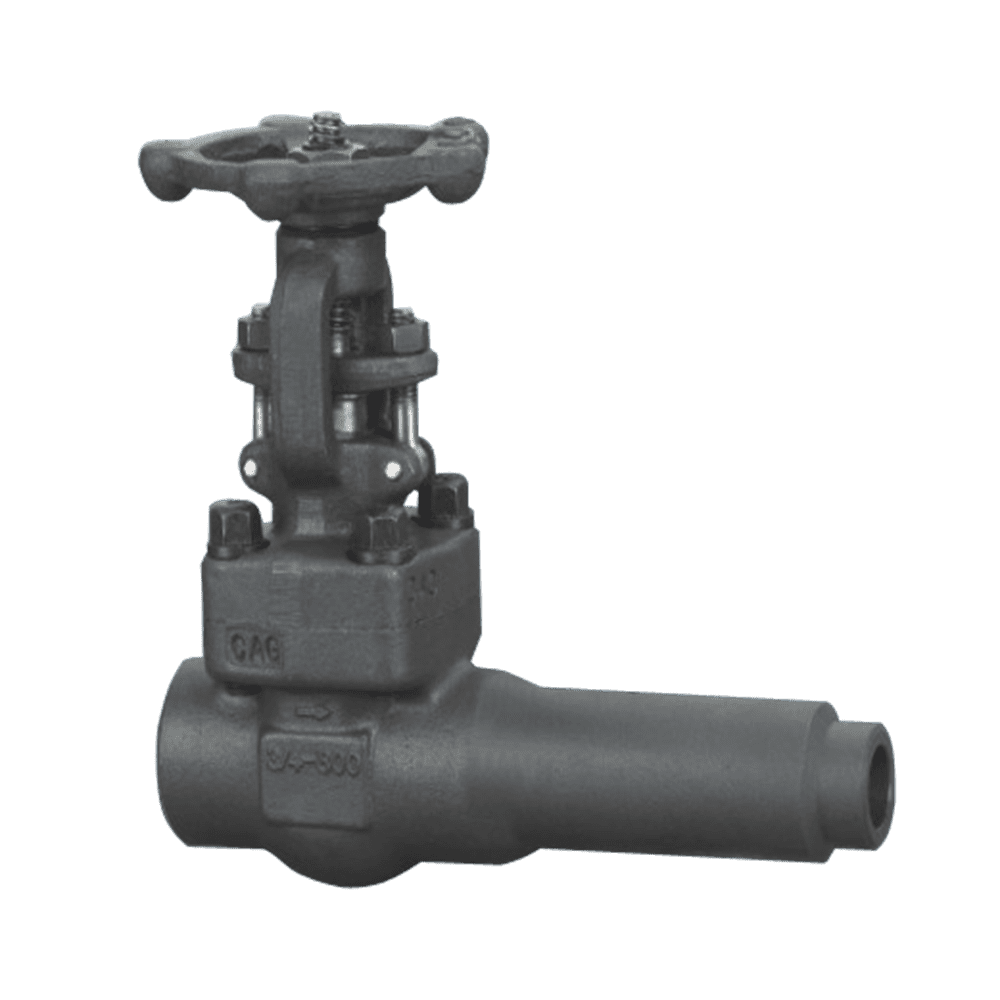
API 602 exists as a separate standard because the failure modes faced by small-diameter and large-diameter fittings are fundamentally different. In the NPS ½″–2″ range, the wall thickness of castings is too thin, and the probability of sand holes, shrinkage cavities, and inclusions causing through-wall defects at the thinnest cross-sections rises sharply; API 602 addresses this issue by using solid forgings with thicker minimum wall thicknesses (thicker than those specified in ASME B16.34 for the same class), thereby reducing the risk to an acceptable level. For sizes NPS 2½″ and larger, where the wall thickness is sufficient for radiographic testing, API 600 cast steel gate valves are typically more economical.
This page provides the standard selection guidelines for API 602 in Classes 150–600: socket-weld face-to-face dimensions of 79/92/111/120 mm, with threaded ends being identical; RF flanged ends with NPS ½″–1¼″ face-to-face dimensions of 108–140 mm, consistent with the butt-weld ends; 300 lb for 140–178 mm, and 600 lb for 165–229 mm. The valve stem is designed to prevent ejection, and a seal is installed on the inside of the valve body. Each valve undergoes a shell test at 1.5 times the rated pressure and a seal test in accordance with API 598. For the high-pressure range (Class 800–2500), see the API 602 High-Pressure Forged Steel Gate Valves page on this site; for stainless steel grades, see the Stainless Steel Forged Steel Gate Valves page on this site; for detailed selection of socket weld, threaded, and flanged ends, see the corresponding connection ends pages.
Steam traps, tracing and condensate branches, where a forged body survives repeated thermal cycles without weeping at Class 150–600.
Instrument, sampling, drain and vent lines, the densest small-bore population, with end type chosen to whether the joint is opened.
Pump discharge, minimum-flow and priming lines fitted close to the pump to protect centrifugal pumps at low flow.
Chemical injection and dosing lines, with F316 or F51 bodies and socket weld ends chosen to keep chemical from weeping past threads.
Fuel gas and pilot gas branches to gas turbines and boilers, where Class 300–600 forged gate valves are routine.
Forged body selection:API 602 forged gate valves are selected for small-bore, high-pressure applications where casting is less suitable. A105 covers general oil, water, steam and gas service, while LF grades are used for low-temperature duty and F11/F22 for high-temperature steam.
Corrosion and trim selection:F304/F316 stainless steel or duplex materials are selected according to corrosion and chloride conditions. Trim 01 (13Cr) is suitable for clean service, while Trim 05 with Stellite hardfacing is preferred for high-temperature steam and erosive media.
Pressure and bonnet selection:Bolted bonnets are standard for general applications, while welded or pressure-seal bonnets are considered for higher pressure and temperature service. Socket weld, threaded or butt-weld ends are selected according to piping requirements.
Critical service requirements:For sour environments, specify NACE MR0175-compliant materials. Low-emission packing, fire-safe design and third-party material certification are available for demanding applications.
At the JPRC Zarqa Refinery in Jordan, cast steel gate valves installed in high-pressure hydrogen service experienced body and bonnet leakage caused by casting defects and heavy structural loads. Flowork supplied NPS 1/2–2, Class 1500 API 602 forged gate valves featuring A182 F11 chromium-molybdenum forged bodies, OS&Y rising stem wedge designs, and Stellite 6 hardfaced sealing surfaces. The valves were socket weld connected and tested according to API 598 high-pressure gas sealing requirements. Since commissioning in 2021, the valves have operated continuously for four years without external leakage, eliminating valve-related shutdowns and reducing installation workload by approximately 40%.
Q: How do API 602 and API 600 divide?
A: API 602 governs forged steel valves NPS ½″ to 4″, with a heavier minimum wall, defined end types and required testing. API 600 governs cast steel gate valves, generally NPS 2 and up. Specify API 602 forged at NPS ½″ to 2″ and API 600 cast at NPS 2½″ up; mixing them either wastes money or leaves a casting defect in a thin wall.
Q: Why is an API 602 valve heavier than B16.34?
A: B16.34 covers every size and its minimum wall formula returns a thin value at small bores. API 602 resets the minimum wall for small-bore forged steel and prescribes forging practice, end types and pressure testing, giving a larger safety margin. Where both appear in a specification, build to API 602.
Q: Are the four end types interchangeable?
A: No. At Class 150 NPS 2″, an RF flanged valve is 178 mm against 216 mm for the butt weld high-pressure variant, a 38 mm difference. At Class 300 and 600 the RF and BW lengths match. Socket weld and NPT lengths match across all classes at 79/92/111/120 mm. Verify against the tables before a replacement.
150LB~800lbAPI602
Forged Gate Valve

| NPS | in | 1/2 | 3/4 | 1 | 11/4 | 11/2 | 2 |
| L(SW) | mm | 79 | 92 | 111 | 120 | 120 | 140 |
| L(NPT) | mm | 79 | 92 | 111 | 120 | 120 | 140 |
| NPT | mm | 1/2 | 3/4 | 1 | 11/4 | 11/2 | 2 |
| A | mm | 21.8 | 27.1 | 33.8 | 42.6 | 48.7 | 61.1 |
| B | mm | 9.6 | 12.7 | 12.7 | 12.7 | 12.7 | 15.9 |
| H | mm | 166 | 169 | 193 | 230 | 246 | 283 |
| W | mm | 100 | 100 | 125 | 160 | 160 | 180 |
150Lb API602 Forged Gate Valve

| NPS | in | 1/2 | 3/4 | 1 | 11/4 | 11/2 | 2 |
| d | mm | 13 | 19 | 25 | 32 | 38 | 51 |
| L(RF) | mm | 108 | 117 | 127 | 140 | 165 | 178 |
| L(BW) | mm | 108 | 117 | 127 | 140 | 165 | 216 |
| d1 | mm | 35 | 43 | 51 | 64 | 73 | 92 |
| d2 | mm | 60.5 | 70 | 79.5 | 89 | 98.5 | 120.5 |
| D | mm | 89 | 98 | 108 | 117 | 127 | 152 |
| b | mm | 11 | 12 | 12 | 13 | 15 | 16 |
| n-Фd | mm | 4-16 | 4-16 | 4-16 | 4-16 | 4-16 | 4-19 |
| H | mm | 195 | 210 | 240 | 300 | 395 | 400 |
| W | mm | 120 | 120 | 140 | 180 | 200 | 200 |
300Lb API602 Forged Gate Valve

| NPS | in | 1/2 | 3/4 | 1 | 11/4 | 11/2 | 2 |
| d | mm | 13 | 19 | 25 | 32 | 38 | 51 |
| L(RF) | mm | 140 | 152 | 165 | 178 | 190 | 216 |
| L(BW) | mm | 140 | 152 | 165 | 178 | 190 | 216 |
| d1 | mm | 35 | 43 | 51 | 64 | 73 | 92 |
| d2 | mm | 66.5 | 82.5 | 89 | 98.5 | 114.5 | 127 |
| D | mm | 95 | 117 | 124 | 133 | 156 | 165 |
| b | mm | 15 | 16 | 18 | 19 | 21 | 23 |
| n-Фd | mm | 4-16 | 4-19 | 4-19 | 4-19 | 4-22 | 8-19 |
| H | mm | 198 | 215 | 245 | 306 | 400 | 420 |
| W | mm | 120 | 140 | 160 | 180 | 200 | 200 |
600Lb API602 Forged Gate Valve

| NPS | in | 1/2 | 3/4 | 1 | 11/4 | 11/2 | 2 |
| d | mm | 13 | 19 | 25 | 32 | 38 | 51 |
| L(RF) | mm | 165 | 190 | 216 | 229 | 241 | 292 |
| L(BW) | mm | 165 | 190 | 216 | 229 | 241 | 292 |
| d1 | mm | 35 | 43 | 51 | 64 | 73 | 92 |
| d2 | mm | 66.5 | 82.5 | 89 | 98.5 | 114.5 | 127 |
| D | mm | 95 | 118 | 124 | 133 | 156 | 165 |
| b | mm | 15 | 16 | 18 | 21 | 23 | 26 |
| n-Фd | mm | 4-16 | 4-19 | 4-19 | 4-19 | 4-22 | 8-19 |
| H | mm | 198 | 215 | 245 | 306 | 400 | 420 |
| W | mm | 120 | 140 | 160 | 180 | 200 | 200 |
API Trim NO. Table
|
No |
Seat |
Gate、disc 、ball or body |
Stem |
No |
Seat |
Gate、disc 、ball or body |
Stem | |
| 01 | 13Cr | 13Cr | 13Cr | 31 | STELLITE | 321SS | 321SS | |
| 02 | 304SS | 304SS | 304SS | 32 | STELLITE | STELLITE | 321SS | |
| 03 | 310SS | 310SS | 310SS | 33 | 347SS | 347SS | 347SS | |
| 04 | HARD 13Cr | HARD 13Cr | 13Cr | 34 | STELLITE | 347SS | 347SS | |
| 05 | STELLITE | STELLITE | 13Cr | 35 | NICKEL ALLOY | 13Cr | 13Cr | |
| 06 | Cu-Ni | 13Cr | 13Cr | 36 | A105/PTFE | A105+ENP | A105+ENP | |
| 07 | 13Cr | HARD 13Cr | 13Cr | 37 | A105/PTFE | WCB+ENP | A105+ENP | |
| 08 | STELLITE | 13Cr | 13Cr | 38 | 13Cr/PTFE | 13Cr | 13Cr | |
| 09 | Cu-Ni | Cu-Ni | Cu-Ni | 39 | 304SS/PTFE | 304SS | 304SS | |
| 10 | 316SS | 316SS | 316SS | 40 | 316SS/PTFE | 316SS | 316SS | |
| 11 | Cu-Ni | STELLITE | Cu-Ni | 41 | A105/RPTFE | A105+ENP | A105+ENP | |
| 12 | STELLITE | 316SS | 316SS | 42 | A105/RPTFE | WCB+ENP | A105+ENP | |
| 13 | ALLOY 20 | ALLOY 20 | ALLOY 20 | 43 | 13Cr/RPTFE | 13Cr | 13Cr | |
| 14 | STELLITE | ALLOY 20 | ALLOY 20 | 44 | 304SS/RPTFE | 304SS | 304SS | |
| 15 | STELLITE | STELLITE | 304SS | 45 | 316SS/RPTFE | 316SS | 316SS | |
| 16 | STELLITE | STELLITE | 316SS | 46 | A105/NYLON | A105+ENP | A105+ENP | |
| 17 | STELLITE | STELLITE | 347SS | 47 | A105/NYLON | WCB+ENP | A105+ENP | |
| 18 | STELLITE | STELLITE | ALLOY 20 | 48 | A105/NYLON | 304SS | 304SS | |
| 19 | MONEL | MONEL | MONEL | 49 | A105/NYLON | 316SS | 316SS | |
| 20 | BRONZE | BRONZE | 13Cr | 50 | 13Cr/NYLON | 13Cr | 13Cr | |
| 21 | HASTELLOY B | HASTELLOY B | HASTELLOY B | 51 | 304SS/NYLON | 304SS | 304SS | |
| 22 |
| HASTELLOY C | HASTELLOY C | 52 | 316SS/NYLON | 316SS | 316SS | |
| 23 | STELLITE | 304SS | 304SS | 53 | A105/PEEK | A105+ENP | A105+ENP | |
| 24 | 304LSS | 304LSS | 304LSS | 54 | A105/PEEK | WCB+ENP | A105+ENP | |
| 25 | STELLITE | 304LSS | 304LSS | 55 | 13Cr/PEEK | 13Cr | 13Cr | |
| 26 | STELLITE | STELLITE | 304LSS | 56 | 304SS/PEEK | 304SS | 304SS | |
| 27 | 316LSS | 316LSS | 316LSS | 57 | 316SS/PEEK | 316SS | 316SS | |
| 28 | STELLITE | 316LSS | 316LSS |
|
|
|
|
|
| 29 | STELLITE | STELLITE | 316LSS |
|
|
| ||
| 30 | 321SS | 321SS | 321SS |
|
|
|
| |
Note:please indicate it directly in the
order for the internal part’smaterial uncovered in the table


 Optimized by Seraphinite Accelerator