

...

🍪 This website requires cookies to provide all of it's features. Please enable your browser cookies.

Accept All Decline All
REQUEST A QUOTE

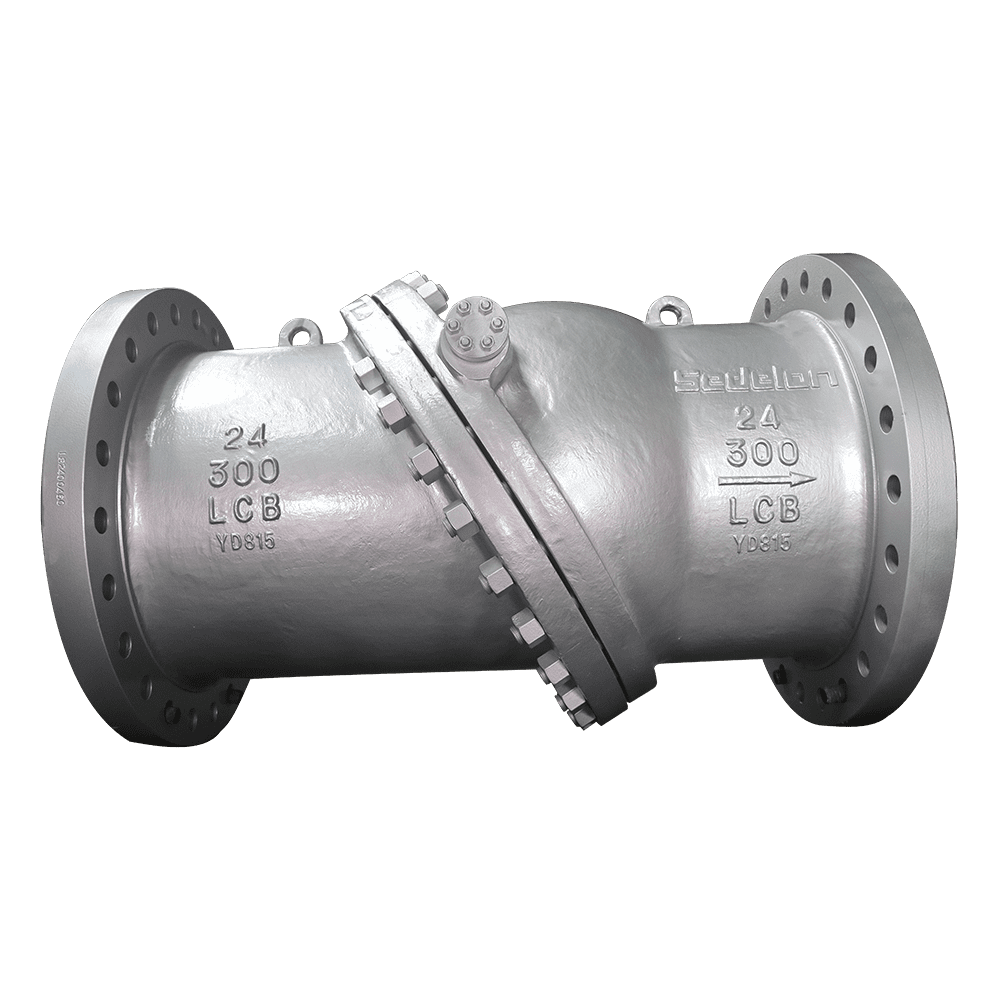
Tilting Disc Check Valve

Our valves utilize cutting-edge technology, undergo rigorous quality control, ensuring outstanding performance and durability.

  1. Home
  2. »
  3. Product
  4. »
  5. Tilting Disc Check Valve

Tilting Disc Check Valve

SEDELON Tilting Disc Check Valves are engineered for low-slam, non-return protection in pipelines where backflow must be stopped without water-hammer shock. The disc tilts open on forward flow and pivots back onto the seat the instant flow reverses, giving a faster, quieter close than a swing-check design — ideal for pump discharge, compressor lines, and long-distance transmission.

Built to ASME B16.34 (design & manufacture) and tested to API 598 (shell + seat), the valves cover NPS 2″–24″ and Class 150–900, with flanged (ANSI B16.5) or butt-welded (ANSI B16.25) ends. A broad material menu — WCB, WC6/WC9, CF8/CF8M, LCB/LCC, Monel, CN7M — supports water, steam, oil & gas, and low-temperature duty.

product feature

  • Low-slam closing — the tilting disc stops reverse flow with minimal water hammer and pipeline shock.
  • Faster than swing checks — short disc travel and a spring-independent pivot give a quicker, quieter seat on flow reversal.
  • Full-bore flow path — low pressure drop across the full NPS 2″–24″ range.
  • Confirmed standards — designed to ASME B16.34, shell & seat tested to API 598.
  • Flexible ends — flanged (ANSI B16.5) and butt-welded (ANSI B16.25) configurations.
  • Wide pressure coverage — Class 150 through Class 900 for utility to critical service.
  • Broad material menu — WCB, WC6/WC9, CF8/CF8M, LCB/LCC, Monel, CN7M for corrosion and low-temperature duty.
  • Multi-orientation installation — horizontal or vertical-up flow; optional counterweight for large-bore lines.

Follow Us

Face to Face Dimensions:ANSI B16.10

Flange end Dimension :ANSI B16.5

Butt Welded Dimensions:ANSI B16.25

Design and Manufacture:ANSI 16.34

Pressure Test:API598

Materials:WCB 、WC6 、WC9 、CF8、 CF8M、 CF3、 CF3M 、CN7M、LC1

LC2、LC3、LCB、LCC、Monel、 20# Alloys、4A、5A

How a Tilting Disc Check Valve Works

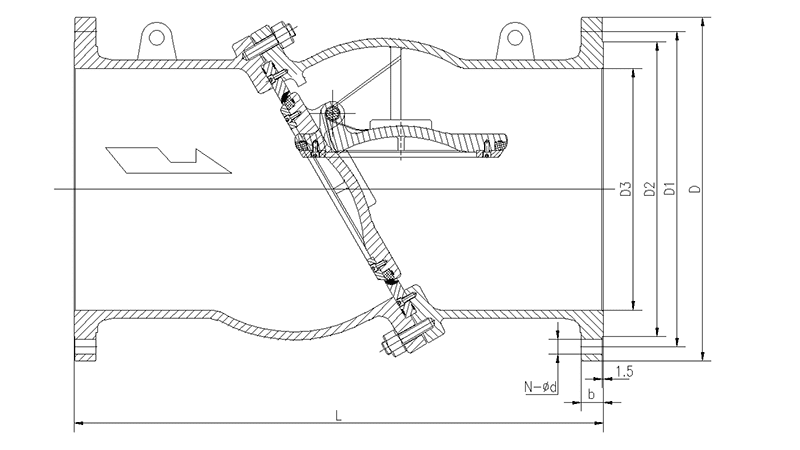
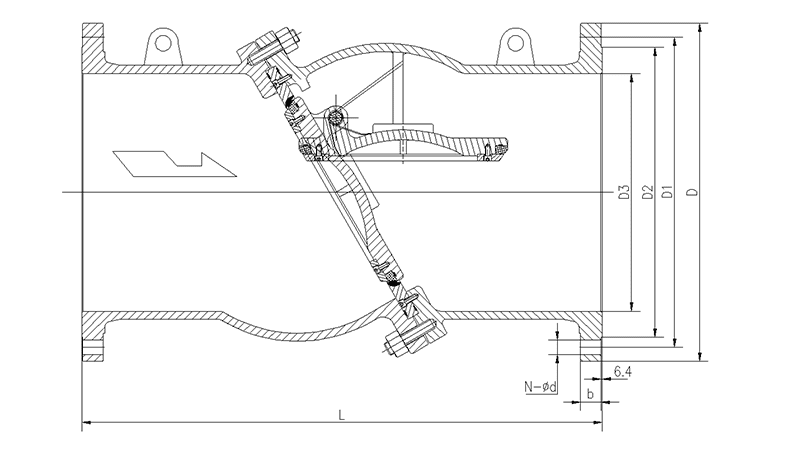
On forward flow the disc tilts up off the seat and rides nearly parallel to the pipe, so the flow path stays full-bore with very low resistance. The moment flow slows or reverses, the disc pivots back on its trunnion and seats quickly — there is no long swing arm to slam, which is why tilting-disc designs generate far less water hammer than conventional swing checks. Because the motion is a short pivot rather than a long arc, the close is also more repeatable under pulsing or compressor duty.

Material & Service Selection

Body / Trim Material Typical Service
WCB / WC6 / WC9 Carbon-steel utility, high-temperature steam (WC6/WC9)
CF8 / CF8M / CF3 / CF3M Stainless service, mild corrosion, food & pharma washdown
LCB / LCC Low-temperature / cryogenic duty down to −46 °C (LCC lower)
Monel / CN7M Seawater, sour and highly corrosive media
20# Alloys / 4A / 5A Special alloy and duplex/super-duplex requirements

Typical Applications

  • Pump discharge & compressor lines — protects equipment from backflow and surge.
  • Oil & gas transmission — long-distance lines where water-hammer control matters.
  • Power & boiler feed — high-temperature carbon/alloy trim service.
  • Cryogenic & LNG — LCB/LCC builds for low-temperature duty.
  • Water & desalination — Monel or stainless trim for corrosive duty.

FAQ

Q1: What is a tilting disc check valve, and how is it different from a swing check valve?
A: Both are non-return valves, but the tilting disc pivots on a trunnion through a short arc instead of swinging on a long hinge. That short travel means a faster, lower-slam close — better for lines prone to water hammer. If you specifically need a swing design, see our Swing Check Valve.

Q2: Which standards does SEDELON build to?
A: Design and manufacture follow ASME B16.34; every valve is shell- and seat-tested to API 598. Face-to-face is ANSI B16.10, flanges ANSI B16.5, butt-weld ends ANSI B16.25.

Q3: What sizes and pressure classes are available?
A: NPS 2″–24″ across Class 150–900, with the full flange and face-to-face dimension table listed above.

Q4: Which end connections are offered?
A: Flanged (ANSI B16.5) and butt-welded (ANSI B16.25). Choose butt-weld for permanent, leak-tight piping and flanged for lines that need frequent disassembly.

Q5: Which material should I specify for low-temperature or cryogenic service?
A: Use LCB or LCC body/trim for low-temperature duty (down to roughly −46 °C for LCC). Confirm your exact minimum design temperature with our team when ordering.

Q6: Can it be installed vertically?
A: Yes — horizontal or vertical-up flow. For very large bores, an optional counterweight stabilizes the disc and buffers closing.

Class150 Tilting Disc Check Valve
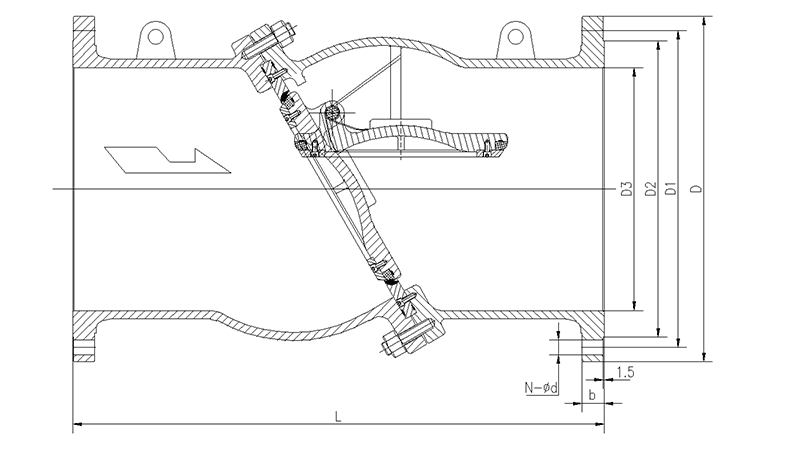
NPS in 2 2 1/2 3 4 5 6 8 10 12 14 16 18 20 24
D3 mm 51 64 76 102 127 152 203 254 305 337 387 438 489 591
L(RF) mm 203 216 241 292 330 356 495 622 699 787 864 978 978 1295
D2 mm 92 105 127 157 186 216 270 324 381 413 470 533 584 692
D1 mm 120.5 139.5 152.5 190.5 216 241.5 298.5 362 432 476 540 578 635 749.5
D mm 152 178 190 229 254 279 343 406 483 533 597 635 699 813
b mm 16 18 19 24 24 26 29 31 32 35 37 40 43 48
n-Фd mm 4-19 4-19 4-19 8-19 8-22 8-22 8-22 12-25 12-25 12-29 16-29 16-32 20-32 20-35


Class300 Tilting Disc Check Valve

NPS in 2 2 1/2 3 4 5 6 8 10 12 14 16 18 20 24
D3 mm 51 64 76 102 127 152 203 254 305 337 387 432 483 584
L(RF) mm 267 292 318 356 400 445 533 622 711 838 864 978 1016 1346
D2 mm 92 105 127 157 186 216 270 324 381 413 470 533 584 692
D1 mm 127 149 168.5 200 235 270 330 387.5 451 514.5 571.5 628.5 686 813
D mm 165 190 210 254 279 318 381 445 521 584 648 711 775 914
b mm 23 26 29 32 35 37 42 48 51 54 58 61 64 70
n-Фd mm 8-19 8-22 8-22 8-22 8-22 12-22 12-25 16-29 16-32 20-32 20-35 24-35 24-35 24-41


Class600 Tilting Disc Check Valve


NPS in 2 2 1/2 3 4 5 6 8 10 12 14 16 18 20 24
D3 mm 51 64 76 102 127 152 200 248 298 327 375 419 464 559
L(RF) mm 292 330 356 432 508 559 660 787 838 889 991 1092 1194 1397
D2 mm 92 105 127 157 186 216 270 324 381 413 470 533 584 692
D1 mm 127 149 168.5 216 267 292 349 432 489 527 603 654 724 838
D mm 165 190 210 273 330 356 419 508 559 603 686 743 813 940
b mm 26 29 32 38 45 48 56 64 67 70 77 83 89 102
n-Фd mm 8-19 8-22 8-22 8-25 8-29 12-29 12-32 16-35 20-35 20-38 20-41 20-44 24-44 24-52


POPULAR PRODUCTS

Face to Face Dimensions: ANSI B16.10

Flange end Dimension :ANSI B16.5

Butt Welded Dimensions:ANSI B16.25

Design and Manufacture:API 609

Pressure Test:API598

Materials:CF8、 CF8M、 CF3、 CF3M 、CN7M、LC1LC2、LC3、LCB、LCC、Monel、20# Alloys、4A、5A、C95800、C95500, ect.

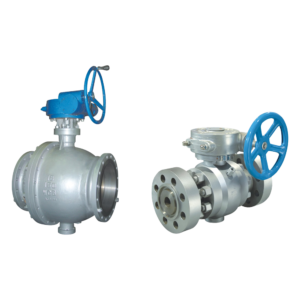
A gear operated ball valve combines a quarter-turn ball valve with a gearbox actuator that multiplies the operator’s input torque, making it practical to open and close large-bore or high-pressure lines by hand where a plain lever would be too stiff to turn. The gearbox carries a clear open/closed position indicator and can be padlocked in either state for safety and tamper resistance. SEDELON gear operated ball valves are built to API 6D with forged bodies (A105 / F304 / F316 / F11 / F22 / duplex F51-F53), fire-safe and anti-static construction, for oil & gas, petrochemical, power and pipeline service.

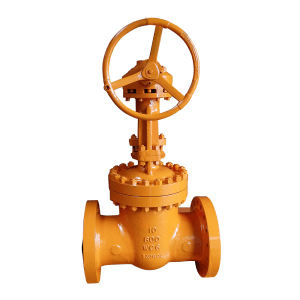
SEDELON gear operated gate valves combine a wedge-gate isolation design with a geared handwheel actuator, cutting the operating torque needed on large-bore and high-pressure lines where a direct handwheel would be impractical. Built to API 600 with a bolted bonnet, they cover NPS 2″–24″ (DN50–DN600) and Class 150–2500, with flanged (ANSI B16.5) or butt-weld (ANSI B16.25) ends and a full material range from carbon and alloy steel to stainless, low-temperature and bronze. The result is a full-bore, low-pressure-drop shutoff built for oil & gas, refining, power, chemical and water service.

Face to Face Dimensions:ANSI B16.10

Flange end Dimension :ANSI B16.5

Butt Welded Dimensions:ANSI B16.25

Design and Manufacture:BS1873

Pressure Test:API598

Materials: WC6 、WC9 、CF8、 CF8M、 CF3、 CF3M 、CN7M、LC1LC2、LC3、LCB、LCC、Monel、20# Alloys、4A、5A、C95800、C95500, ect.

POPULAR PRODUCTS

SEDELON Manufactured DBB BALL VALVES

Sedelon pays much attention on quality control in products, and all valves are designed and tested according

Pressure Seal Gate Valve vs Bolted Bonnet: High-Pressure Steam Service Selection

A pressure seal gate valve uses line pressure to tighten a self-energizing gasket, so the joint seals tighter as steam pressure rises; a bolted bonnet clamps the joint with studs and needs ever-larger studs at high pressure. This guide compares the two designs on sealing, pressure class, temperature, maintenance and cost, and how to specify the right gate valve.

API 6D Ball Valve vs API 608 Ball Valve: Pipeline vs Process Service Standards

API 6D and API 608 ball valves look alike but serve different worlds. API 6D governs pipeline valves with butt-weld ends and full mill certification; API 608 covers refinery and process-plant ball valves, usually flanged in smaller bores. This guide compares end design, pressure class, fire safety, sour service and documentation, and how to choose the right standard.

Swing Check Valve vs Lift Check Valve: Backflow Prevention Selection Guide

A check valve stops backflow with no actuator. A swing check uses a hinged clapper for very low pressure drop on horizontal, large-bore lines; a lift check uses a guided disc that seats squarely for tighter, faster shut-off in vertical and high-velocity runs. This guide compares the two on sealing, pressure drop, orientation and water hammer risk.
Triple Offset vs Double Offset Butterfly Valves

Triple Offset Butterfly Valve vs Double Offset: Severe Service Selection Guide

Triple offset or double offset butterfly valve? The deciding question is whether the service needs fully metal-seated, zero-leakage, fire-safe isolation, or a resilient-seated throttling valve that is cheaper to run. This guide explains how the offsets work, where each design wins, and how to specify the right one for severe-service lines.
Seraphinite AcceleratorOptimized by Seraphinite Accelerator
Turns on site high speed to be attractive for people and search engines.