



When you specify a ball valve for a new project, the standard stamped on the nameplate decides far more than paperwork. API 6D and API 608 describe two different worlds: long-distance transmission pipelines on one side, and refinery, petrochemical, and process-plant piping on the other. Choosing the wrong standard can mean a valve that passes the shop test but fails a pipeline hydrostatic protocol, or a pipeline-grade valve that costs 40% more than the process duty ever required. This guide compares the two standards on the points that actually drive selection—body and end design, pressure class, fire safety, sour service, and documentation—so your purchasing team can match the valve to the service instead of to a habit. If you are still weighing ball valves against other patterns, our gate valve vs butterfly valve comparison covers the wider picture.
What API 6D and API 608 Actually Govern
API 6D, Specification for Pipeline and Piping Valves, governs valves for onshore and offshore pipelines carrying oil, gas, and related fluids. Its scope includes ball, gate, check, and plug valves in pipeline service, with tight requirements for hydrostatic and pneumatic seat testing, cavity relief, and end-to-end dimensions. API 608, Metal Ball Valves—Flanged, Threaded, and Welding Ends, covers metal ball valves for general refinery and process use, typically in smaller and mid-size bores with flanged, threaded, or welded ends. The two standards overlap on basic ball-valve geometry but diverge sharply on testing severity, traceability, and the documents a buyer can demand at handover.
Body and End Connection Design
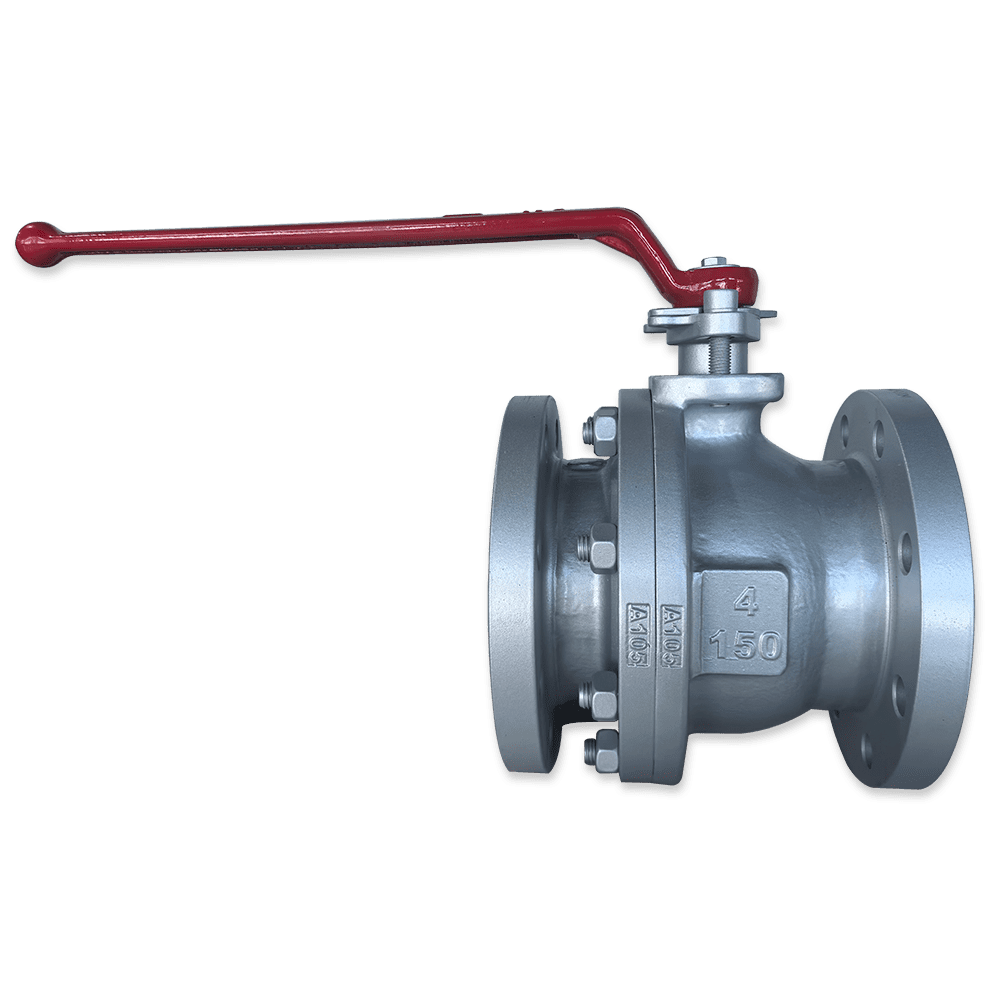
API 6D pipeline ball valves are overwhelmingly split body or top-entry, built for double-block-and-bleed function and field maintenance. Ends are most often welded (butt weld) because a pipeline cannot afford a flanged joint that can loosen, though flanged ends appear on station valves. API 608 valves favor split-body or single-piece designs with flanged, threaded (NPT/BSP), or socket-weld ends, sized for plant piping where flanges are the norm and space is less constrained. If your line is welded and buried, the end preparation in API 6D is non-negotiable; for a skid inside a plant, API 608 flanged ends install faster and cost less. Our butt weld vs socket weld vs flanged guide explains how end type changes installation and inspection effort.
Pressure Class and Temperature
API 608 references ASME B16.34 pressure-temperature ratings, so a valve is selected by ASME class (150, 300, 600, 900 and up) and the material’s allowable stress. API 6D also builds on ASME B16.34 but adds pipeline-specific pressure class bands and stricter proof-test pressures, because a transmission line is hydrotested as a system at a higher margin than a process loop. For high-pressure steam or thermal duty the material choice matters as much as the class; see our WC6 and WC9 alloy steel valve guide for the metallurgy behind elevated-temperature service.
Fire Safety and Anti-Static Provisions
Both standards require fire-safe design and anti-static protection, but API 6D pipeline valves are routinely specified to API 607 or ISO 10497 fire testing with documented stem and seat retention after burn, because a pipeline rupture carries regional consequence. API 608 process valves meet fire-safe intent through design and soft-seat construction that will not blow out, yet the documented fire-test certificate is more often requested on the pipeline side. For plants handling hydrocarbons, our low-emission valve seal systems article shows how sealing upgrades cut fugitive emissions beyond the base standard.
Sour Service and NACE Requirements
Where H2S is present, API 6D valves are commonly ordered to NACE MR0175 / ISO 15156 for sulfide stress cracking resistance, with hardness limits on trim and bodies and full material traceability. API 608 valves can also be supplied NACE-compliant, but the default purchase order often omits it unless the process engineer calls it out. Never assume sour-service compliance from the base standard alone—write the NACE clause into the dat sheet. Large-bore and high-pressure process valves that must meet these limits are covered in our gear-operated ball valve guide.
API 6D vs API 608: Side-by-Side Selection
| Parameter | API 6D | API 608 |
|---|---|---|
| Primary service | Transmission & gathering pipelines | Refinery, petrochemical, process plant |
| Valve types | Ball, gate, check, plug | Ball only |
| Typical ends | Butt weld, flanged (station) | Flanged, threaded, socket weld |
| DBB function | Required, documented | Available, not mandated |
| Pressure proof | Higher pipeline margin | ASME B16.34 class |
| Fire test cert | Routinely required | By request |
| NACE sour | Common clause | By specification |
| Traceability | Full mill certs | Standard certs |
| Relative cost | Higher | Lower to mid |
When to Specify Each Standard
Specify API 6D for any valve that is part of a pipeline system—cross-country transmission, subsea tiebacks, station isolation, and custody-transfer metering runs—where double-block-and-bleed, cavity relief, and full traceability protect a high-consequence asset. Specify API 608 for process-unit ball valves, utility headers, tank farms, and skid packages where flanged installation speed and lower cost matter more than pipeline-grade proof testing. A refinery will use both on the same plot: API 6D at the battery-limits tie-in, API 608 everywhere inside the unit. For the plant-side valve population, our API 609 butterfly valve guide helps when a quarter-turn alternative fits the duty.
Procurement Checklist
Before releasing the purchase order, confirm four things: (1) the governing standard written explicitly as API 6D or API 608, not just “ball valve”; (2) end type and facing matching the line—weld prep for pipelines, flange rating for plant; (3) NACE MR0175 if H2S is possible, even at low partial pressure; and (4) fire-test and mill-certificate requirements, because retrofitting documents after delivery is slow and expensive. Pair this with the pressure-class and temperature check so the body material carries the duty without over-specifying. When in doubt on bore and actuator, our globe vs gate valve guide frames how trim and throttling needs shape the final choice.
Frequently Asked Questions
Can an API 608 valve be used on a pipeline?
Only on non-critical, low-consequence pipeline branches such as instrument taps or small station drains. The mainline, tie-ins, and metering runs should be API 6D because of the proof-test margin, DBB requirement, and traceability the pipeline code expects.
Is API 6D always more expensive than API 608?
Usually yes, because of stricter testing, full mill certificates, and welded-end fabrication. The premium is justified on high-consequence lines but wasted on a utility header where API 608 performs identically in service.
Do both standards cover fire safety?
Both require fire-safe intent and anti-static paths. The difference is documentation: API 6D pipeline valves are routinely delivered with a formal fire-test certificate (API 607 / ISO 10497), while API 608 may ship with design compliance only unless a cert is ordered.
What end connections does API 608 allow?
Flanged, threaded (NPT or BSP), and socket-weld ends. It does not emphasize butt-weld ends the way API 6D does, which is why process plants—built on flanged piping—favor API 608.
How do I handle sour service under these standards?
Neither standard makes NACE compliance automatic. Add the NACE MR0175 / ISO 15156 clause to the order with hardness limits on trim and body, and request material certificates that prove it. This applies equally to API 6D and API 608 valves.
Which standard suits a tank-farm isolation valve?
A tank-farm block valve is plant service, so API 608 with flanged ends is typically correct and economical. Move to API 6D only if the valve sits on a posted pipeline segment or a custody-transfer line.
Need the Right Ball Valve Standard for Your Project?
Sedelon supplies both API 6D pipeline ball valves and API 608 process ball valves in floating and trunnion designs, with NACE, fire-safe, and full mill-cert options. Send us your line size, pressure class, and fluid data—our engineers will return a standard-compliant recommendation and quote.
Related Resources
- Gate Valve vs Butterfly Valve: Which One Is Right for Your Pipeline?
- Gear Operated Ball Valve: Benefits for Large-Bore and High-Pressure Service
- Butt Weld vs Socket Weld vs Flanged Valves: How to Choose
- Low-Emission Valve Seal Systems: Mitigating Fugitive Emissions
- WC6 and WC9 Alloy Steel Valves: Material Selection for High Temperature