



Elastomer seats char, stem packing burns away, and body gaskets relax — releasing the very inventory feeding a pool fire. Fire-safe valves break that chain: even after soft sealing elements are destroyed, the valve must retain pressure-boundary integrity long enough for operators to isolate the line. The two fire-test specifications most often cited on valve datasheets are API 607 and API 6FA. They are not interchangeable, and confusing them is a common cause of rejected submittals. This guide explains what each standard covers, what the test actually proves, and when your plant genuinely needs fire-safe design.
Key Takeaways
- API 607 is the fire test for quarter-turn valves and valves with nonmetallic seats — think ball, butterfly and plug valves per API 608 and API 609 in process service.
- API 6FA is the fire test written for valves in the pipeline and upstream envelope, and in practice it is the reference most gate valve specifications per API 600 (and many API 6D ball valves) point to.
- Both tests expose a pressurised valve to a controlled flame envelope, then measure through-seat leakage, external leakage, and whether the valve can still be operated.
- “Fire-safe” on a datasheet without a named standard, edition, size, pressure class and type-test report number is a marketing claim, not a certification.
- Where a fire is a credible scenario next to a flammable inventory, fire-safe design is the baseline expectation, not a paid upgrade.
Why Fire-Safe Design Exists: What Actually Fails in a Fire
A modern process valve seals at three points you rarely think about: the seat-to-ball or seat-to-disc interface, the stem packing, and the body-to-bonnet or body-joint gasket. In a well-maintained valve, soft components — PTFE, RPTFE, NBR, Viton, graphite-composite — do almost all of the sealing work. They are also the parts that fail first when external flame raises metal temperatures well past their service limits.
The failure sequence is predictable. Within minutes of flame impingement, the soft seat loses dimension and then decomposes. Stem packing dries out and shrinks, opening a leak path along the stem. Body-bonnet gaskets relax under combined heat and internal pressure because bolt preload drops as the bolts themselves elongate. If nothing else were done, the valve would become an open nozzle feeding fuel to the fire — precisely the failure mode fire-safe design is meant to prevent.
Fire-safe construction therefore does not rely on the primary soft seal surviving. It relies on a secondary metal-to-metal contact that takes over once the soft seal is gone, backed by fire-resistant graphite stem packing and body-joint gasketing. A fire test simply proves, under a controlled and repeatable burner rig, that this secondary system actually holds.
What “Fire-Safe” Means on a Datasheet
The phrase is used loosely in enquiries, which is where problems start. It is worth separating three distinct ideas:
- Fire-safe construction — the physical design features: secondary metal seat contact, graphite packing, graphite-wound or spiral-wound body gaskets, antistatic devices on quarter-turn valves.
- Fire type-testing — the valve family has been exposed to a standardised fire test and passed. This produces a type-test report that documents exactly what was tested.
- Qualification scope — the specific combination of valve type, size, pressure class, bore and materials that the report actually covers.
A compliant purchase requires all three to line up. A beautiful design with no test evidence fails document review; a passing report whose qualification scope does not cover your size and class fails it too.
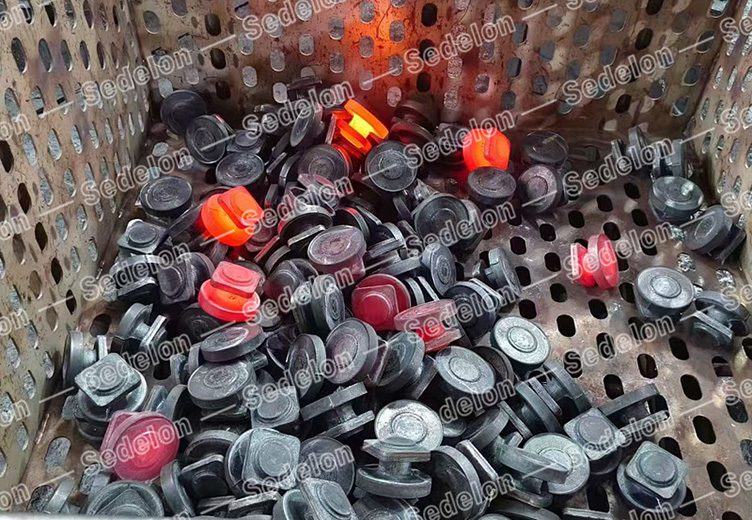
It is also useful to know where the other fire test standards sit, because well-written specifications reference them explicitly:
- API 607 — quarter-turn valves and valves equipped with nonmetallic seats (the process-plant workhorse).
- API 6FA — specification for fire test for valves in the pipeline/upstream family, widely cited for gate valves per API 600 and many API 6D ball valves.
- API 6FD — the fire test written specifically for check valves.
- ISO 10497 — the international equivalent to API 607, frequently quoted on projects that follow ISO rather than API purchasing.
API 607 vs API 6FA: Side-by-Side Comparison
The two standards share the same philosophy — burn it, then prove it still contains and still operates — but they were written for different valve populations. Reading them as interchangeable is the single most common specification error we see.
| Aspect | API 607 | API 6FA |
|---|---|---|
| Formal title | Fire Test for Quarter-Turn Valves and Valves Equipped with Nonmetallic Seats | Specification for Fire Test for Valves |
| Valve families covered | Ball, butterfly and plug valves per API 608 / API 609, plus other valves using nonmetallic seats | Valves in the API 6D pipeline envelope; in practice dominated by multi-turn gate valves per API 600, plus pipeline ball and plug valves |
| Operating motion | Quarter-turn (90°) | Primarily multi-turn (gate), also quarter-turn in pipeline service |
| Typical application | Refinery and petrochemical process units, chemical plants, storage terminals, loading racks | Pipelines, gathering systems, wellhead and upstream facilities, mainline isolation |
| Fire exposure | Valve fully enveloped in flame; thermocouples held in the temperature band defined by the standard edition | Same principle — full flame envelope with a defined temperature band |
| Burn duration | Typically a 30-minute burn for most sizes; duration is defined per size and pressure class by the edition cited | Comparable duration regime, likewise defined by valve size and pressure class in the specified edition |
| What must survive | Secondary metal-to-metal seat contact, graphite stem sealing, body-joint integrity after elastomer loss | Bonnet gasket, stem packing, seat interface and backseat must retain containment |
| Evidence you should demand | Type-test report naming valve type, size, pressure class, materials, standard edition and report number | Identical expectation — report plus explicit qualification scope |
What Each Fire Test Actually Measures
Despite different scopes, the two procedures follow broadly the same logic. Knowing the sequence helps you read a test report instead of just filing it.
- Pressurise and stabilise. The valve is filled with water and brought to the specified test pressure for its pressure class.
- Apply the flame envelope. Burners positioned around the valve raise thermocouple readings into the temperature band the standard requires, typically within the order of 760–980 °C (1400–1800 °F).
- Burn for the specified duration. Through-seat leakage is collected continuously during this phase.
- Collect external leakage. Anything escaping past stem packing or body joints during the burn is measured separately — this is the leakage that feeds a fire.
- Prove operability. The valve is operated against differential pressure while still hot, demonstrating the secondary metal seat and packing still allow the valve to be cycled.
- Cool and re-test. After cool-down, a final pressure test confirms through-seat and external leakage again.
Acceptance limits are not a single number: they scale with nominal pipe size and are defined per pressure class and per the edition cited. That detail matters, because it is exactly why a report that covers one size-and-class combination does not automatically qualify every other combination in the catalogue.
Which Standard Applies to Which Valve Family
The practical rule is simple once you sort valves by motion and by the product specification they are purchased to.
Quarter-turn valves — API 607 territory
Ball valves are the most fire-tested valve in any hydrocarbon plant. Whether you are buying a floating ball valve for general service or a trunnion mounted ball valve for larger sizes and higher classes, the fire test referenced is almost always API 607. Butterfly and plug valves in process units, including soft-seated designs per API 609, fall into the same group.
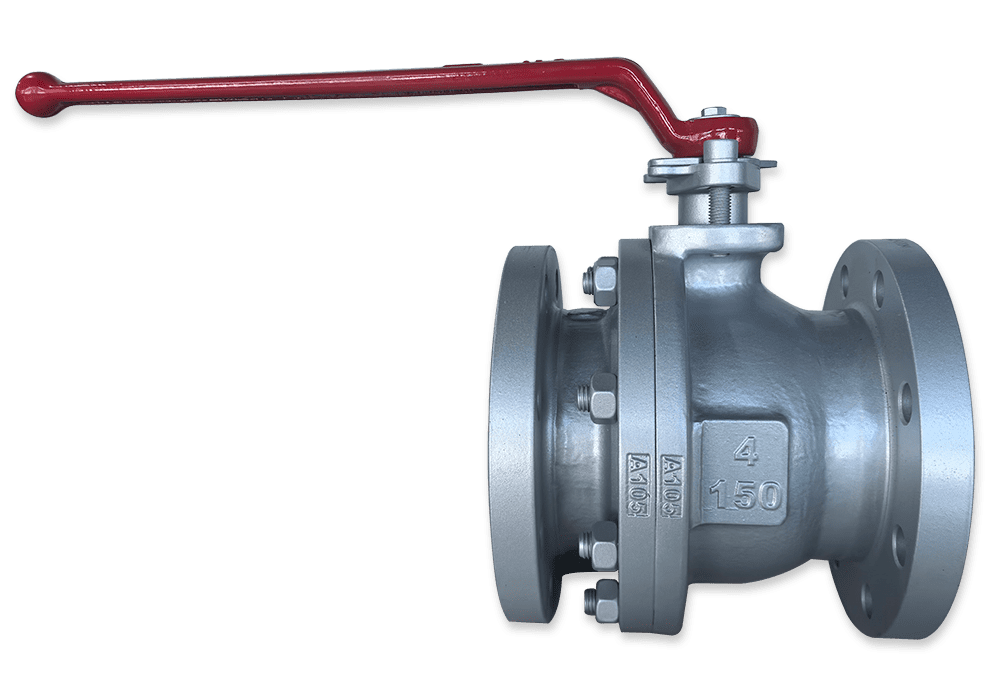
If you are choosing between these two constructions, our comparison of trunnion mounted vs floating ball valve design explains how torque, line size and pressure drive that decision before the fire question even arises.
Gate valves — API 6FA territory
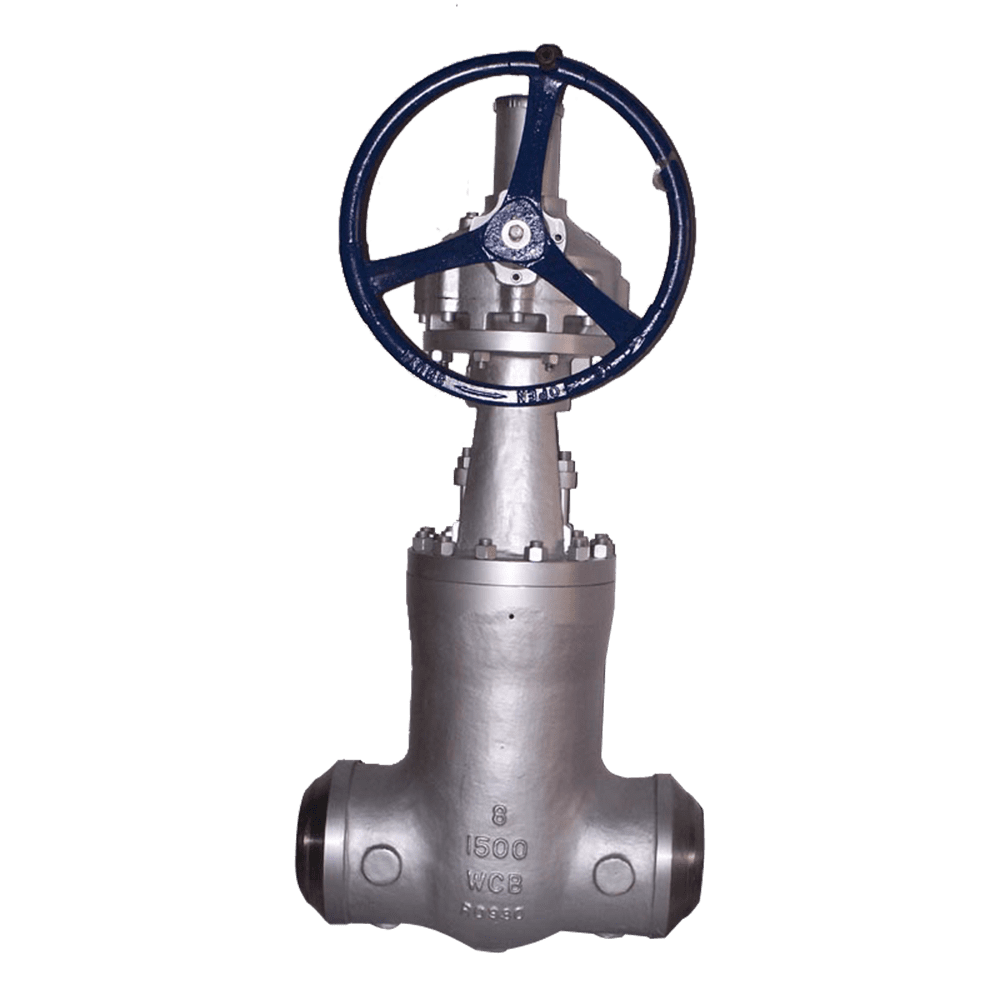
For multi-turn isolation, specifications written to API 600 point to API 6FA. That covers the bonnet joint, stem packing and seat system of a flanged or bolted-bonnet gate valve as well as higher pressure designs. On pipeline service, the API 600 gate valve range is normally what purchasers mean when they write “API 6FA fire safe” into a line list, and high-pressure variants such as a pressure seal gate valve should carry qualification evidence for their own size and class.
Pipeline ball valves — read the governing spec
Here the answer is genuinely “read the purchase specification”. A ball valve bought to API 6D for a pipeline may be cited to API 6FA, while the same size ball valve bought to API 608 for a process unit is cited to API 607. That distinction — not valve geometry — decides the test. If you are unclear which standard governs your line, see our breakdown of the API 6D vs API 608 ball valve specifications.
Not sure which fire test your line list needs?
Send us the valve type, size range, pressure class and service fluid. Sedelon engineers will confirm whether API 607 or API 6FA governs each line and quote accordingly — no substitutions appearing at submittal stage.
Where Fire-Safe Valves Are Effectively Mandatory
In practice, the requirement is rarely written as “install fire-safe valves”. It arrives through owner standards, client specifications, insurer conditions, or process-safety regulation — and those all converge on the same plants and units.
- Refinery process units — any unit handling flammable hydrocarbon streams above their flash point.
- Petrochemical and chemical plants — particularly lines carrying flammable solvents, ethylene, propylene or aromatics. Our guide to valve selection for corrosive and hazardous petrochemical media covers the material side of this duty.
- LNG and gas processing — large flammable inventories with cryogenic handling upstream of the fire risk.
- Offshore platforms and terminals — congested layouts where a release cannot disperse and escape routes are limited.
- Tank farms, loading racks and marine jetties — predictable liquid inventory sitting under transfer equipment.
- Emergency shutdown (ESD) and isolation duty — wherever the valve must be operable while emergency responders are working.
The common thread is not the fluid alone; it is fluid plus a credible ignition source in the same fire area. That combination is what process hazard analysis flags, and what drives the specification.
When Your System Actually Needs Them: A Working Checklist
Use this before adding fire-safe requirements to every line on the project — over-specifying is real money, and under-specifying is a safety gap.
- Does the line carry a flammable or toxic fluid inventory? If yes, treat fire-safe as the default.
- Is there credible ignition in the same fire area — a fired heater, pump seal, compressor, manifold or loading arm?
- Is the valve on emergency shutdown, isolation or depressuring duty where post-incident operation matters?
- Does the governing owner standard, client specification or insurer require fire type-testing?
- Is the valve soft-sealed? If so, secondary metal-to-metal contact plus graphite stem sealing is required — a metal-to-metal seal ball valve already provides the secondary contact many fire-safe designs rely on.
- Is the valve actuated? Then the actuator, its mounting to ISO 5211, and any gear operator must be considered part of the fire-safe package, not an accessory.
Answer “yes” to the first question alongside any other item and fire-safe type-tested construction belongs in the specification. Where the service is non-hazardous — utility water, instrument air, clean steam routed away from hydrocarbon inventories — the requirement is usually unnecessary unless the owner standard mandates it across the board.
Specifying Fire-Safe Valves Without Overpaying
Most cost and rework in this area comes from imprecise specification rather than from the hardware itself. The failures repeat across projects:
- Naming “fire-safe” without naming the standard and edition. This invites the cheapest interpretation, and it is discovered at document review, when the schedule is tightest.
- Assuming one qualification covers the whole catalogue. Fire qualification is scoped by valve type, size, pressure class and materials. Ask for the qualification scope in writing.
- Ignoring the actuator and mounting. If the assembly cannot be operated after the burn, the operability part of the test is meaningless in your installation.
- Treating graphite packing as sufficient on its own. Without secondary metal-to-metal seat contact, through-seat leakage after the soft seat fails will not meet limits.
- Assuming metal seats need no testing. Even fully metal-seated valves are type-tested to prove stem and body-joint containment, which has nothing to do with seat material.
- Not requesting the report. The type-test report — with standard edition, valve drawing number, size, class and report number — is your evidence. If a supplier cannot produce it, the claim is unverified.
- Applying fire-safe to every utility line. On genuinely non-hazardous services remote from hydrocarbon inventories it adds cost without reducing risk.
Note too that fire-safe testing is a separate requirement from fugitive-emission testing. They are frequently specified together on the same valve, but passing one does not demonstrate the other. If low emissions also apply, ask for evidence under the emission test standard as well.
Need documented fire type-test evidence?
Sedelon supplies fire-safe ball valves and gate valves with secondary metal seats, graphite stem and body sealing, and antistatic devices. Request type-test documentation for your size and class before you commit.
Frequently Asked Questions
What is the difference between API 607 and API 6FA?
API 607 is the fire test for quarter-turn valves and valves fitted with nonmetallic seats — typically ball, butterfly and plug valves in process service. API 6FA is the fire test written for valves in the pipeline and upstream family, and it is most often cited for multi-turn gate valves supplied to API 600, alongside pipeline ball and plug valves to API 6D. The test philosophy is similar; the valve populations differ.
Is ISO 10497 the same as API 607?
ISO 10497 is the international equivalent of API 607, and later editions have been effectively harmonised with each other. Many projects that purchase under ISO rather than API standards will specify ISO 10497 for exactly the valves where an API project would name API 607. If both appear acceptable in your specification, confirm which edition applies before ordering.
Do metal-seated valves still need fire-safe testing?
Usually yes, because a fire test is not only about the seat. Even with a metal primary seat, the standard still proves stem packing and body-joint containment under flame exposure, and proves the valve can be operated afterwards. Whether a project permits waiving the test depends on the governing owner specification rather than on the seat material alone.
Does API 6FA apply only to gate valves?
No, and this is a frequent misconception. API 6FA covers a broader valve population that includes API 6D ball and plug valves; gate valves simply dominate its everyday usage because they are the multi-turn isolation valve most pipelines specify. If your ball valve is being purchased to API 6D, check whether the specification calls up API 6FA rather than API 607.
How long does a fire test last and how hot does it get?
Both standards use a full flame envelope with thermocouples held in a defined high-temperature band, commonly in the order of 760–980 °C (1400–1800 °F), and a burn period of roughly 30 minutes for most sizes. Duration is set by the edition cited and by valve size and pressure class, so treat the report rather than the rule of thumb as the authority.
Does fire-safe certification cover the actuator as well?
The type test qualifies the valve, not a complete actuated assembly. In an installation, the operator still has to cycle the valve after the fire, so the actuator, gear operator, mounting hardware and any fire protection on the operator are part of your responsibility. Specify them as a package rather than assuming the valve certificate extends to the whole unit.
If a valve passed the test in one size, does that qualify other sizes?
Not automatically. Fire qualification is scoped by valve type, nominal size, pressure class, bore type and materials, with size-and-class grouping rules defined by the standard. Always check that the type-test report’s scope covers the specific combination you are buying, and ask for evidence if your line falls outside it.
When is a fire-safe valve legally required?
The requirement normally arrives indirectly, through owner standards, client specifications, insurer conditions or process-safety obligations on facilities handling flammable inventories, rather than through a single rule naming the standard. Practically, any soft-sealed valve in flammable hydrocarbon service should be treated as requiring fire-safe type-tested construction.
How do I verify a supplier really meets the claim?
Ask for the type-test report and read its scope. It should name the standard and edition, the valve type and drawing reference, size, pressure class, materials of construction, the testing laboratory, and the report number. A certificate without those specifics, or a promise that the range is covered “by extension”, should be challenged before purchase.
Conclusion
Choosing between API 607 and API 6FA comes down to what you are isolating: a quarter-turn ball valve in a process unit, or a multi-turn gate valve on a main line. Match the standard to the valve family and its governing product specification, then require the actual type-test report so the claim survives document review. Wherever a pool-fire scenario exists beside a flammable inventory, fire-safe design is not an upgrade — it is the expected baseline. Get the valve family right, insist on the report, and you buy yourself minutes that matter when the alarms are already sounding.
Specifying fire-safe valves for a project?
Share your line list, sizes, pressure classes and service fluids. Sedelon will tell you which standard governs each line, supply type-test evidence, and quote to it — for ball valves, gate valves and the actuated assemblies that go with them.
Related Resources
- API 6D vs API 608 Ball Valve: Which Specification Governs Your Line
- Trunnion Mounted vs Floating Ball Valve: Selection Guide
- High Temperature Gate Valves: Materials, Design & Selection for Thermal Service
- Valves for the Petrochemical Industry: Handling Corrosive and Hazardous Media
- API 609 Butterfly Valve: Soft Seat vs Metal Seat Material Selection