



Short answer: A gear operated globe valve is the right choice when a large-diameter line needs repeatable, precise throttling control but the unassisted handwheel force would be too high or too slow for safe operation. The gearbox multiplies input torque, protects the seat from slamming, and keeps the operator within ergonomic limits.
A gear operated globe valve combines a precision-machined throttling globe valve body with a worm-gear or bevel-gear operator, so plant engineers can modulate flow on large-diameter, high-pressure lines without fighting a heavy handwheel. In this guide we explain how the gear operator multiplies input torque, why it is safer and more repeatable than a handwheel on big sizes, and how to size, install, and maintain one. You will also get a torque-selection checklist and answers to the questions procurement and engineering teams ask most before issuing a requisition.
Key takeaways
- Gear operated globe valves are built for precise throttling on large pipelines where handwheel torque becomes excessive.
- The gearbox multiplies operator effort by a fixed ratio, typically from 8:1 up to 50:1 depending on valve size.
- Common design standards include API 600, API 602, BS 1873, and DIN 3356.
- Size one by line size, pressure class, material, required Cv/Kv, and target gear ratio.
What Is a Gear Operated Globe Valve?
A gear operated globe valve is a globe valve whose disc or plug is lifted and lowered by a handwheel through a sealed gearbox. The gearbox reduces the number of input turns and multiplies the torque delivered to the stem. The body still uses the classic S-shaped or Z-shaped flow path that forces the process fluid to change direction, which gives excellent throttling control and tight shutoff.
On large-size lines the unassisted handwheel force needed can exceed 300 N (about 70 lbf) at the rim. That is above the comfortable single-operator limit for repeated use and creates a real risk of over-torque damage to the seat and disc. The gear operator keeps rim pull within ergonomic limits and slows the closing action so the disc does not slam against the seat.
Why Use a Gear Operator for Throttling on Large-Diameter Lines?
On DN300 or larger, or ANSI Class 12″ and above, the differential pressure across a partially open globe valve creates significant hydrodynamic torque. A direct handwheel would need either an oversized wheel or high rim pull, which makes throttling slow, imprecise, and unsafe on elevated platforms or in confined installations. A gear operated globe valve solves this by multiplying input torque through the gearbox ratio.
The practical benefits include fewer input turns to move the disc across the full stroke, finer position adjustment for flow control, built-in self-locking in most worm-gear designs, and provision for padlocks or chain wheels. Because the operator cannot spin freely, it also prevents water-hammer-style slamming that can damage downstream equipment.
Explore Sedelon Gear Operated Globe Valves
Browse flanged, forged, and cast-steel gear operated globe valves in ANSI 150-2500 and DN15-DN1200 sizes.
Where Gear Operated Globe Valves Deliver the Most Value
The best applications are services where repeatable throttling matters more than full-bore, low-pressure-drop operation. Common examples include large-diameter steam headers, cooling-water distribution manifolds, petrochemical charge lines, boiler feedwater lines, district heating networks, and turbine bypass loops. In these duties the valve spends most of its life at a partial-open position, so smooth, low-effort positioning directly affects process stability and energy efficiency.
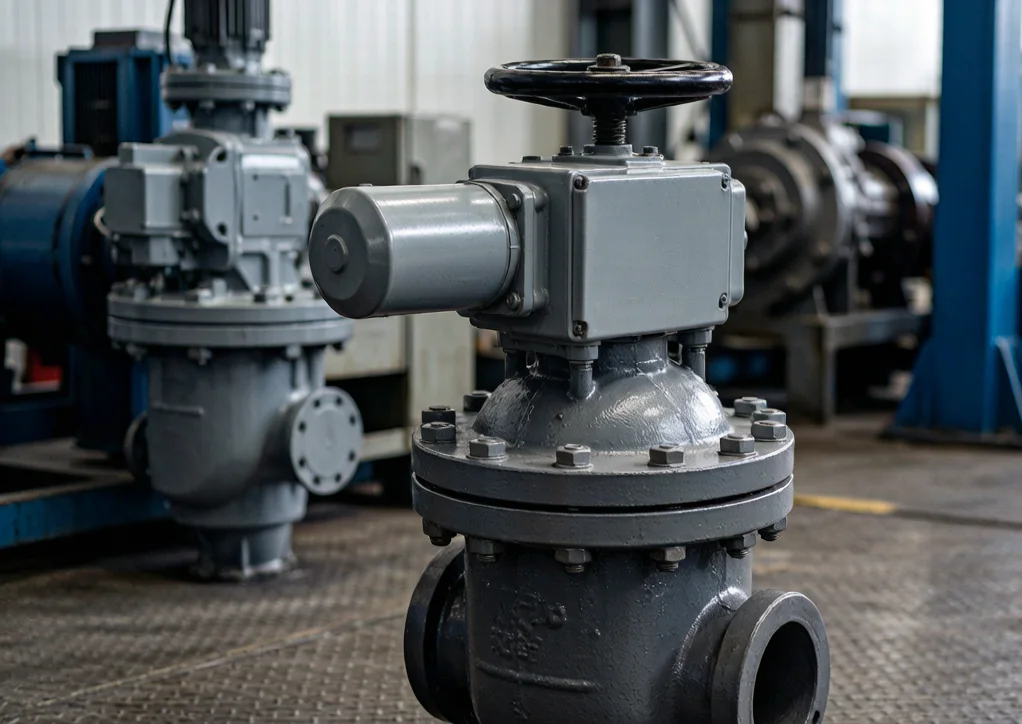
Because large lines are almost always flanged, the valve body usually matches a flanged globe valve design with raised-face or ring-type-joint ends. The gear operator is bolted to the yoke and sealed against dust and moisture, so it performs reliably outdoors or in wash-down areas.
How to Size and Specify a Gear Operated Globe Valve
Start by collecting the duty data: line size (DN or NPS), pressure class (PN or ANSI), design temperature, flow medium, required flow coefficient (Cv or Kv), maximum allowable leakage class, and end-connection type. Next, estimate the operating torque at maximum differential pressure and compare it against the allowable handwheel rim pull for your site. If the required rim pull exceeds roughly 120-150 N, move from a handwheel to a gear operator.
Standard references help you specify with confidence. API 600 covers cast steel bolted-bonnet globe valves, API 602 covers forged steel designs, BS 1873 is widely used for cast steel globe valves outside North America, and DIN 3356 defines the DIN family. Sedelon builds BS1873 globe valves and forged steel globe valves with gear operators to match each standard.
Request a Quote or Technical Datasheet
Send your line size, pressure class, and medium details. Sedelon’s engineers will return a valve spec with torque data and gear ratio.
Gear Operator vs Handwheel: Torque & Selection Checklist
Use the checklist below to decide whether a handwheel or a gear operator is the better fit. If two or more items point toward a gear operator, the extra investment is usually justified by safer operation and longer seat life.
| Selection factor | Handwheel | Gear operator |
|---|---|---|
| Rim pull on large sizes | High; can exceed safe limits | Low; torque is multiplied |
| Fine throttling | Difficult at high torque | Easy; high mechanical advantage |
| Operator fatigue | High on big valves | Low |
| Position holding | Depends on stem thread friction | Self-locking worm gear |
| Lockout / tagout | Limited | Built-in provisions |
| Relative cost | Lower initial cost | Higher, but reduces lifecycle risk |
A final reminder: if the application is isolation-only rather than throttling, a gate valve will usually give lower pressure drop and faster operation. The gear operated globe valve wins where flow modulation is the primary duty.
Installation and Maintenance Tips for Large-Diameter Lines
Correct installation protects both the valve and the gearbox. Mount the valve with the stem vertical where possible; side-mounted stems need independent pipe support to avoid bending loads on the body. Leave enough clearance above the handwheel and beside the gearbox for removal during future maintenance. Always flush the line before first startup so weld spool, scale, or construction debris cannot score the seat or disc.

Maintenance is straightforward but must be scheduled. Regrease the gearbox at the interval recommended by the manufacturer, typically every six to twelve months depending on duty and environment. Inspect gland packing and retighten bonnet studs after the first thermal cycle, then monitor torque trends; a sudden increase in operating effort usually indicates seat damage or debris, not gearbox wear.
Get Application Engineering Support
Not sure whether a gear operator is needed for your line? Share the duty data and Sedelon’s team will size the right valve and gear ratio.
When a Gear Operated Globe Valve Is Not the Best Choice
No valve is right for every service. Choose a different solution when the duty is on-off isolation rather than throttling, when the line carries abrasive solids that will erode the seating surfaces, when the valve must cycle frequently and automatically, or when the line size is small enough that a handwheel is clearly simpler and cheaper. Being honest about the limits of the technology is part of good engineering practice and is what keeps long-term relationships with plant owners strong.
Frequently Asked Questions
1. What is a gear operated globe valve and how does it work?
It is a globe valve whose disc is moved by a handwheel through a sealed gearbox. The gearbox multiplies the torque from the operator so a large, high-pressure valve can be opened, throttled, and closed with manageable rim pull.
2. When should I choose a gear operator instead of a handwheel?
Move to a gear operator when the calculated handwheel rim pull exceeds about 120-150 N, when the valve is installed in an elevated or confined position, or when precise throttling is required on DN300 / ANSI 12″ and larger lines.
3. Can a gear operated globe valve be used for throttling?
Yes. The globe valve body is inherently a throttling valve because the disc profile can be shaped for stable flow control. The gear operator simply makes that throttling action practical on large valves.
4. What size and pressure range are gear operated globe valves suitable for?
Sedelon manufactures gear operated globe valves across ANSI 150-2500 pressure classes and DN15-DN1200 line sizes. The gear operator becomes especially valuable at the upper end of the size range, where handwheel effort would otherwise be excessive.
5. How do I calculate the handwheel torque needed for a gear operated valve?
Calculate the total valve operating torque at maximum differential pressure, including seat load, packing friction, and hydrostatic unbalance. Divide that torque by the gear ratio to get the required input torque, then divide by the handwheel radius to get rim pull. Keep the final rim pull within your site’s ergonomic limit.
6. What standards apply to gear operated globe valves?
Common standards are API 600 and API 602 for steel valves, BS 1873 for cast steel globe valves, and DIN 3356 for DIN-standard designs. The gear operator itself is usually built to AWWA or manufacturer torque ratings rather than a single global standard.
7. How do I install and maintain a gear operated globe valve?
Install with the stem vertical where possible, flush the line before startup, and leave clearance for gearbox service. Grease the gearbox every six to twelve months, check packing after the first thermal cycle, and monitor operating torque for sudden increases.
Related Resources
- Ball Valve vs Globe Valve: Which One Should You Choose
- Globe Valve vs Gate Valve: Key Differences
- How to Select the Right Alloy Globe Valve for Your System
- Installation and Operational Tips for API602 Forged Globe Valves
- High Pressure Globe Valve with Electric Actuator
- Explore Sedelon Globe Valve Product Range
Conclusion
Gear operated globe valves are the practical choice whenever a large-diameter line needs repeatable throttling control without oversized handwheel effort or compromised operator safety. Specify by line size, pressure class, and body standard, confirm the gear ratio covers your expected torque, and plan for periodic gearbox lubrication. If your project is still at the selection stage, share your line data with Sedelon’s engineering team and we will match a tested valve to your duty. Explore the gear operated globe valve range or talk to our specialists before you issue the purchase requisition.