



What Is a Butterfly Valve Actuator?
A butterfly valve controls flow with a rotating disc, but the disc does not turn itself. The actuator is the power device that converts a manual, pneumatic, electric, or hydraulic input into the torque needed to rotate the stem. In simple on/off service a lever may be enough; in automated plants the actuator also holds the disc against line pressure, seats it tightly, and returns it to a safe position on loss of signal. Selecting the right actuator is therefore less about the valve and more about the duty cycle, torque demand, and fail-safe requirement of the line it serves.
Types of Butterfly Valve Actuators
Five operator families cover almost every butterfly valve application:
- Manual lever – direct, low-cost, for small bore and infrequent operation only.
- Gear operator – a worm-gear box that multiplies handwheel torque; standard above DN200 and for throttling.
- Pneumatic actuator – rack-and-pinion or scotch yoke, driven by plant air, fastest for cycling.
- Electric actuator – motorized, precise positioning, ideal where no air supply exists.
- Hydraulic actuator – high torque from fluid pressure, used on large bore and severe service.
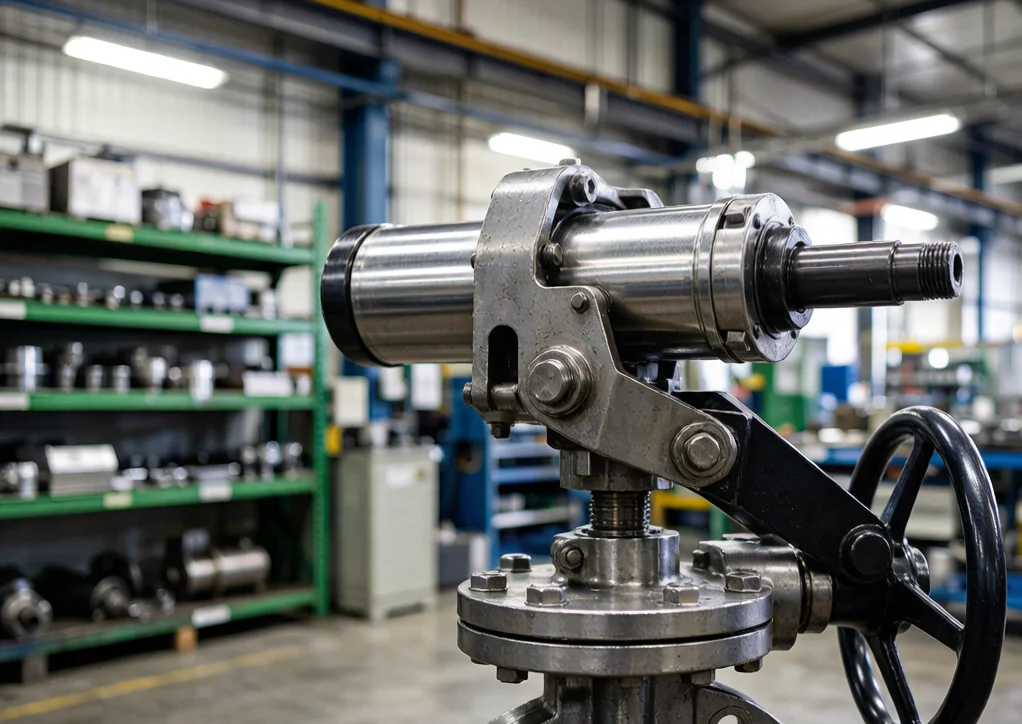
Sedelon supplies the full gear-operated butterfly valve range with ISO 5211 mounting faces, so actuators can be matched or retrofitted without custom brackets. For high-temperature or fire-safe lines, our triple-offset butterfly valve is commonly paired with scotch yoke or spring-return pneumatic actuators.
How to Size a Butterfly Valve Actuator
Sizing starts from torque, not bore. Two values matter: break (seating) torque – the peak needed to start moving the disc and crush the seat – and running torque – the lower value to keep it turning. The actuator must deliver break torque at the worst-case pressure differential, then a safety factor (typically 1.25–1.5) is applied for seat wear, temperature, and media buildup.
A practical seat-torque reference for resilient-seated butterfly valves (indicative, N·m at full differential):
| Nominal Size | Break Torque (approx.) | Suggested Operator |
|---|---|---|
| DN50–DN80 | 25–60 N·m | Lever / small gear |
| DN100–DN200 | 80–250 N·m | Gear operator |
| DN250–DN400 | 350–900 N·m | Gear / pneumatic |
| DN500+ | 1200 N·m and up | Pneumatic / hydraulic |
Need a verified torque figure for your line? Sedelon engineers calculate break and running torque from your pressure, size, and seat type, then size the gear, pneumatic, electric, or hydraulic actuator with the correct safety margin. See our gear-operated butterfly valves →
Manual Lever vs Gear Operator vs Automated
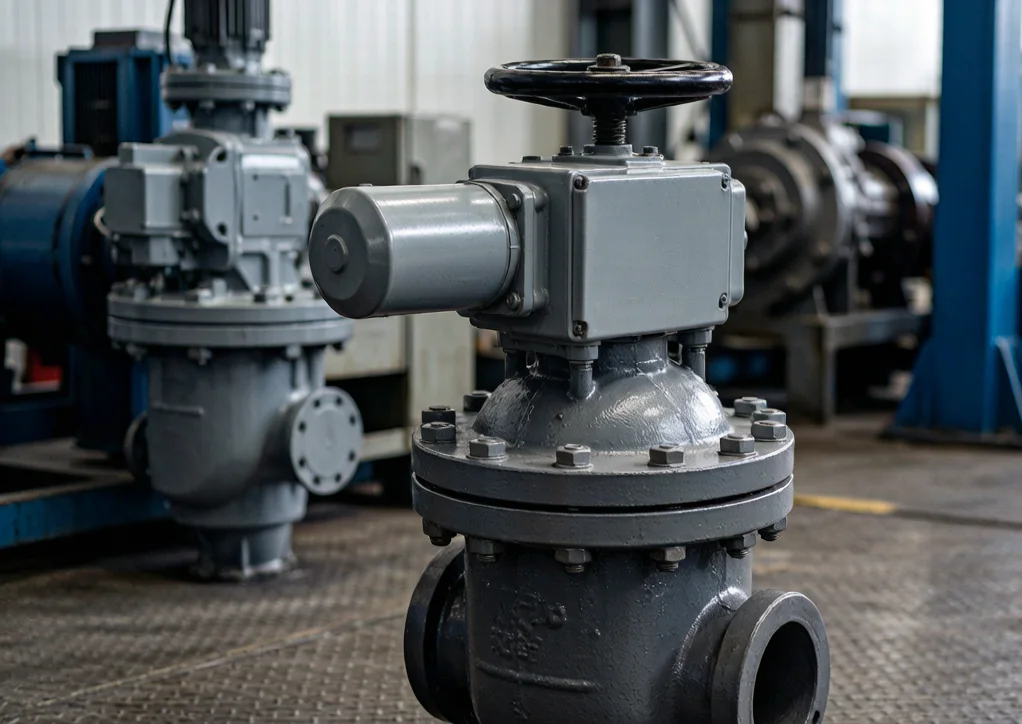
A lever is fine for DN80 and below with infrequent use, but torque rises sharply with bore, so most isolation and all throttling services use a gear operator. Automation is chosen when the valve must cycle on command, integrate with a DCS/PLC, or fail safe. The decision is rarely “which is best” and more “what does the duty cycle demand.”
Pneumatic vs Electric vs Hydraulic: When Each Wins
This is the most common actuator question, and the answer depends on your plant utility. Pneumatic actuators are fast, intrinsically safe, and simple—ideal for process plants with reliable air. Electric actuators give precise modulating control where no air exists, at the cost of speed. Hydraulic actuators deliver the highest torque for very large bore or high-pressure severe service. We cover the trade-offs in depth in our comparison of hydraulic, pneumatic, and electric actuators.
Actuator Type Selection Matrix
Use this matrix as a first-pass filter before running the torque calculation:
| Application | Recommended Actuator | Why |
|---|---|---|
| Small bore, manual isolation | Lever | Lowest cost, no utility |
| Throttling, DN200–DN400 | Gear operator / pneumatic | Torque + control |
| Fast cycling, process plant | Pneumatic (spring return) | Speed + fail-safe |
| Modulating, no air supply | Electric | Precise positioning |
| Large bore, high pressure | Hydraulic scotch yoke | Maximum torque |
Fail-Safe and Special Considerations
Fail-safe defines what the disc does on loss of power or signal. A spring-return pneumatic or hydraulic actuator drives the valve to fail-open or fail-closed; a double-acting actuator holds position. For fire-safe or emission-critical lines, pair the actuator with a API 609 butterfly valve and confirm stem and mounting integrity. Always specify fail position explicitly—omitting it is the single most common cause of incorrect supply.
Common Sizing Mistakes
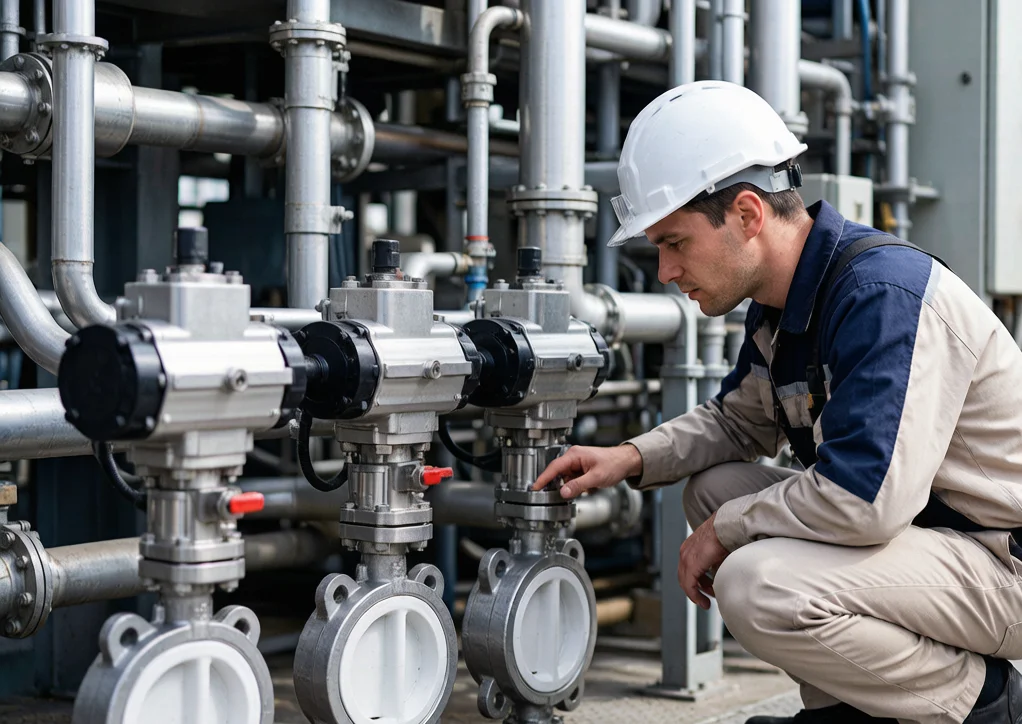
- Sizing on bore alone instead of break torque at differential pressure.
- Forgetting the safety margin for seat wear and temperature.
- Leaving fail-safe (spring return vs double-acting) unspecified.
- Mismatched ISO 5211 flange, forcing improvised brackets.
- Over-specifying a hydraulic unit where a pneumatic one is sufficient.
Frequently Asked Questions
1. What is a butterfly valve actuator and what does it do?
It is the power device that rotates the disc to open, close, or modulate flow, holding the disc against line pressure and returning it to a safe position on signal loss.
2. How do I choose between pneumatic, electric, and hydraulic actuators?
Base it on plant utility and duty: pneumatic for fast, safe cycling in air-equipped plants; electric for precise modulating control without air; hydraulic for maximum torque on large bore or severe service.
3. How do I calculate the actuator torque for a butterfly valve?
Use the worst-case break (seating) torque at full differential pressure, add a 1.25–1.5 safety factor for wear and media, and confirm the actuator’s output torque meets it across the air/electric range.
4. What does actuator sizing mean and why is it critical?
Sizing matches actuator output torque and stroke to the valve’s demand plus margin. Under-sizing causes failure to seat; over-sizing wastes cost and can damage the valve.
5. Can I retrofit a gear operator onto a lever-operated butterfly valve?
Yes, if the valve has an ISO 5211 mounting pad. Most Sedelon butterfly valves are built with this pad so a gear or automated actuator can be added later.
6. What is a scotch yoke actuator and when is it used?
A scotch yoke converts linear piston motion into 90° rotation with high starting torque. It is preferred for large bore, high-pressure, and fire-safe butterfly and ball valve service.
7. How do I select an actuator for fail-safe operation?
Specify spring-return (fail-open or fail-closed) for pneumatic or hydraulic units; the spring drives the disc to the safe position on loss of pressure or signal.
Related Resources
- Hydraulic vs Pneumatic vs Electric Actuators
- API 609 Butterfly Valve Material Selection Guide
- Triple Offset vs Double Offset Butterfly Valve
- Why Butterfly Valves Suit Control and Shut-Off
- Gate Valve vs Butterfly Valve
Conclusion
Correct butterfly valve actuator selection is never guesswork: it starts from break and running torque, adds a safety margin for seat wear and media, and ends with the right operator type for your power source and fail-safe need. Whether you need a simple gear operator for infrequent isolation or a spring-return pneumatic actuator for emergency shutoff, the sizing principles here apply. Sedelon’s engineers verify torque, ISO 5211 mounting, and actuator compatibility against your exact butterfly valve and duty cycle—so the valve closes when it must, every time.
Specifying a butterfly valve with an actuator? Send us your size, pressure, media, and fail-safe requirement and we will return a matched valve-plus-actuator package with verified torque data. Browse the Sedelon butterfly valve range →