



 Skip to content

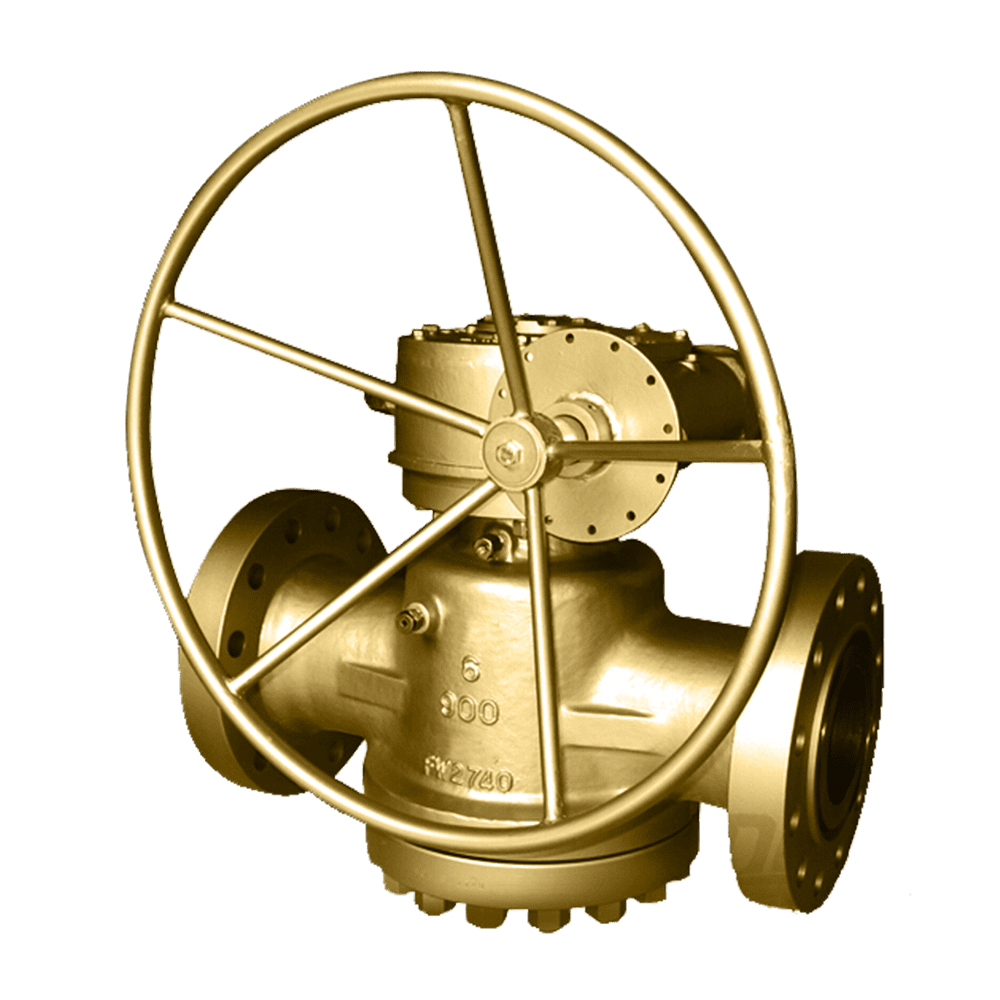
The difference between a plug valve and a ball valve only shows up in abrasive service. A ball valve carries a ring-shaped gap between ball and seat, where sand lodges, wears the sealing surfaces and then jams the ball. A plug valve holds a tapered plug against the body all round, with no passage for the medium to settle in. The quarter-turn action leaves the port fully aligned, so the valve passes a pig or scraper for cleaning.
The bronze matters for the medium, not the mechanism. C95800 nickel-aluminium bronze resists pitting and erosion in seawater far better than 316L, on a par with duplex, while C95500 is heat-treated and harder for high-velocity erosion in seabed and drilling muds. Bronze also does two things duplex cannot: copper ions discourage barnacle and mussel growth, and its galvanic potential sits close to steel, so it can share a cathodic protection system with steel pipe instead of accelerating that pipe's corrosion.
The body is cast nickel-aluminium bronze, with a full-bore plug and either a PTFE sleeve or a metal seat. When the seal wears, grease can be injected under pressure to restore it without taking the valve out of the line.
1. Seawater cooling and fire protection piping: The C95800 valve body is resistant to seawater pitting corrosion; bronze does not support marine biofouling, and the valve operates normally even after prolonged inactivity.
2. Seawater ballast and bilge water systems in ports and shipyards: The full-bore design allows for the passage of pipe cleaners to remove deposits and fouling from the pipes.
3. Seawater desalination and brine discharge pipelines: The chloride ion concentration in the brine is more than twice that of the feedwater; bronze and duplex steel are viable options.
4. Seawater lift and fire pump outlets on offshore platforms and FPSOs: In sandy seawater conditions, plug valves have no material accumulation zones, preventing ball valves from seizing.
5. Sand-laden crude oil and offshore oilfield produced water reinjection pipelines: Sand particles cause severe erosion to ball valves; plug valves provide full-circumferential sealing and are erosion-resistant.
6. Flue gas desulfurization (FGD) slurry and lime slurry pipelines: Slurry media containing solid particles; the flow path is straight-through, preventing material buildup and blockages.
Material selection:Bronze plug valves are commonly selected for seawater, desalination and offshore applications where corrosion resistance and reliability are required. C95800 and other aluminium bronze grades are preferred for marine environments due to their resistance to saltwater corrosion and erosion.
Service and sealing selection:Pressure-balanced plug designs are suitable for higher pressure applications where reduced operating torque and reliable shut-off are required. Sealing materials should be matched with the medium temperature and chemical compatibility, especially for chemical and hydrocarbon service.
Connection and application requirements:Flanged, butt-weld and other connection options should be selected according to piping requirements and maintenance conditions. For offshore, chemical and critical applications, specify material certification and inspection requirements according to project standards.
At the Tun Razak Exchange centralized cooling plant in Malaysia, conventional cast iron plug valves in chilled water systems containing 25% ethylene glycol frequently suffered from scaling and operating seizure. Flowork supplied NPS 1/2–2, Class 150 bronze lubricated plug valves featuring ASTM B62 C83600 bronze bodies and plugs, injection grooves for lubrication, PTFE sealing sleeves, and quarter-turn operation. Designed and tested according to API 599 requirements, the valves provided reliable flow isolation for district cooling applications. Since commissioning in 2022, the valves have operated for three years without sticking, reducing annual maintenance work orders and improving system availability to 99.6%.
Q: How do I choose between a bronze plug valve and a bronze ball valve?
A: By the medium. Where it carries sand or solids, or can settle and scale – sandy seawater, drilling mud, FGD slurry – choose the plug valve, whose all-round seal leaves no cavity for sand to wear or jam. Where the medium is clean, bubble-tight shut-off is required and the valve strokes often, choose the ball valve.
Q: Why does a plug valve not jam in abrasive service?
A: The tapered plug seals against the body all round, with none of the ring-shaped gap a ball valve carries between ball and seat, so sand has nowhere to lodge. The full-bore port also leaves no step for the medium to settle against, making it far more reliable than a ball valve in sand.
Q: What is in-line greasing for?
A: Sealing faces wear slightly over many strokes. With a grease-injection point, sealant can be injected while the line is under pressure, filling micro-gaps and restoring the seal without a shutdown or dismantling the valve. Specify it where the medium carries sand or the valve strokes often.
Q: What is the difference between C95800 and C95500, and which do I specify?
A: Both are nickel-aluminium bronzes, far more corrosion-resistant in seawater than 316L. C95800 is the corrosion grade for ordinary seawater; C95500 is heat-treated to higher strength and hardness for high-sand, high-velocity erosion such as seabed mud and sandy crude. Choose by sand content and flow velocity.
Class150 BronzePressure Balanced Plug Valve

| NPS | in | 2 | 2 1/2 | 3 | 4 | 6 | 8 | 10 | 12 | 14 | 16 | 18 | 20 | 24 |
| d | mm | 51 | 64 | 76 | 102 | 152 | 203 | 254 | 305 | 337 | 387 | 438 | 489 | 591 |
| L(RF) | mm | 178 | 190 | 203 | 229 | 394 | 457 | 533 | 610 | 686 | 762 | 864 | 914 | 1016 |
| d1 | mm | 92 | 105 | 127 | 157 | 216 | 270 | 324 | 381 | 413 | 470 | 533 | 584 | 692 |
| d2 | mm | 120.5 | 139.5 | 152.5 | 190.5 | 241.5 | 298.5 | 362 | 432 | 476 | 540 | 578 | 635 | 749.5 |
| D | mm | 152 | 178 | 190 | 229 | 279 | 343 | 406 | 483 | 533 | 597 | 635 | 699 | 813 |
| b | mm | 16 | 18 | 19 | 24 | 26 | 29 | 31 | 32 | 35 | 37 | 40 | 43 | 48 |
| n-Фd | mm | 4-19 | 4-19 | 4-19 | 8-19 | 8-22 | 8-22 | 12-25 | 12-25 | 12-29 | 16-29 | 16-32 | 20-32 | 20-35 |
| H | mm | 175 | 180 | 190 | 214 | 270 | 370 | 420 | 490 | 500 | 645 | 690 | 740 | 800 |
| W | mm | 350 | 600 | 700 | 700 | 900 | 600 | 600 | 600 | 600 | 700 | 760 | 760 | 760 |
Class300 BronzePressure Balanced Plug Valve

| NPS | in | 2 | 2 1/2 | 3 | 4 | 6 | 8 | 10 | 12 | 14 | 16 | 18 | 20 | 24 |
| d | mm | 51 | 64 | 76 | 102 | 152 | 203 | 254 | 305 | 337 | 387 | 432 | 483 | 584 |
| L(RF) | mm | 216 | 241 | 283 | 305 | 403 | 502 | 568 | 648 | 762 | 838 | 914 | 991 | 1143 |
| d1 | mm | 92 | 105 | 127 | 157 | 216 | 270 | 324 | 381 | 413 | 470 | 533 | 584 | 692 |
| d2 | mm | 127 | 149 | 168.5 | 200 | 270 | 330 | 387.5 | 451 | 514.5 | 571.5 | 628.5 | 686 | 813 |
| D | mm | 165 | 190 | 210 | 254 | 318 | 381 | 445 | 521 | 584 | 648 | 711 | 775 | 914 |
| b | mm | 23 | 26 | 29 | 32 | 37 | 42 | 48 | 51 | 54 | 58 | 61 | 64 | 70 |
| n-Фd | mm | 8-19 | 8-22 | 8-22 | 8-22 | 12-22 | 12-25 | 16-29 | 16-32 | 20-32 | 20-35 | 24-35 | 24-35 | 24-41 |
| H | mm | 184 | 190 | 195 | 265 | 307 | 390 | 433 | 500 | 630 | 740 | 790 | 830 | 890 |
| W | mm | 500 | 550 | 600 | 700 | 900 | 600 | 600 | 700 | 700 | 760 | 760 | 760 | 760 |
Class600 BronzePressure Balanced Plug Valve

| NPS | in | 2 | 3 | 4 | 5 | 6 | 8 | 10 | 12 | 14 | 16 | 18 | 20 | 24 |
| d | mm | 51 | 76 | 102 | 127 | 152 | 200 | 248 | 298 | 327 | 375 | 419 | 464 | 559 |
| L(RF) | mm | 292 | 356 | 432 | 508 | 559 | 660 | 787 | 838 | 889 | 991 | 1092 | 1194 | 1397 |
| L(RTJ) | mm | 295 | 359 | 435 | 511 | 562 | 664 | 791 | 841 | 892 | 994 | 1095 | 1200 | 1407 |
| d1 | mm | 92 | 127 | 157 | 186 | 216 | 270 | 324 | 381 | 413 | 470 | 533 | 584 | 692 |
| d2 | mm | 127 | 168.5 | 216 | 267 | 292 | 349 | 432 | 489 | 527 | 603 | 654 | 724 | 838 |
| D | mm | 165 | 210 | 273 | 330 | 356 | 419 | 508 | 559 | 603 | 686 | 743 | 813 | 940 |
| b | mm | 26 | 32 | 38 | 45 | 48 | 56 | 64 | 67 | 70 | 77 | 83 | 89 | 102 |
| n-Фd | mm | 8-19 | 8-22 | 8-25 | 8-29 | 12-29 | 12-32 | 16-35 | 20-35 | 20-38 | 20-41 | 20-44 | 24-44 | 24-52 |
| H | mm | 194 | 205 | 270 | 300 | 350 | 405 | 460 | 500 | 630 | 740 | 790 | 830 | 890 |
| W | mm | 500 | 780 | 1100 | 600 | 600 | 600 | 600 | 700 | 700 | 760 | 760 | 760 | 760 |
Class900 BronzePressure Balanced Plug Valve

| NPS | in | 2 | 3 | 4 | 5 | 6 | 8 | 10 | 12 | 14 | 16 |
| d | mm | 47 | 73 | 98 | 121 | 146 | 190 | 234 | 282 | 311 | 354 |
| L(RF) | mm | 368 | 381 | 457 | 559 | 610 | 737 | 838 | 965 | 1029 | 1130 |
| L(RTJ) | mm | 371 | 384 | 460 | 562 | 613 | 740 | 841 | 968 | 1039 | 1140 |
| d1 | mm | 92 | 127 | 157 | 186 | 216 | 270 | 324 | 381 | 413 | 470 |
| d2 | mm | 165 | 190.5 | 235 | 279.4 | 317.5 | 393.7 | 469.9 | 533.4 | 558.8 | 615.9 |
| D | mm | 216 | 241 | 292 | 349 | 381 | 470 | 545 | 610 | 640 | 705 |
| b | mm | 38.5 | 38.5 | 44.5 | 51 | 56 | 64 | 70 | 79.5 | 86 | 89 |
| n-Фd | mm | 8-26 | 8-26 | 8-32 | 8-35 | 12-32 | 12-39 | 16-39 | 20-39 | 20-42 | 20-45 |
| H | mm | 215 | 250 | 300 | 350 | 365 | 405 | 460 | 510 | 550 | 600 |
| W | mm | 700 | 800 | 1100 | 600 | 700 | 760 | 760 | 760 | 760 | 760 |


 Optimized by Seraphinite Accelerator