


 Skip to content
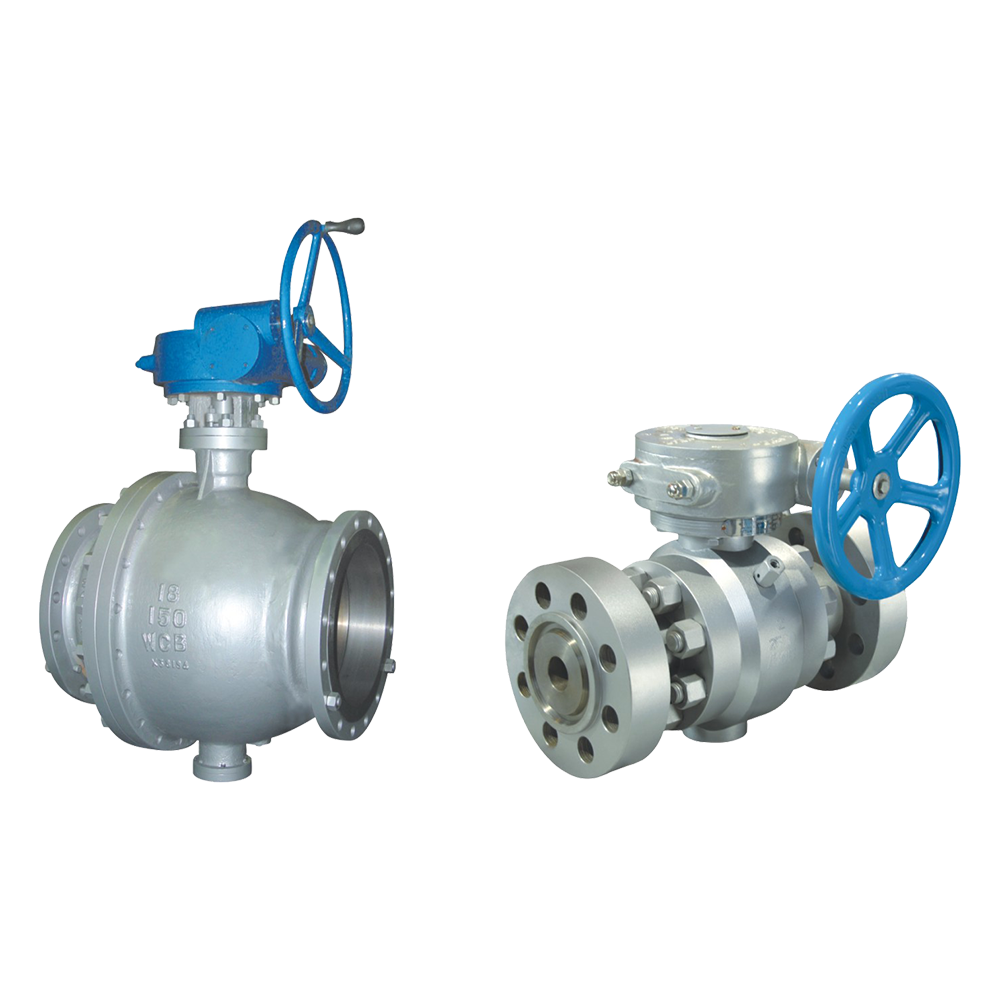
Flange end Dimension :ANSI B16.5
Butt Welded Dimensions:ANSI B16.25
Design and Manufacture:API 6D
Pressure Test:API598
Materials:A105、 F304 、F304L 、F316 、F316L、LF1 、LF2、LF3、LF9、 F51、F53、F11、F22, ect.
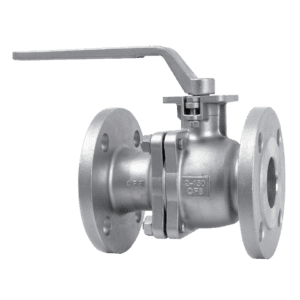
The valve body is a standard quarter-turn ball valve; the difference is the actuator. A gearbox (worm-gear or bevel-gear reduction) sits between the handwheel and the stem, so several turns of the handwheel produce one 90° rotation of the ball. This reduction multiplies the operator’s torque, letting a single person open or close a large-bore or high-pressure valve that a direct lever could not move. The handwheel position always shows whether the ball bore is aligned with the pipeline (open) or at 90° (closed).
| Service / Media | Body | Ball | Stem | Seat |
|---|---|---|---|---|
| General water / air / oil | A105 (forged) | A105 / F304 | A182 F6a | PTFE / RPTFE |
| Corrosive / chemical | F316 (CF8M) | F316 | F316 | RPTFE / PEEK |
| Cryogenic LNG | LF2 / LF3 | F304 | F304 | PCTFE / PEEK |
| High-temp steam / oil | F11 / F22 | F11 | F11 | Grafoil / metal |
| Offshore / seawater | F51 / F53 (duplex) | F51 | F51 | RPTFE |
| Sour service (H2S) | A105 (NACE) | F304 | F6a (NACE) | PEEK |
Gear operated ball valves are used where lever torque is insufficient — large-bore lines, high-pressure systems, buried or hard-to-reach valves, and stations that need a lockable open/closed state. Typical service includes oil & gas pipelines, refineries, petrochemical plants, power stations, tank farms and general industrial utilities.
Q: What is a gear operated ball valve?
A: A quarter-turn ball valve fitted with a gearbox actuator that multiplies hand torque, so large or high-pressure valves can still be operated manually.
Q: When do I need a gear operator instead of a lever?
A: Choose a gear operator when the line is large-bore (roughly NPS 10″ and above), high-pressure, buried/hard to reach, or requires a lockable position. For smaller, easily reached lines a lever operated ball valve is enough.
Q: Can the gear operator be locked or later automated?
A: Yes — the handwheel can be padlocked open or closed, and the gearbox can later be adapted to a pneumatic or electric actuator if automation is required.
Q: Floating vs trunnion ball for gear operated valves?
A: Smaller gear operated valves use a floating ball; larger bore / higher-pressure units use a trunnion mounted ball valve with a supported ball.
Q: What standards and end connections apply?
A: Design and manufacture to API 6D, face-to-face to ANSI B16.10, flanged ends to ANSI B16.5, butt-weld ends to ANSI B16.25, pressure-tested to API 598.
Q: Are you a manufacturer, and can you supply samples?
A: SEDELON is a ball valve manufacturer. We provide drawings, material certificates (EN 10204 3.1) and a fast sample quote — contact us for a 3-day sample quotation.
Class150
Gear open ball valves
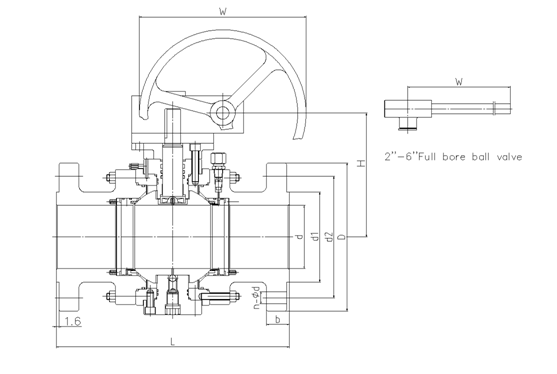
| NPS | in | 2 | 2 1/2 | 3 | 4 | 6 | 8 | 10 | 12 | 14 | 16 | 18 | 20 | 24 |
| d | mm | 51 | 64 | 76 | 102 | 152 | 203 | 254 | 305 | 337 | 387 | 438 | 489 | 591 |
| L(RF) | mm | 178 | 190 | 203 | 229 | 394 | 457 | 533 | 610 | 686 | 762 | 864 | 914 | 1016 |
| d1 | mm | 92 | 105 | 127 | 157 | 216 | 270 | 324 | 381 | 413 | 470 | 533 | 584 | 692 |
| d2 | mm | 120.5 | 139.5 | 152.5 | 190.5 | 241.5 | 298.5 | 362 | 432 | 476 | 540 | 578 | 635 | 749.5 |
| D | mm | 152 | 178 | 190 | 229 | 279 | 343 | 406 | 483 | 533 | 597 | 635 | 699 | 813 |
| b | mm | 16 | 18 | 19 | 24 | 26 | 29 | 31 | 32 | 35 | 37 | 40 | 43 | 48 |
| n-Фd | mm | 4-19 | 4-19 | 4-19 | 8-19 | 8-22 | 8-22 | 12-25 | 12-25 | 12-29 | 16-29 | 16-32 | 20-32 | 20-35 |
| H | mm | 176 | 200 | 215 | 252 | 330 | 448 | 505 | 556 | 620 | 700 | 750 | 805 | 1110 |
| W | mm | 350 | 400 | 400 | 500 | 1000 | 300 | 350 | 400 | 500 | 500 | 500 | 500 | 500 |
Class300
Gear open ball valves
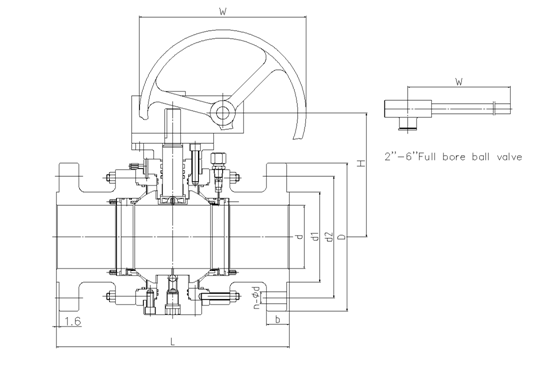
| NPS | in | 2 | 2 1/2 | 3 | 4 | 6 | 8 | 10 | 12 | 14 | 16 | 18 | 20 | 24 |
| d | mm | 51 | 64 | 76 | 102 | 152 | 203 | 254 | 305 | 337 | 387 | 432 | 483 | 584 |
| L(RF) | mm | 216 | 241 | 283 | 305 | 403 | 502 | 568 | 648 | 762 | 838 | 914 | 991 | 1143 |
| d1 | mm | 92 | 105 | 127 | 157 | 216 | 270 | 324 | 381 | 413 | 470 | 533 | 584 | 692 |
| d2 | mm | 127 | 149 | 168.5 | 200 | 270 | 330 | 387.5 | 451 | 514.5 | 571.5 | 628.5 | 686 | 813 |
| D | mm | 165 | 190 | 210 | 254 | 318 | 381 | 445 | 521 | 584 | 648 | 711 | 775 | 914 |
| b | mm | 23 | 26 | 29 | 32 | 37 | 42 | 48 | 51 | 54 | 58 | 61 | 64 | 70 |
| n-Фd | mm | 8-19 | 8-22 | 8-22 | 8-22 | 12-22 | 12-25 | 16-29 | 16-32 | 20-32 | 20-35 | 24-35 | 24-35 | 24-41 |
| H | mm | 176 | 200 | 215 | 252 | 330 | 448 | 505 | 556 | 620 | 700 | 750 | 805 | 1110 |
| W | mm | 350 | 400 | 400 | 500 | 1000 | 300 | 350 | 400 | 500 | 500 | 500 | 500 | 500 |
Class600
Gear open ball valves
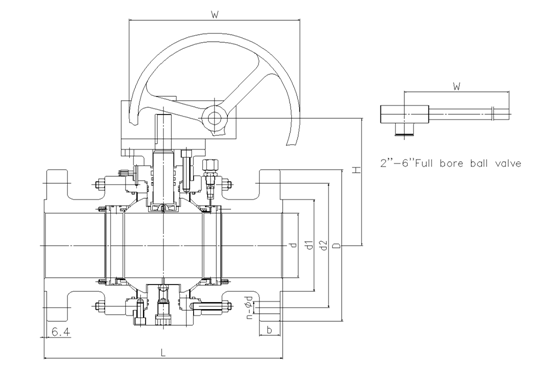
| NPS | in | 2 | 3 | 4 | 5 | 6 | 8 | 10 | 12 | 14 | 16 | 18 | 20 | 24 |
| d | mm | 51 | 76 | 102 | 127 | 152 | 200 | 248 | 298 | 327 | 375 | 419 | 464 | 559 |
| L(RF) | mm | 292 | 356 | 432 | 508 | 559 | 660 | 787 | 838 | 889 | 991 | 1092 | 1194 | 1397 |
| d1 | mm | 92 | 127 | 157 | 186 | 216 | 270 | 324 | 381 | 413 | 470 | 533 | 584 | 692 |
| d2 | mm | 127 | 168.5 | 216 | 267 | 292 | 349 | 432 | 489 | 527 | 603 | 654 | 724 | 838 |
| D | mm | 165 | 210 | 273 | 330 | 356 | 419 | 508 | 559 | 603 | 686 | 743 | 813 | 940 |
| b | mm | 26 | 32 | 38 | 45 | 48 | 56 | 64 | 67 | 70 | 77 | 83 | 89 | 102 |
| n-Фd | mm | 8-19 | 8-22 | 8-25 | 8-29 | 12-29 | 12-32 | 16-35 | 20-35 | 20-38 | 20-41 | 20-44 | 24-44 | 24-52 |
| H | mm | 192 | 279 | 315 | 320 | 323 | 381 | 518 | 568 | 665 | 730 | 795 | 825 | 973 |
| W | mm | 600 | 1000 | 1500 | 1500 | 1500 | 500 | 500 | 500 | 500 | 500 | 500 | 500 | 500 |
Class900
Gear open ball valves
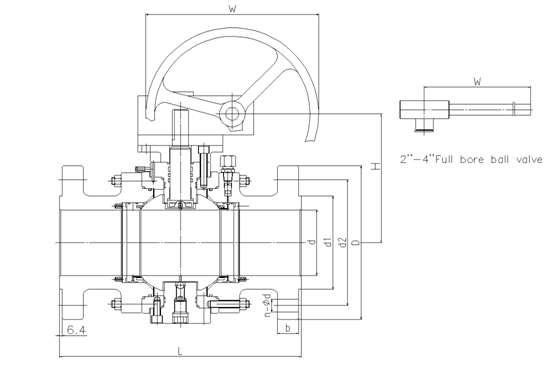
| NPS | in | 2 | 3 | 4 | 5 | 6 | 8 | 10 | 12 | 14 | 16 | 18 | 20 | 24 |
| d | mm | 47 | 73 | 98 | 121 | 146 | 190 | 234 | 282 | 311 | 354 | 400 | 444 | 533 |
| L(RF) | mm | 368 | 381 | 457 | 559 | 610 | 737 | 838 | 965 | 1029 | 1130 | 1219 | 1321 | 1549 |
| L(RTJ) | mm | 371 | 384 | 460 | 562 | 613 | 740 | 841 | 968 | 1039 | 1140 | 1232 | 1334 | 1568 |
| d1 | mm | 92 | 127 | 157 | 186 | 216 | 270 | 324 | 381 | 413 | 470 | 533 | 584 | 692 |
| d2 | mm | 165 | 190.5 | 235 | 279.4 | 317.5 | 393.7 | 469.9 | 533.4 | 558.8 | 615.9 | 685.8 | 749.3 | 901.7 |
| D | mm | 216 | 241 | 292 | 349 | 381 | 470 | 545 | 610 | 640 | 705 | 785 | 855 | 1040 |
| b | mm | 38.5 | 38.5 | 44.5 | 51 | 56 | 64 | 70 | 79.5 | 86 | 89 | 102 | 108 | 140 |
| n-Фd | mm | 8-26 | 8-26 | 8-32 | 8-35 | 12-32 | 12-39 | 16-39 | 20-39 | 20-42 | 20-45 | 20-51 | 20-54 | 20-67 |
| H | mm | 192 | 279 | 315 | 320 | 323 | 381 | 518 | 568 | 665 | 730 | 795 | 825 | 973 |
| W | mm | 600 | 1000 | 1500 | 1500 | 500 | 500 | 500 | 500 | 500 | 500 | 500 | 500 | 500 |
API Trim NO.
Table
|
No |
Seat |
Gate、disc 、ball or body |
Stem |
No |
Seat |
Gate、disc 、ball or body |
Stem | |
| 01 | 13Cr | 13Cr | 13Cr | 31 | STELLITE | 321SS | 321SS | |
| 02 | 304SS | 304SS | 304SS | 32 | STELLITE | STELLITE | 321SS | |
| 03 | 310SS | 310SS | 310SS | 33 | 347SS | 347SS | 347SS | |
| 04 | HARD 13Cr | HARD 13Cr | 13Cr | 34 | STELLITE | 347SS | 347SS | |
| 05 | STELLITE | STELLITE | 13Cr | 35 | NICKEL ALLOY | 13Cr | 13Cr | |
| 06 | Cu-Ni | 13Cr | 13Cr | 36 | A105/PTFE | A105+ENP | A105+ENP | |
| 07 | 13Cr | HARD 13Cr | 13Cr | 37 | A105/PTFE | WCB+ENP | A105+ENP | |
| 08 | STELLITE | 13Cr | 13Cr | 38 | 13Cr/PTFE | 13Cr | 13Cr | |
| 09 | Cu-Ni | Cu-Ni | Cu-Ni | 39 | 304SS/PTFE | 304SS | 304SS | |
| 10 | 316SS | 316SS | 316SS | 40 | 316SS/PTFE | 316SS | 316SS | |
| 11 | Cu-Ni | STELLITE | Cu-Ni | 41 | A105/RPTFE | A105+ENP | A105+ENP | |
| 12 | STELLITE | 316SS | 316SS | 42 | A105/RPTFE | WCB+ENP | A105+ENP | |
| 13 | ALLOY 20 | ALLOY 20 | ALLOY 20 | 43 | 13Cr/RPTFE | 13Cr | 13Cr | |
| 14 | STELLITE | ALLOY 20 | ALLOY 20 | 44 | 304SS/RPTFE | 304SS | 304SS | |
| 15 | STELLITE | STELLITE | 304SS | 45 | 316SS/RPTFE | 316SS | 316SS | |
| 16 | STELLITE | STELLITE | 316SS | 46 | A105/NYLON | A105+ENP | A105+ENP | |
| 17 | STELLITE | STELLITE | 347SS | 47 | A105/NYLON | WCB+ENP | A105+ENP | |
| 18 | STELLITE | STELLITE | ALLOY 20 | 48 | A105/NYLON | 304SS | 304SS | |
| 19 | MONEL | MONEL | MONEL | 49 | A105/NYLON | 316SS | 316SS | |
| 20 | BRONZE | BRONZE | 13Cr | 50 | 13Cr/NYLON | 13Cr | 13Cr | |
| 21 | HASTELLOY B | HASTELLOY B | HASTELLOY B | 51 | 304SS/NYLON | 304SS | 304SS | |
| 22 |
| HASTELLOY C | HASTELLOY C | 52 | 316SS/NYLON | 316SS | 316SS | |
| 23 | STELLITE | 304SS | 304SS | 53 | A105/PEEK | A105+ENP | A105+ENP | |
| 24 | 304LSS | 304LSS | 304LSS | 54 | A105/PEEK | WCB+ENP | A105+ENP | |
| 25 | STELLITE | 304LSS | 304LSS | 55 | 13Cr/PEEK | 13Cr | 13Cr | |
| 26 | STELLITE | STELLITE | 304LSS | 56 | 304SS/PEEK | 304SS | 304SS | |
| 27 | 316LSS | 316LSS | 316LSS | 57 | 316SS/PEEK | 316SS | 316SS | |
| 28 | STELLITE | 316LSS | 316LSS |
|
|
|
|
|
| 29 | STELLITE | STELLITE | 316LSS |
|
|
| ||
| 30 | 321SS | 321SS | 321SS |
|
|
|
| |
Note:please indicate it directly in the
order for the internal part’smaterial uncovered in the table
 Optimized by Seraphinite Accelerator