



 Skip to content

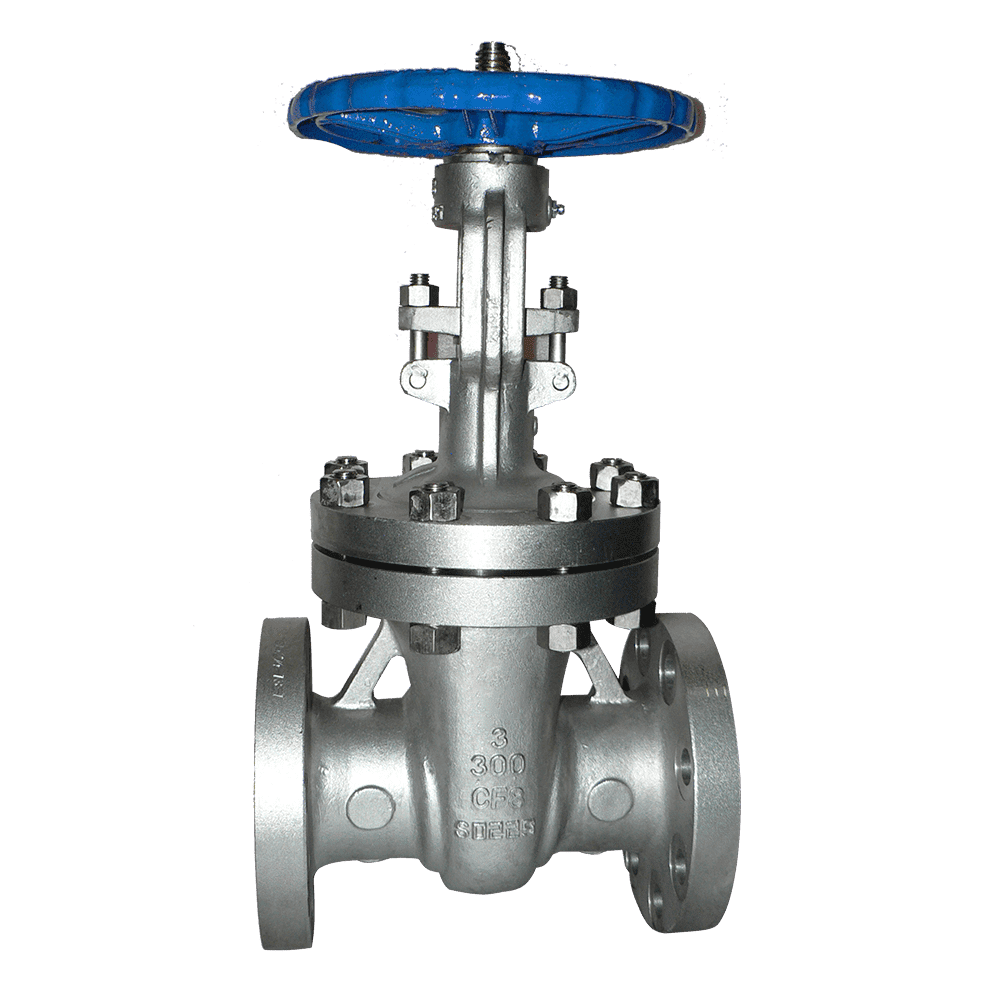
The decision to use a stainless steel gate valve depends primarily on how the process medium affects carbon steel. Carbon steel gate valves can corrode in chemical process media and seawater. Rust formation on the seating surfaces can prevent the gate from achieving tight shutoff, while detached rust particles may contaminate the process medium or obstruct downstream equipment. CF8 and CF8M stainless steels rely on a chromium-rich passive film to resist corrosion. They are suitable for selected chloride-containing process water, acid and alkali solutions, and seawater applications. Their corrosion resistance is particularly important in pharmaceutical, food processing, and fine chemical systems where iron contamination must be minimized.
The gate valve's design makes it suitable for isolation rather than flow regulation. The gate moves vertically along the seat, withdrawing completely from the flow path when fully open. This produces very low flow resistance, making the valve suitable for main pipeline isolation. However, gate valves are designed for fully open or fully closed operation. When held partially open, high-velocity flow can erode the gate edges and seating surfaces, quickly forming grooves and compromising shutoff performance. For flow regulation, a globe valve should be selected instead.
Stainless steel grades and their limitations must also be considered. CF8 (304) is suitable for general service, while CF8M (316), which contains molybdenum, offers improved resistance to pitting corrosion in many chloride-containing and mildly acidic environments. CF3 and CF3M are low-carbon grades suited to applications requiring welding. Stainless steel generally has lower strength and hardness than many carbon steels, so large-bore, high-pressure gate valves often require hardfacing on the gate sealing surfaces to improve erosion resistance.
In high-total-acid-number (TAN) crude oil service, naphthenic acid corrosion of carbon steel generally becomes more severe as temperature increases within the relevant operating range. Such applications may require CF8M (316) construction and hardfaced sealing surfaces, subject to the actual crude oil composition, temperature, and flow conditions.
High-TAN crude oil atmospheric and vacuum distillation units: CF8M bodies provide improved resistance to naphthenic acid corrosion under suitable operating conditions.
Chemical process water and acid/alkali lines: CF8M stainless steel offers improved corrosion resistance in compatible chloride-containing and mildly acidic services.
Seawater and cooling water pipelines: 316 stainless steel can provide improved resistance to chloride-induced corrosion compared with 304, subject to chloride concentration, temperature, and other service conditions.
Pharmaceutical and food processing lines: Stainless steel construction helps minimize contamination from corrosion products; surface finish and cleanliness requirements should be specified separately.
Power plant chemical water and condensate lines: Stainless steel bodies help maintain water quality when the material grade is properly matched to the chemistry.
Material Selection: Choose CF8M (316) for compatible chloride-containing process water, mildly acidic media, and selected seawater applications. CF8 (304) is suitable for less aggressive general service. Specify low-carbon grades CF3 or CF3M where welding requirements and corrosion conditions warrant their use.
Intended Service: Gate valves are designed for fully open or fully closed operation and should not be used for throttling. Where flow regulation is required, consider a globe valve or butterfly valve, depending on the process conditions.
Pressure Class and Size: The product range covers NPS 2–24 and Class 150–2500. For large-bore, high-pressure applications, consider a gearbox to reduce manual operating effort and provide adequate operating torque.
Sealing Surfaces and Corrosion Protection: For services involving solids or significant erosive flow, consider hardfacing the gate sealing surfaces with a suitable hard alloy. Avoid direct contact between dissimilar stainless steel and carbon steel components where galvanic corrosion may occur. Insulating flange gaskets and sleeves may be considered after evaluating the electrical continuity and corrosion-control requirements of the piping system.
Rosneft Refinery, Russia – Atmospheric and Vacuum Distillation Unit
Rosneft's atmospheric and vacuum distillation unit processes high-TAN crude oil with a total acid number exceeding 1.0. The original carbon steel gate valves, rated Class 300, developed internal leakage within 14 months due to naphthenic acid corrosion and erosion of the sealing surfaces. The resulting failures required shutdowns for maintenance and pipeline replacement.
Flowork supplied 44 stainless steel gate valves in sizes NPS 6–18, rated Class 300, featuring CF8M stainless steel bodies, 316 stainless steel trim, rising stems, flexible wedge gates, Stellite 6 hardfaced sealing surfaces, and RF flanged end connections. The valves were designed in accordance with API 600 and underwent shell and seat leakage testing in accordance with API 598, witnessed on site by Rosneft's technical inspection team.
Since commissioning in May 2021, the valves have reportedly operated for four consecutive years without corrosion-related failures or internal leakage. Unplanned shutdowns caused by valve failures have decreased from three per year to zero, increasing the availability of the atmospheric and vacuum distillation unit to 99.1%.
Q1: What should be done if a gate valve continues to leak internally when fully closed?
First, fully open the valve to flush out any debris trapped between the sealing surfaces, then close it fully. If leakage persists, isolate and depressurize the valve before disassembly. Inspect the gate and seat sealing surfaces, then lap or replace the damaged components as necessary.
Q2: Can a gate valve be used to regulate low flow rates?
No. Gate valves are designed for isolation, not throttling. When partially open, high-velocity flow can erode the gate and seat surfaces, creating grooves and compromising shutoff performance. Use a globe valve or a suitably selected butterfly valve for flow regulation.
Q3: Why should carbon steel gate valves be avoided in high-TAN crude oil service?
Naphthenic acid corrosion can accelerate at elevated temperatures, depending on crude oil composition, flow velocity, and other operating conditions. Corrosion and erosion can damage the seating surfaces and prevent tight shutoff. CF8M (316) stainless steel with suitable hardfacing may be appropriate, subject to a detailed materials assessment.
Q4: What precautions are needed when connecting a stainless steel valve to carbon steel piping?
Evaluate the risk of galvanic corrosion where dissimilar metals are in electrical contact in the presence of an electrolyte. Insulating gaskets and sleeves may be appropriate where required by the piping design and corrosion-control strategy. Also ensure that flange ratings, facing types, and gasket materials are compatible.
Q5: Can stem packing leakage be addressed while the valve is under pressure?
If the valve design and site procedures explicitly permit it, the packing gland follower may be adjusted carefully and evenly within the manufacturer's specified limits. If leakage persists, isolate and depressurize the valve before replacing the packing. Do not overtighten the packing, as excessive compression can increase stem operating torque and damage the packing or stem.
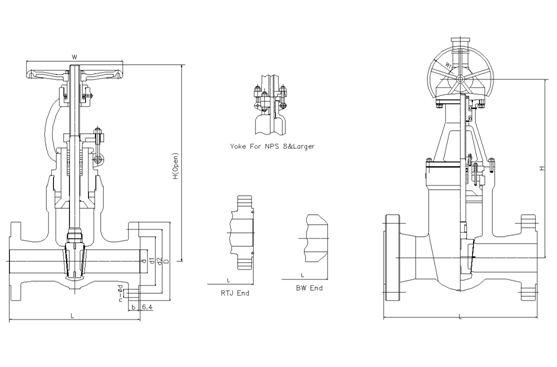
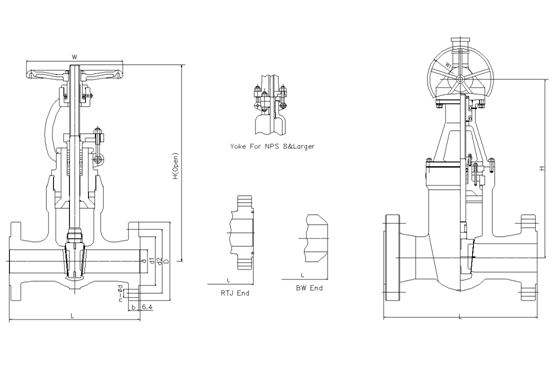
Class150 Stainless
Steel Gate Valve
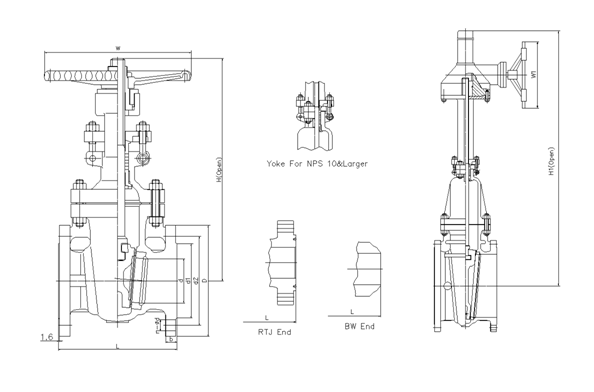
| NPS | in | 2 | 2 1/2 | 3 | 4 | 5 | 6 | 8 | 10 | 12 | 14 | 16 | 18 | 20 | 24 |
| d | mm | 51 | 64 | 76 | 102 | 127 | 152 | 203 | 254 | 305 | 337 | 387 | 438 | 489 | 591 |
| L(RF) | mm | 178 | 190 | 203 | 229 | 254 | 267 | 292 | 330 | 356 | 381 | 406 | 432 | 457 | 508 |
| L(BW) | mm | 216 | 241 | 283 | 305 | 381 | 403 | 419 | 457 | 502 | 572 | 610 | 660 | 711 | 813 |
| L(RTJ) | mm | 191 | 203 | 216 | 241 | 267 | 279 | 305 | 343 | 368 | 394 | 419 | 445 | 470 | 521 |
| d1 | mm | 92 | 105 | 127 | 157 | 186 | 216 | 270 | 324 | 381 | 413 | 470 | 533 | 584 | 692 |
| d2 | mm | 120.5 | 139.5 | 152.5 | 190.5 | 216 | 241.5 | 298.5 | 362 | 432 | 476 | 540 | 578 | 635 | 749.5 |
| D | mm | 152 | 178 | 190 | 229 | 254 | 279 | 343 | 406 | 483 | 533 | 597 | 635 | 699 | 813 |
| b | mm | 16 | 18 | 19 | 24 | 24 | 26 | 29 | 31 | 32 | 35 | 37 | 40 | 43 | 48 |
| n-Фd | mm | 4-19 | 4-19 | 4-19 | 8-19 | 8-22 | 8-22 | 8-22 | 12-25 | 12-25 | 12-29 | 16-29 | 16-32 | 20-32 | 20-35 |
| H | mm | 400 | 435 | 515 | 595 | 725 | 780 | 975 | 1150 | 1380 | 1545 | 1733 | 1915 | 2122 | 2520 |
| H1 | mm | 820 | 1020 | 1200 | 1430 | 1580 | 1780 | 1990 | 2220 | 2600 | |||||
| W | mm | 200 | 200 | 250 | 280 | 280 | 300 | 350 | 400 | 450 | 500 | 500 | 500 | 600 | 600 |
| W1 | mm | 310 | 310 | 310 | 310 | 310 | 460 | 460 | 460 | 460 |
Class300 Stainless Steel Gate Valve
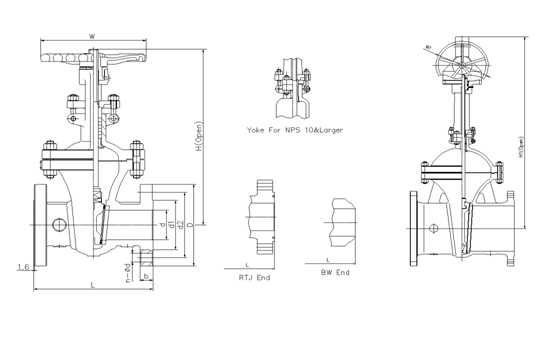
| NPS | in | 2 | 2 1/2 | 3 | 4 | 5 | 6 | 8 | 10 | 12 | 14 | 16 | 18 | 20 | 24 |
| d | mm | 51 | 64 | 76 | 102 | 127 | 152 | 203 | 254 | 305 | 337 | 387 | 432 | 483 | 584 |
| L(RF) | mm | 216 | 241 | 283 | 305 | 381 | 403 | 419 | 457 | 502 | 762 | 838 | 914 | 991 | 1143 |
| L(BW) | mm | 216 | 241 | 283 | 305 | 381 | 403 | 419 | 457 | 502 | 762 | 838 | 914 | 991 | 1143 |
| L(RTJ) | mm | 232 | 257 | 298 | 321 | 397 | 419 | 435 | 473 | 518 | 778 | 854 | 930 | 1010 | 1165 |
| d1 | mm | 92 | 105 | 127 | 157 | 186 | 216 | 270 | 324 | 381 | 413 | 470 | 533 | 584 | 692 |
| d2 | mm | 127 | 149 | 168.5 | 200 | 235 | 270 | 330 | 387.5 | 451 | 514.5 | 571.5 | 628.5 | 686 | 813 |
| D | mm | 165 | 190 | 210 | 254 | 279 | 318 | 381 | 445 | 521 | 584 | 648 | 711 | 775 | 914 |
| b | mm | 23 | 26 | 29 | 32 | 35 | 37 | 42 | 48 | 51 | 54 | 58 | 61 | 64 | 70 |
| n-Фd | mm | 8-19 | 8-22 | 8-22 | 8-22 | 8-22 | 12-22 | 12-25 | 16-29 | 16-32 | 20-32 | 20-35 | 24-35 | 24-35 | 24-41 |
| H | mm | 420 | 446 | 537 | 619 | 722 | 806 | 1000 | 1240 | 1425 | 1585 | 1790 | 1960 | 2158 | 2576 |
| H1 | mm | 650 | 750 | 835 | 1030 | 1280 | 1460 | 1620 | 1830 | 2000 | 2220 | 2620 | |||
| W | mm | 200 | 200 | 250 | 280 | 300 | 350 | 400 | 450 | 500 | 500 | 600 | 650 | 750 | 900 |
| W1 | mm | 310 | 310 | 310 | 310 | 310 | 310 | 460 | 460 | 460 | 460 | 600 |
Class600 Stainless Steel Gate Valve

| NPS | in | 2 | 2 1/2 | 3 | 4 | 5 | 6 | 8 | 10 | 12 | 14 | 16 | 18 | 20 | 24 |
| d | mm | 51 | 64 | 76 | 102 | 127 | 152 | 200 | 248 | 298 | 327 | 375 | 419 | 464 | 559 |
| L(RF) | mm | 292 | 330 | 356 | 432 | 508 | 559 | 660 | 787 | 838 | 889 | 991 | 1092 | 1194 | 1397 |
| L(BW) | mm | 292 | 330 | 356 | 432 | 508 | 559 | 660 | 787 | 838 | 889 | 991 | 1092 | 1194 | 1397 |
| L(RTJ) | mm | 295 | 333 | 359 | 435 | 511 | 562 | 664 | 791 | 841 | 892 | 994 | 1095 | 1200 | 1407 |
| d1 | mm | 92 | 105 | 127 | 157 | 186 | 216 | 270 | 324 | 381 | 413 | 470 | 533 | 584 | 692 |
| d2 | mm | 127 | 149 | 168.5 | 216 | 267 | 292 | 349 | 432 | 489 | 527 | 603 | 654 | 724 | 838 |
| D | mm | 165 | 190 | 210 | 273 | 330 | 356 | 419 | 508 | 559 | 603 | 686 | 743 | 813 | 940 |
| b | mm | 26 | 29 | 32 | 38 | 45 | 48 | 56 | 64 | 67 | 70 | 77 | 83 | 89 | 102 |
| n-Фd | mm | 8-19 | 8-22 | 8-22 | 8-25 | 8-29 | 12-29 | 12-32 | 16-35 | 20-35 | 20-38 | 20-41 | 20-44 | 24-44 | 24-52 |
| H | mm | 444 | 500 | 558 | 665 | 760 | 868 | 1073 | 1263 | 1600 | 1705 | 1835 | |||
| H1 | mm | 585 | 695 | 790 | 900 | 1110 | 1300 | 1650 | 1750 | 1900 | 2020 | 2172 | 2650 | ||
| W | mm | 200 | 250 | 280 | 300 | 350 | 450 | 500 | 650 | 700 | 900 | 900 | |||
| W1 | mm | 310 | 310 | 310 | 310 | 310 | 460 | 460 | 460 | 460 | 600 | 600 | 600 |
Class900 Stainless Steel Gate Valve
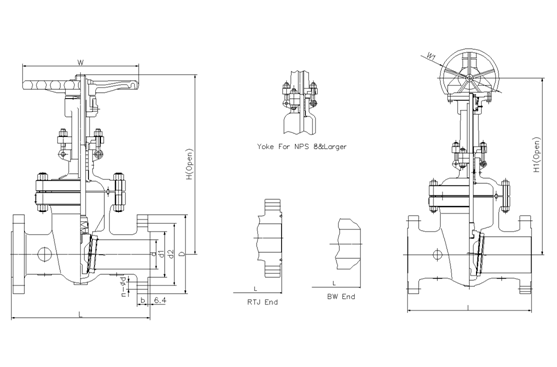
| NPS | in | 2 | 2 1/2 | 3 | 4 | 5 | 6 | 8 | 10 | 12 | 14 | 16 | 18 | 20 | 24 |
| d | mm | 47 | 57 | 73 | 98 | 121 | 146 | 190 | 234 | 282 | 311 | 354 | 400 | 444 | 533 |
| L(RF) | mm | 368 | 419 | 381 | 457 | 559 | 610 | 737 | 838 | 965 | 1029 | 1130 | 1219 | 1321 | 1549 |
| L(BW) | mm | 368 | 419 | 381 | 457 | 559 | 610 | 737 | 838 | 965 | 1029 | 1130 | 1219 | 1321 | 1549 |
| L(RTJ) | mm | 371 | 422 | 384 | 460 | 562 | 613 | 740 | 841 | 968 | 1039 | 1140 | 1232 | 1334 | 1568 |
| d1 | mm | 92 | 105 | 127 | 157 | 186 | 216 | 270 | 324 | 381 | 413 | 470 | 533 | 584 | 692 |
| d2 | mm | 165 | 190.5 | 190.5 | 235 | 279.4 | 317.5 | 393.7 | 469.9 | 533.4 | 558.8 | 615.9 | 685.8 | 749.3 | 901.7 |
| D | mm | 216 | 244 | 241 | 292 | 349 | 381 | 470 | 545 | 610 | 640 | 705 | 785 | 855 | 1040 |
| b | mm | 38.5 | 41.5 | 38.5 | 44.5 | 51 | 56 | 64 | 70 | 79.5 | 86 | 89 | 102 | 108 | 140 |
| n-Фd | mm | 8-26 | 8-29 | 8-26 | 8-32 | 8-35 | 12-32 | 12-39 | 16-39 | 20-39 | 20-42 | 20-45 | 20-51 | 20-54 | 20-67 |
| H | mm | 500 | 550 | 610 | 702 | 850 | 980 | 1100 | 1320 | 1500 | 1900 | 2050 | |||
| H1 | mm | 660 | 750 | 900 | 1060 | 1140 | 1370 | 1560 | 1950 | 2100 | 2300 | 2450 | 2600 | ||
| W | mm | 280 | 280 | 300 | 350 | 400 | 500 | 650 | 700 | 900 | 900 | 900 | |||
| W1 | mm | 310 | 310 | 310 | 460 | 460 | 460 | 460 | 600 | 600 | 600 | 600 | 600 |
Class1500 Stainless Steel Gate Valve
| NPS | in | 2 | 2 1/2 | 3 | 4 | 5 | 6 | 8 | 10 | 12 | 14 | 16 |
| d | mm | 47 | 57 | 70 | 92 | 111 | 136 | 178 | 222 | 263 | 289 | 330 |
| L(RF) | mm | 368 | 419 | 470 | 546 | 673 | 705 | 832 | 991 | 1130 | 1257 | 1384 |
| L(BW) | mm | 368 | 419 | 470 | 546 | 673 | 705 | 832 | 991 | 1130 | 1257 | 1384 |
| L(RTJ) | mm | 371 | 422 | 473 | 549 | 676 | 711 | 841 | 1000 | 1146 | 1276 | 1407 |
| d1 | mm | 92 | 105 | 127 | 157 | 186 | 216 | 270 | 324 | 381 | 413 | 470 |
| d2 | mm | 165 | 190.5 | 203.2 | 241.3 | 292.1 | 317.5 | 393.7 | 482.6 | 571.5 | 635 | 704.8 |
| D | mm | 216 | 244 | 267 | 311 | 375 | 394 | 483 | 585 | 675 | 750 | 825 |
| b | mm | 38.5 | 41.5 | 48 | 54 | 73.5 | 83 | 92.9 | 108 | 124 | 133.5 | 146.5 |
| n-Фd | mm | 8-26 | 8-29 | 8-32 | 8-35 | 8-42 | 12-39 | 12-45 | 12-51 | 16-54 | 16-61 | 16-67 |
| H | mm | 510 | 560 | 620 | 728 | 870 | 1000 | 1130 | 1360 | |||
| H1 | mm | 670 | 770 | 920 | 1070 | 1180 | 1410 | 1620 | 2020 | 2180 | ||
| W | mm | 280 | 300 | 350 | 400 | 450 | 500 | 750 | 900 | |||
| W1 | mm | 310 | 310 | 310 | 460 | 460 | 600 | 600 | 600 | 600 |
Class2500 Stainless Steel Gate Valve
| NPS | in | 2 | 2 1/2 | 3 | 4 | 5 | 6 | 8 | 10 | 12 |
| d | mm | 38 | 47 | 57 | 73 | 92 | 111 | 146 | 184 | 219 |
| L(RF) | mm | 451 | 508 | 578 | 673 | 794 | 914 | 1022 | 1270 | 1422 |
| L(BW) | mm | 451 | 508 | 578 | 673 | 794 | 914 | 1022 | 1270 | 1422 |
| L(RTJ) | mm | 454 | 514 | 584 | 683 | 807 | 927 | 1038 | 1292 | 1445 |
| d1 | mm | 92 | 105 | 127 | 157 | 186 | 216 | 270 | 324 | 381 |
| d2 | mm | 171.4 | 196.8 | 228.6 | 273 | 323.8 | 368.3 | 438.1 | 539.7 | 619.1 |
| D | mm | 235 | 267 | 305 | 356 | 419 | 483 | 550 | 675 | 760 |
| b | mm | 51 | 57.5 | 67 | 76.5 | 92.5 | 108 | 127 | 165.5 | 184.5 |
| n-Фd | mm | 8-29 | 8-32 | 8-35 | 8-42 | 8-48 | 8-54 | 12-54 | 12-67 | 12-74 |
| H | mm | 530 | 580 | 650 | 750 | 900 | 1040 | 1150 | 1400 | |
| H1 | mm | 580 | 630 | 700 | 800 | 960 | 1100 | 1200 | 1460 | 1660 |
| W | mm | 280 | 300 | 350 | 400 | 500 | 600 | 750 | 900 | |
| W1 | mm | 310 | 310 | 310 | 310 | 460 | 460 | 460 | 600 | 600 |
API Trim NO. Table
|
No |
Seat |
Gate、disc 、ball or body |
Stem |
No |
Seat |
Gate、disc 、ball or body |
Stem | |
| 01 | 13Cr | 13Cr | 13Cr | 31 | STELLITE | 321SS | 321SS | |
| 02 | 304SS | 304SS | 304SS | 32 | STELLITE | STELLITE | 321SS | |
| 03 | 310SS | 310SS | 310SS | 33 | 347SS | 347SS | 347SS | |
| 04 | HARD 13Cr | HARD 13Cr | 13Cr | 34 | STELLITE | 347SS | 347SS | |
| 05 | STELLITE | STELLITE | 13Cr | 35 | NICKEL ALLOY | 13Cr | 13Cr | |
| 06 | Cu-Ni | 13Cr | 13Cr | 36 | A105/PTFE | A105+ENP | A105+ENP | |
| 07 | 13Cr | HARD 13Cr | 13Cr | 37 | A105/PTFE | WCB+ENP | A105+ENP | |
| 08 | STELLITE | 13Cr | 13Cr | 38 | 13Cr/PTFE | 13Cr | 13Cr | |
| 09 | Cu-Ni | Cu-Ni | Cu-Ni | 39 | 304SS/PTFE | 304SS | 304SS | |
| 10 | 316SS | 316SS | 316SS | 40 | 316SS/PTFE | 316SS | 316SS | |
| 11 | Cu-Ni | STELLITE | Cu-Ni | 41 | A105/RPTFE | A105+ENP | A105+ENP | |
| 12 | STELLITE | 316SS | 316SS | 42 | A105/RPTFE | WCB+ENP | A105+ENP | |
| 13 | ALLOY 20 | ALLOY 20 | ALLOY 20 | 43 | 13Cr/RPTFE | 13Cr | 13Cr | |
| 14 | STELLITE | ALLOY 20 | ALLOY 20 | 44 | 304SS/RPTFE | 304SS | 304SS | |
| 15 | STELLITE | STELLITE | 304SS | 45 | 316SS/RPTFE | 316SS | 316SS | |
| 16 | STELLITE | STELLITE | 316SS | 46 | A105/NYLON | A105+ENP | A105+ENP | |
| 17 | STELLITE | STELLITE | 347SS | 47 | A105/NYLON | WCB+ENP | A105+ENP | |
| 18 | STELLITE | STELLITE | ALLOY 20 | 48 | A105/NYLON | 304SS | 304SS | |
| 19 | MONEL | MONEL | MONEL | 49 | A105/NYLON | 316SS | 316SS | |
| 20 | BRONZE | BRONZE | 13Cr | 50 | 13Cr/NYLON | 13Cr | 13Cr | |
| 21 | HASTELLOY B | HASTELLOY B | HASTELLOY B | 51 | 304SS/NYLON | 304SS | 304SS | |
| 22 |
| HASTELLOY C | HASTELLOY C | 52 | 316SS/NYLON | 316SS | 316SS | |
| 23 | STELLITE | 304SS | 304SS | 53 | A105/PEEK | A105+ENP | A105+ENP | |
| 24 | 304LSS | 304LSS | 304LSS | 54 | A105/PEEK | WCB+ENP | A105+ENP | |
| 25 | STELLITE | 304LSS | 304LSS | 55 | 13Cr/PEEK | 13Cr | 13Cr | |
| 26 | STELLITE | STELLITE | 304LSS | 56 | 304SS/PEEK | 304SS | 304SS | |
| 27 | 316LSS | 316LSS | 316LSS | 57 | 316SS/PEEK | 316SS | 316SS | |
| 28 | STELLITE | 316LSS | 316LSS |
|
|
|
|
|
| 29 | STELLITE | STELLITE | 316LSS |
|
|
| ||
| 30 | 321SS | 321SS | 321SS |
|
|
|
| |
Note:please indicate it directly in the
order for the internal part’smaterial uncovered in the table
 Optimized by Seraphinite Accelerator