



Choosing between a trunnion mounted ball valve and a floating ball valve is one of the most common decisions pipeline engineers face when designing large-bore, high-pressure isolation systems. Both valves use a rotating ball to start or stop flow, but the way the ball is supported determines pressure rating, torque, seat wear and line size. At Sedelon, a valve manufacturer since 1998 with API 6D, API 607, API 6FA, ISO 9001 and ISO 15848-1 certifications, we guide EPC contractors and project engineers through this trade-off. In this guide, we compare the two designs and explain which one fits severe-service pipelines.
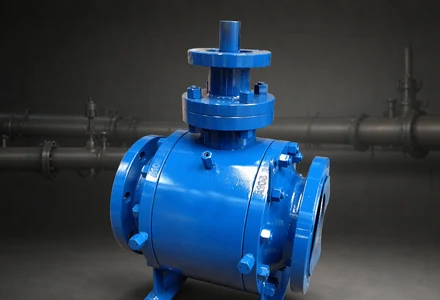
What Is a Ball Valve?
A ball valve is a quarter-turn isolation device. A perforated ball rotates 90 degrees inside the valve body. When the bore aligns with the pipe, flow passes through; when rotated 90 degrees, the solid wall of the ball blocks the line. Ball valves are valued for fast operation, tight shut-off and low pressure drop when fully open. The two main categories used in industrial piping are floating ball valves and trunnion mounted ball valves. The difference is not in the sealing concept but in how the ball is held in place under pressure.
What Is a Trunnion Mounted Ball Valve?
In a trunnion mounted ball valve, the ball is supported by two stationary trunnions or pivot shafts at the top and bottom of the valve body. This fixed-ball design prevents the ball from shifting downstream when line pressure rises. Because the ball does not float, the seats do all the sealing work. They are spring-loaded or pressure-energized so they press against the ball face from both sides. The load is shared between the upstream and downstream seats, which reduces seat deformation and makes the design suitable for very large diameters and very high pressures.
Key advantages of the trunnion design include lower and more predictable operating torque, better sealing at high differential pressures, longer seat life on large-bore lines, and compatibility with automated actuators such as electric, pneumatic or hydraulic operators. Sedelon manufactures trunnion mounted ball valves and forged trunnion mounted ball valves in sizes up to NPS 48 and pressure classes from 150LB through 2500LB, with API 6D design and fire-safe construction.
What Is a Floating Ball Valve?
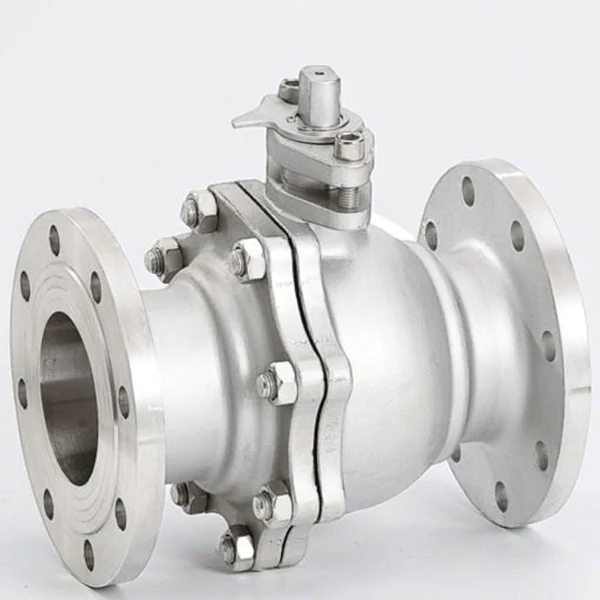
A floating ball valve does not have fixed trunnions. Instead, the ball is held in place by the two seat rings and is free to move slightly along the pipeline axis. When line pressure is applied, the ball is pushed against the downstream seat. The seat material deforms under pressure to create the seal. This makes the floating design simple, compact and cost-effective for smaller sizes and lower pressures.
For general process applications, short pipelines, skids and package equipment, a floating ball valve is often the right choice. Sedelon’s floating ball valves are built to API 6D, available with threaded, socket-weld, butt-weld and flanged ends, and offered in carbon steel, stainless steel and special alloy materials. They are ideal when the line size is moderate and the operating pressure is within the seat’s self-energizing capability.
Trunnion Mounted vs Floating Ball Valve: Key Differences
| Feature | Trunnion Mounted Ball Valve | Floating Ball Valve |
|---|---|---|
| Ball support | Fixed by upper and lower trunnions | Supported only by seat rings |
| Sealing mechanism | Spring-loaded seats seal from both sides | Line pressure pushes ball into downstream seat |
| Pressure rating | Class 150 to 2500 and above | Typically Class 150 to 600 |
| Line size | NPS 2 to 48+ (large-bore) | NPS 2 to 10 typical |
| Operating torque | Lower and stable; easy to automate | Higher and rises with pressure |
| Double block & bleed | Readily available | Limited |
| Fugitive emissions | Can meet ISO 15848-1 low-emission classes | Available in low-emission designs |
How to Choose for Large-Bore & High-Pressure Service
When the application moves beyond routine process piping, the following criteria usually point toward a trunnion mounted design.
1. Nominal Pipe Size (NPS)
Floating ball valves rely on the downstream seat to support the ball. As the bore grows, the ball becomes heavier and the seat load becomes uneven, increasing the risk of leakage and high torque. Above NPS 8 to NPS 10, trunnion support is normally required. For large-bore ball valves and pipeline sizes, trunnion mounting is the standard.
2. Pressure Class
High-pressure gas or hydrocarbon lines generate large forces on the ball. In a floating valve, all that force concentrates on the downstream seat, which can deform the seat and raise torque. In a trunnion valve, the trunnions absorb the axial load and the seats seal with a controlled spring force. For high-pressure ball valves in Class 600, 900, 1500 or 2500, trunnion is the safer choice.
3. Torque & Actuation
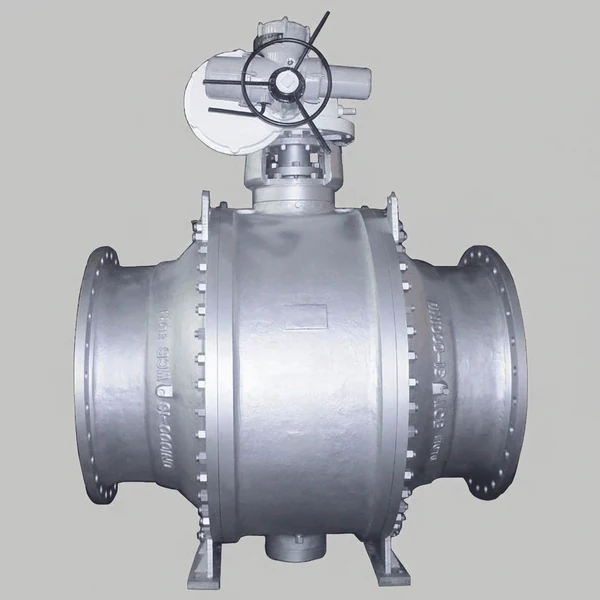
Trunnion valves operate with lower, more consistent torque because the ball is supported and does not wedge into the seat. This makes sizing of gear operators, pneumatic actuators or electric actuators more predictable and often less expensive. Read more about actuator sizing in our gear operated ball valve guide.
4. Pipeline Isolation & Piggability
Mainline pipelines require full-bore or reduced-bore isolation valves that can be pigged and that meet double isolation requirements. Trunnion mounted ball valves can be supplied with full port geometry, double block and bleed (DBB) capability, and full API 6D testing. Sedelon’s API 6D ball valves are built for this exact service.
5. Fugitive Emissions & Fire Safety
For oil and gas, chemical and power plants, low-emission performance is now a procurement requirement rather than an option. Trunnion valves can be configured with graphite stem packing, low-emission gland seals and secondary metal seats to meet ISO 15848-1 and API 624. Fire-safe construction to API 607 / API 6FA and low-emission ball valves are available on both designs when specified.
6. Material & Trim
Both designs are available in carbon steel (WCB, A105), stainless steel (CF8, CF8M, F316), low-temperature alloys (LCB, LCC, LC1-LC3) and special alloys such as Duplex, Super Duplex, Monel and Hastelloy. The right trim depends on the medium, temperature and corrosion risk rather than the ball support style.
Typical Applications
Trunnion mounted ball valves dominate severe-service isolation: oil and gas transmission pipelines, LNG receiving and export terminals, underground gas storage, refinery hydrocracking units, petrochemical crackers, and thermal power plant main steam lines. They are the default choice for NPS 12 and larger, Class 600 and above, and any line where pigging, DBB or high-integrity isolation is required.
Floating ball valves remain the workhorse for process manifolds, tank farms, utility distribution, package skids, HVAC and secondary piping. They are simpler, lighter and less costly in the sizes and pressures where they are mechanically appropriate.
Sedelon Ball Valve Solutions
Sedelon has been designing and manufacturing industrial valves since 1998. Our ball valve portfolio covers trunnion mounted and floating designs, plus top-entry, side-entry, metal-to-metal seat, cryogenic and low-emission configurations. Every valve is tested in accordance with API 598, API 6D, DIN 3230, GOST or ISO 5208, and our quality lab can perform hydrostatic, pneumatic, fugitive emission, torque, anti-static and fire tests. With a dedicated stock factory in Lishui launched in 2023, we also support fast-track projects from the Middle East, Southeast Asia, Africa, America, Russia and Australia.
Need the Right Ball Valve for Your Project?
Send us your pipeline specs — size, pressure class, medium and temperature — and our engineering team will recommend the most cost-effective trunnion or floating ball valve configuration.
Frequently Asked Questions
What is the main difference between a trunnion mounted and a floating ball valve?
A trunnion mounted ball valve supports the ball with fixed upper and lower trunnions. A floating ball valve relies on the downstream seat to support the ball. This difference makes trunnion valves better for large bore and high pressure, while floating valves are simpler and more economical for smaller sizes.
When should I choose a trunnion mounted ball valve?
Choose a trunnion mounted ball valve for NPS 8 and larger, pressure classes above 300, pipeline isolation, pigging service, double block and bleed requirements, or any application where predictable torque and long seat life matter.
Can a floating ball valve be used for high-pressure service?
Floating ball valves are generally used up to Class 300 and NPS 10. Above these limits, the downstream seat load and operating torque become excessive, making a trunnion mounted design the safer and more reliable choice.
What size is considered large-bore for ball valves?
Large-bore usually means NPS 8 (DN 200) and above. Pipeline specifications commonly use NPS 12, NPS 16, NPS 20, NPS 24 and larger. At these sizes, trunnion support is required to keep torque and seat wear under control.
What pressure classes do trunnion ball valves cover?
Sedelon trunnion mounted ball valves are available from Class 150 through Class 2500, with face-to-face dimensions per ANSI B16.10, flange ends per ANSI B16.5 and butt-weld ends per ANSI B16.25. Design and manufacture follow API 6D.
Do trunnion mounted ball valves support double block and bleed?
Yes. Trunnion valves are the natural choice for double block and bleed (DBB) configurations. The two independent seats and a body cavity bleed allow the valve to isolate both sides of the line and vent trapped fluid safely.
Which ball valve is better for piggable pipelines?
Trunnion mounted full-bore ball valves are preferred for piggable pipelines because the ball and seat geometry can be designed for full port flow with minimal obstruction. API 6D-tested trunnion valves are widely used in oil and gas transmission lines for this reason.
Related Resources
- Gear Operated Ball Valve: Large-Bore & High-Pressure Control
- Ball Valve vs Gate Valve: The Ultimate Guide
- Forged Ball Valve vs Cast Ball Valve: Which Is Better?
- Ball Valve Soft Seal Materials Selection
- Butt Weld vs Socket Weld vs Flanged Valves
Conclusion
The choice between a trunnion mounted ball valve and a floating ball valve comes down to bore size, pressure class, torque requirements and isolation integrity. For large-bore and high-pressure service, the fixed-ball trunnion design delivers lower torque, longer seat life and full API 6D compliance. For moderate sizes and pressures, the floating ball valve remains a compact, cost-effective solution. Sedelon supplies both configurations with the materials, testing and certifications needed for oil and gas, petrochemical, power and LNG projects worldwide. Contact our team to match the right ball valve to your specification and keep your pipeline running safely.