


Many buyers treat metal seats as the premium option and resilient seats as the budget choice, as if the decision were about price. The reality often runs the other way: a resilient-seated ball valve achieves bubble-tight shutoff that a metal seat cannot consistently match, while a metal seat earns its place only where temperature, abrasives or fire-safe requirements rule soft materials out. Reading the decision in order — temperature, then media cleanliness, then pressure — saves both money and downtime. This guide explains how each seat type seals, where each wins, and how to choose.
How Each Seat Type Seals
A resilient-seated ball valve closes on soft seat rings — usually PTFE, reinforced PTFE, PFA, nylon or PEEK — mounted in the body. The seat elastically deforms against a polished ball surface, conforming to microscopic imperfections and wiping them clean on every cycle. This is why a soft-seated valve can hold a bubble-tight seal year after year on clean media: the seat is doing the fine work, not the metal.
A metal-seated ball valve does the opposite. Seat faces are hardfaced with cobalt- or nickel-based alloys or tungsten carbide, lapped against the ball to optical flatness, and held against the ball by a high seat load, often assisted by springs. There is no elastic recovery to hide scratches, so the sealing surfaces must be finished and kept clean. The reward is a seat that tolerates heat, abrasion and fire — conditions that would melt, swell or wash out a polymer seat in minutes.
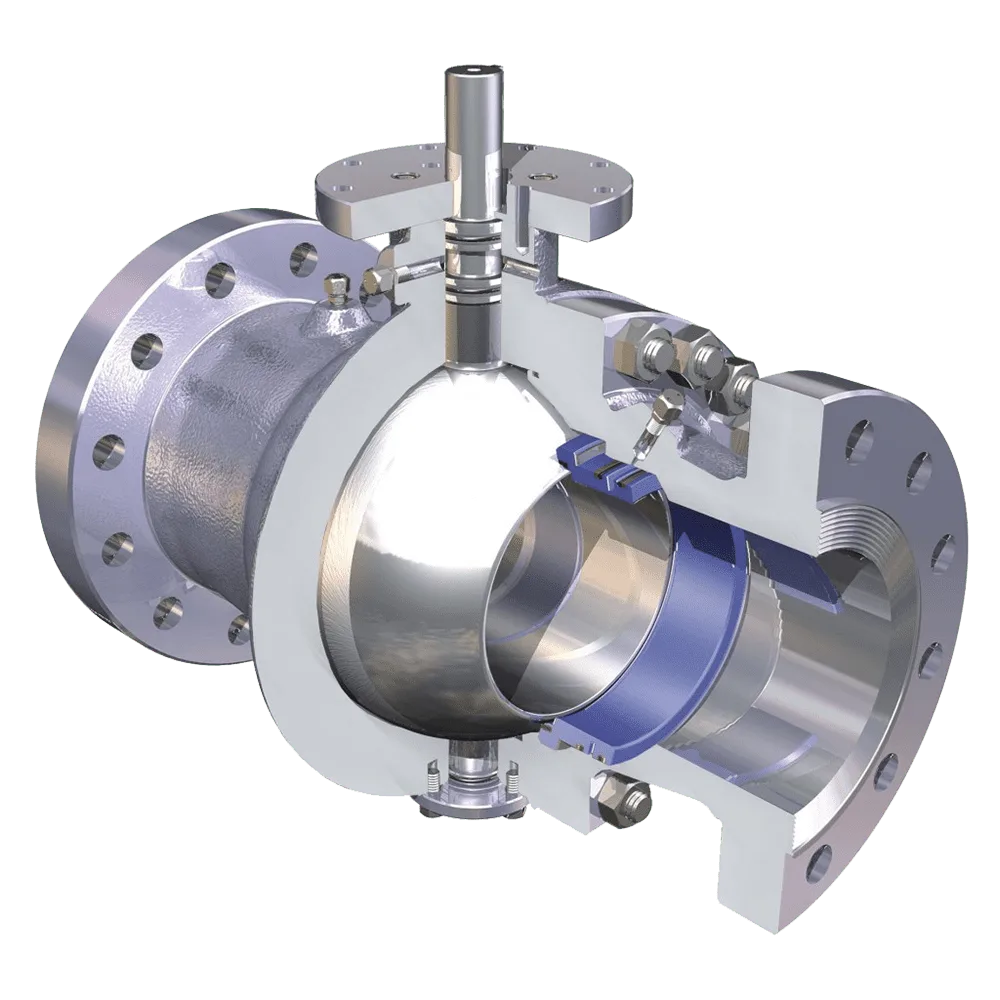
Cutaway of a metal-seated ball valve: hardfaced seat rings, spring-assisted seat load and lapped sealing surfaces.
Where Resilient Seats Win
For the majority of process and utility lines — clean liquids and gases at moderate temperature — the resilient seat is the engineering answer, not a compromise. It delivers repeatable zero-leakage shutoff, low operating torque, and full bidirectional sealing at a cost that metal seats cannot approach. The practical limit is the polymer itself, so seat selection starts with the temperature table below.
| Soft seat material | Typical service limit | Character |
|---|---|---|
| PTFE | Roughly −29 °C to +200 °C | The default: chemically inert, low friction, cold-flow sensitive |
| Reinforced PTFE (RPTFE) | Roughly −29 °C to +200 °C | Glass or carbon filler improves creep and pressure capacity |
| PFA | Up to about +200 °C | Better melt strength for corrosive, high-purity duty |
| PCTFE | Cryogenic duty below −100 °C | Retains resilience at LNG temperatures |
| PEEK | Up to about +280 °C | The high-temperature outlier among polymers; harder, abrasion-tolerant |
| Nylon (PA) | Up to about +120 °C | Tough and wear-resistant; absorbs moisture, size-dependent |
For a deeper look at polymer selection, including chemical compatibility and cold-flow behaviour, our guide to ball valve soft seal materials covers the common grades in detail.
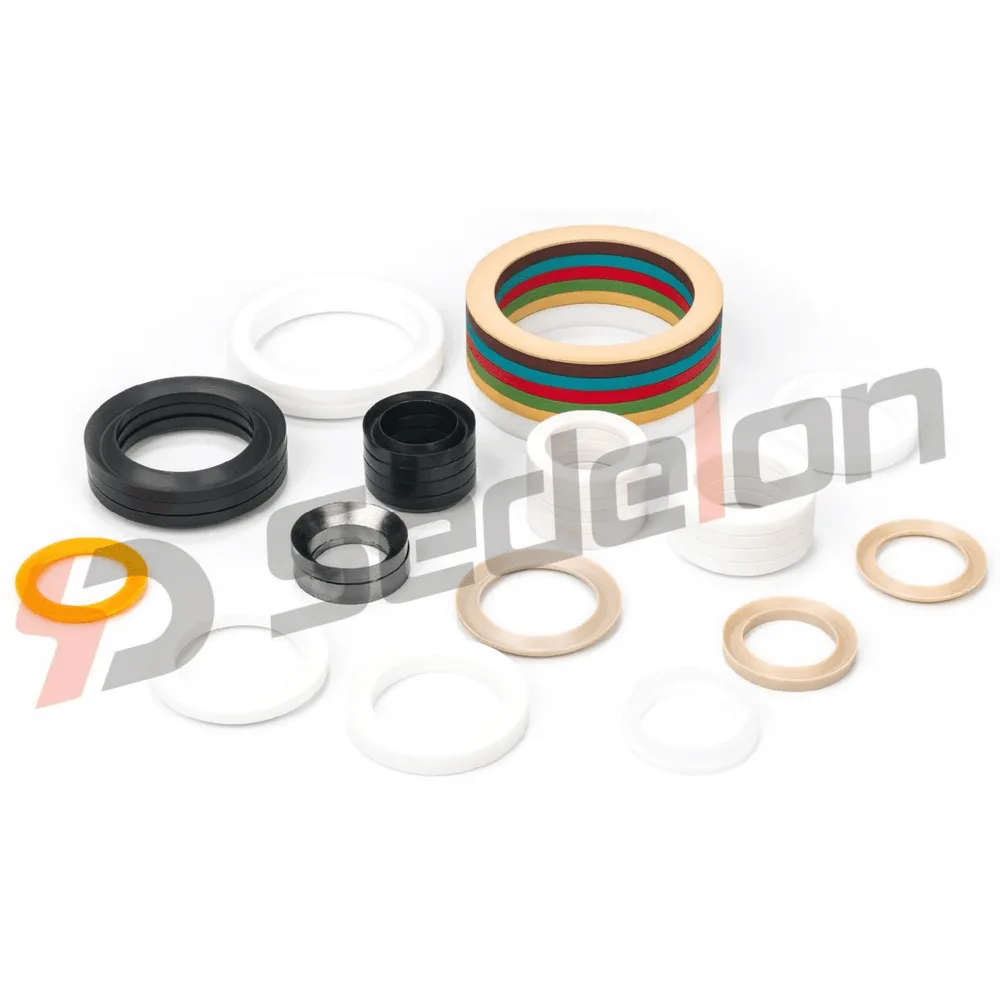
Soft seat rings in PTFE, RPTFE, PEEK and related polymers — the wearing parts that make bubble-tight shutoff possible.
Where Metal Seats Are the Only Answer
Three service families push past the limits of any polymer, and together they define the metal-seated valve’s territory:
- High temperature. Steam, thermal oil and hot hydrocarbon service above roughly 250 °C leaves only metal seats and high-temperature trim. At these temperatures a polymer seat either creeps permanently or decomposes.
- Abrasive and slurry media. Catalyst fines, sand-laden crude, fly ash and slurries cut through soft seats rapidly. Hardfaced metal seats resist the cutting action and can be lapped back to spec during overhaul.
- High-pressure gas and severe-cycle duty. On large-bore trunnion-mounted valves in pipeline service, seat loads and pressure differentials sit beyond the comfortable range of polymer seats — see our trunnion vs floating ball valve guide for how mounting style interacts with seat choice.
Metal-Seat vs Resilient-Seat: Side-by-Side Comparison
The table below condenses the trade-offs buyers weigh most. Read it with your own line conditions in mind: the “worse” column is only worse outside its comfort zone.
| Factor | Resilient Seat | Metal Seat |
|---|---|---|
| Shutoff class | Bubble-tight (zero visible leakage) | Controlled leakage rate — tighter than a gate, not bubble-tight |
| Temperature window | Set by the polymer, roughly −196 °C (PCTFE) to +280 °C (PEEK) | Follows the body rating; well beyond 400 °C with correct trim |
| Abrasive media | Poor — particles embed in and cut the seat | Excellent — hardfaced faces resist erosion |
| Operating torque | Low; smooth breakaway on polished polymer | Higher; spring and seat load must be overcome every cycle |
| Fire-safe behaviour | Requires fire-safe secondary metal seal to API 607 | Inherently fire-resistant sealing system |
| Maintenance | Replaceable seat rings; simple workshop job | Lapping and refacing during overhaul |
| Cost profile | Lower first cost and lifetime cost in clean service | Premium first cost, justified only in severe duty |
Fire-Safe Design: How Soft-Seated Valves Survive a Fire
A fire scenario is where the two seat types meet by design. In a fire-safe resilient-seated valve, the polymer seat is expected to burn away; secondary metal-to-metal contact between ball and body seat, usually assisted by spring-loaded seat inserters, takes over the seal while the valve is still hot. Anti-static devices bleed the charge generated by PTFE surfaces, and the assembly is certified by a burn test to API 607. When your line stores flammable media, a fire-tested soft-seated valve gives you soft-seat shutoff in normal operation and metal sealing in the emergency — the API 607 vs API 6FA comparison explains which test certificate your project needs.
Not Sure Which Seat Your Line Needs?
Send Sedelon your media, temperature and pressure data — our engineers will match the seat material, confirm fire-safe requirements and quote within one working day.
A Decision Matrix by Service Condition
Applied to real lines, the choice usually resolves in four directions:
- Clean media, ambient to +180 °C, Class 150–600: resilient seat, RPTFE or PTFE. This is the specification for water, air, solvents, most chemicals and product lines — including duplex stainless valves on corrosive offshore service where the seat decision is unchanged.
- Steam, thermal oil or process above +250 °C: metal seat with hardfaced trim and graphite packing.
- Slurry, sand, catalyst or fly ash: metal seat, full-port bore, and a maintenance plan that includes seat lapping — top-entry bodies simplify this, as covered in our top entry ball valve guide.
- LNG and cryogenic service below −100 °C: resilient seat in PCTFE or compatible polymer with an extended bonnet; see the cryogenic ball valve selection guide for the full picture.
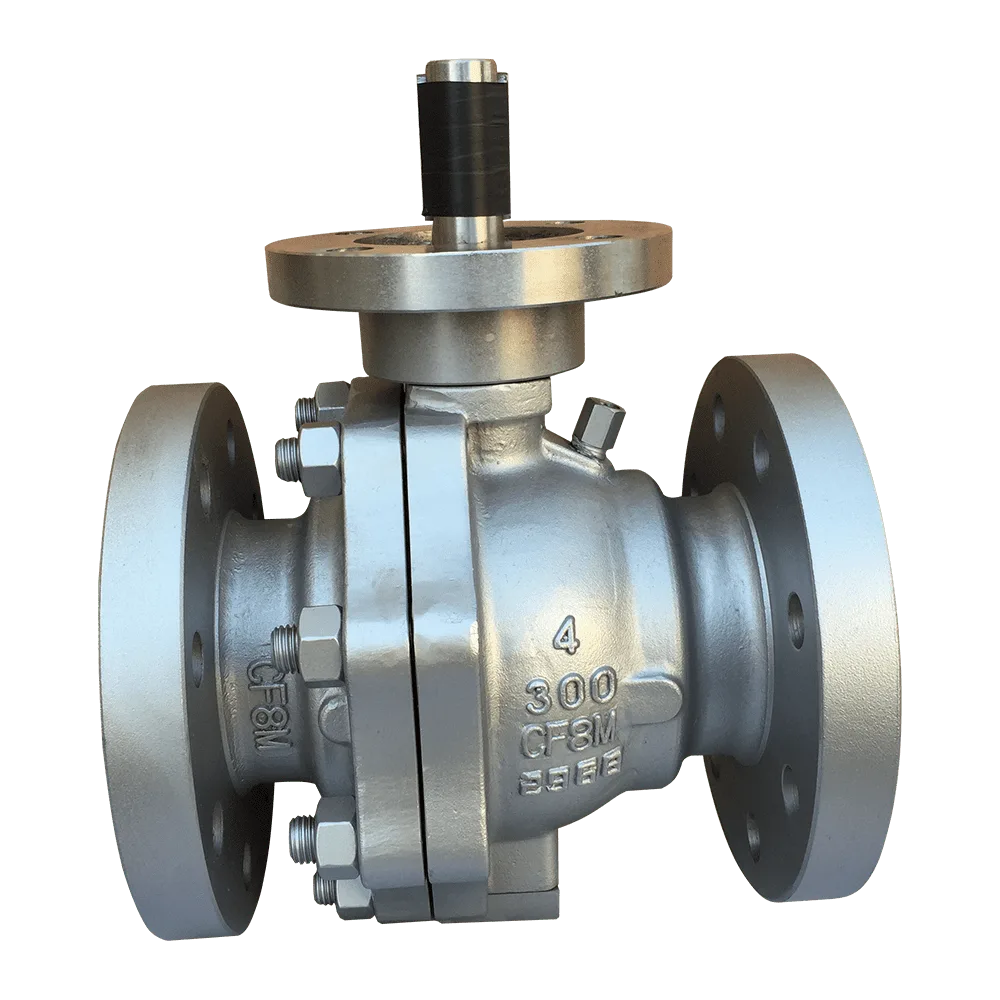
Sedelon 4″ Class 300 CF8M stainless ball valve — a typical resilient-seated specification for clean chemical service.
Frequently Asked Questions
Which ball valve seat type gives zero leakage?
Resilient seats. A PTFE-based seat deforms against the polished ball and seals bubble-tight, which metal seats cannot reliably achieve; metal-seated valves are accepted with a small, controlled leakage rate because metal-to-metal contact can never conform to surface imperfections the way a polymer does.
What temperature limit applies to a PTFE seated ball valve?
Most PTFE and reinforced PTFE seats are limited to about +200 °C, with chemical compatibility and pressure de-rating also in play. Above that range, PEEK seats extend to roughly +280 °C, and beyond about +300 °C a metal seat is the only realistic choice.
Can a metal-seated ball valve be bubble-tight?
Generally no. Even lapped metal surfaces leave a micro-leak path, which is why metal-seated valves are tested and accepted with controlled leakage rather than zero leakage. If bubble-tight shutoff is a hard requirement, specify a resilient seat — or a fire-safe soft-seated valve with a metal backup seal.
Are soft-seated ball valves fire-safe?
They can be. Fire-safe certified soft-seated valves carry a secondary metal-to-metal sealing system that takes over when the polymer seat burns away, plus anti-static earthing. The complete assembly is burn-tested to API 607 or equivalent, so the soft seat does not disqualify the valve from flammable service.
Why does a metal-seated ball valve need more torque?
Sealing depends on seat load: springs and pressure force hard seat faces against the ball, and the operator must overcome that load at every stroke. Soft seats need only light contact to seal, which is why a resilient-seated valve of the same size runs a smaller gearbox or actuator.
Which seat type is cheaper over the valve’s life?
In clean, moderate service the resilient seat wins decisively — lower first cost, lower torque, and inexpensive replaceable seat rings. The metal seat becomes the cheaper choice exactly when a soft seat would fail: high temperature, abrasives or severe cycling, where a failed polymer seat costs far more than the metal seat premium.
Choose the Right Seat with Sedelon
Seat selection is a service-condition decision, not a status decision. Resilient seats deliver the tightest shutoff money can buy on clean lines; metal seats exist to survive heat, abrasion and fire. Sedelon manufactures floating and trunnion ball valves in both seating systems, in WCB, CF8, CF8M, duplex and alloy bodies, with fire-safe and low-emission options tested at its Wenzhou works. Send your media, temperature and line class, and our engineers will recommend the seat — and quote the valve — within one working day.
Specify Ball Valves with the Right Seat, First Time
Resilient or metal seat, floating or trunnion, flanged or weld-end — Sedelon quotes the correct combination with full API 598 test documentation.