



 Skip to content

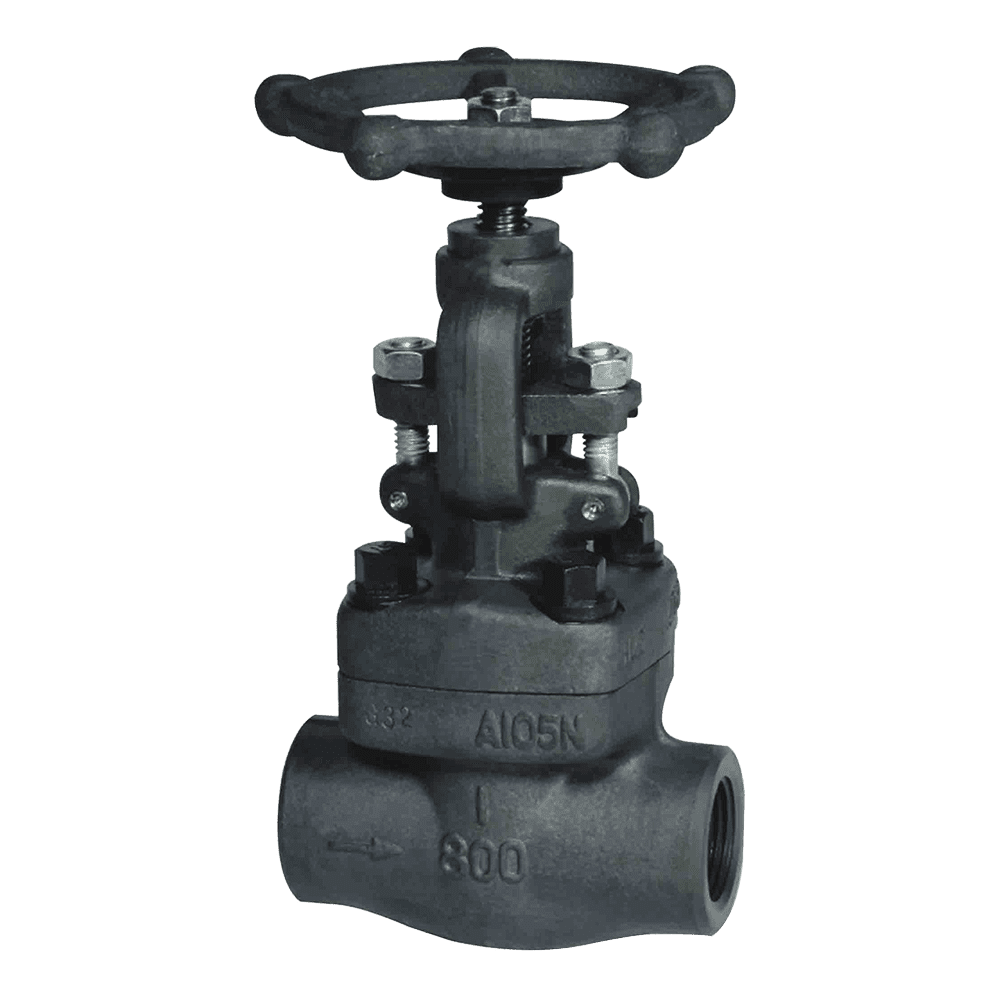
When a line requires flow control rather than simple isolation, a gate valve is not the right choice. Throttling a gate valve in a partially open position can cause severe erosion of the seating surfaces, while a globe valve provides more stable control because the disc lifts vertically from the seat and travel corresponds closely with flow area.
The trade-off is pressure loss. The globe valve flow path forces the medium to change direction around the disc, resulting in higher pressure drop than a comparable gate valve at full opening.
High differential pressure can create additional risks. As fluid accelerates between the disc and seat, local pressure may fall below vapour pressure, causing cavitation damage when bubbles collapse downstream. If vapour remains stable, flashing can continuously erode internal surfaces. Reducing the pressure drop per stage through angle-body designs, multi-stage throttling, or proper sizing helps prevent these failures.
The stem crosses the pressure boundary, making packing the primary atmospheric sealing path. At full lift, the stem backseats against the body, allowing packing replacement while the line remains pressurised.
• Steam tracing and temperature control loops — Used where precise low-flow adjustment is required to maintain line temperature, providing control capability beyond typical on/off valves.
• Plant start-up and pressurisation lines — Gradual opening allows controlled pressure ramp-up, reducing pressure shock to downstream equipment and instrumentation.
• Sampling and online analyser lines — Provides accurate and repeatable flow adjustment where precise sample control is required.
• Chemical injection and dosing systems — Small forged bodies allow installation close to injection points, while adjustable flow control supports changing process requirements.
• High-differential blowdown and drain services — Angle-body configurations redirect high-velocity flow to reduce cavitation damage and protect valve internals under severe pressure drops.
• Cooling-water branches for heat exchangers and coolers — Modulates flow according to individual equipment heat loads rather than providing only isolation.
• Boiler feedwater and desuperheating spray systems — Provides stable small-flow regulation for controlling steam temperature and spray-water demand.
Application and pattern selection:Globe valves are designed for flow regulation and throttling service, while gate and ball valves are used for isolation. Straight, angle, and Y-pattern bodies are available according to pressure drop and differential pressure requirements.
Material and trim selection:A105, LF2/LF9, F304/F316, F11/F22, and duplex materials are available for different temperature and corrosion conditions. Trim 01 (13Cr) suits clean service, Trim 05 with Stellite hard-facing resists cavitation and erosion, and soft-seat options are available for enhanced shutoff.
Installation and options:Install according to the body flow arrow with pressure entering below the disc. API 602 Class 800 provides an intermediate rating between Class 600 and 900. Options include API 624 low-emission testing, API 607 fire-safe, NACE MR0175, EN 10204 certification, and powered actuation.
At the Team Energy Sual Power Plant in the Philippines, conventional globe valves in the main steam drain and blowdown system experienced packing leakage under 540°C superheated steam service, creating operational and safety concerns. Flowork supplied NPS 1/2–2, Class 1500 API 602 forged globe valves featuring A182 F91 heat-resistant steel bodies, extended bonnets, flexible graphite packing, and Stellite 6 hardfaced sealing surfaces. The socket weld valves were tested according to API 598 requirements. Since commissioning in 2022, the valves have operated for three years without steam leakage, eliminating burn risks and reducing valve replacement time from 12 hours to three hours.
Q1: Globe valve or gate valve — which should I choose?
A: Use a gate valve for full isolation with minimal pressure drop. Use a globe valve when flow control or throttling is required, as gate valves are not designed for continuous throttling service.
Q2: Can a globe valve be installed backwards?
A: No. Globe valves are designed for a specific flow direction, with pressure acting under the disc to assist sealing. Reverse installation can increase operating torque and accelerate packing and seat wear.
Q3: Why do valves fail during high differential pressure throttling?
A: High pressure drops can cause cavitation or flashing, which damage the trim through bubble formation and collapse. Solutions include multi-stage throttling, angle-body designs, larger valve sizing, and hardened trim such as Stellite overlays.
Q4: What is Class 800, and why is it used?
A: Class 800 is an API 602 pressure class between Class 600 and Class 900, mainly used for forged small-bore valves. It provides a suitable pressure rating without requiring the heavier design of higher classes.
Q5: Can packing be replaced while the line is pressurized?
A: In principle, yes. When fully open, the stem backseat isolates the packing area from the process fluid, allowing packing replacement under pressure. However, hazardous service should always follow site isolation procedures.
150Lb
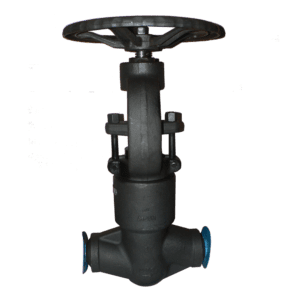
API602 Forged Globe Valve
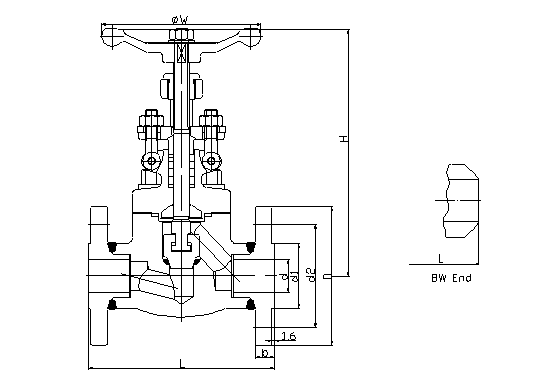
| NPS | in | 1/2 | 3/4 | 1 | 11/4 | 11/2 | 2 |
| d | mm | 13 | 19 | 25 | 32 | 38 | 51 |
| L(RF) | mm | 108 | 117 | 127 | 140 | 165 | 203 |
| L(BW) | mm | 108 | 117 | 127 | 140 | 165 | 203 |
| d1 | mm | 35 | 43 | 51 | 64 | 73 | 92 |
| d2 | mm | 60.5 | 70 | 79.5 | 89 | 98.5 | 120.5 |
| D | mm | 89 | 98 | 108 | 117 | 127 | 152 |
| b | mm | 11 | 12 | 12 | 13 | 15 | 16 |
| n-Фd | mm | 4-16 | 4-16 | 4-16 | 4-16 | 4-16 | 4-19 |
| H | mm | 180 | 190 | 215 | 235 | 258 | 330 |
| W | mm | 100 | 100 | 100 | 135 | 135 | 200 |
300Lb
API602 Forged Globe Valve
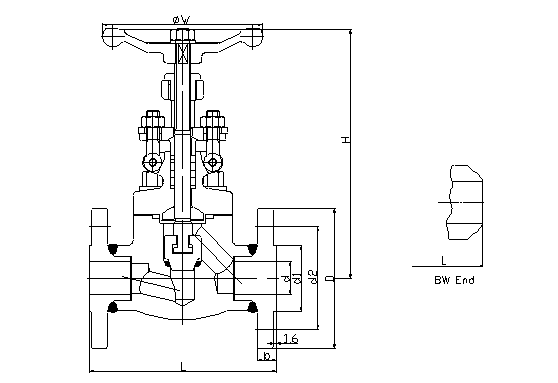
| NPS | in | 1/2 | 3/4 | 1 | 11/4 | 11/2 | 2 |
| d | mm | 13 | 19 | 25 | 32 | 38 | 51 |
| L(RF) | mm | 152 | 178 | 203 | 216 | 229 | 267 |
| L(BW) | mm | 152 | 178 | 203 | 216 | 229 | 267 |
| d1 | mm | 35 | 43 | 51 | 64 | 73 | 92 |
| d2 | mm | 66.5 | 82.5 | 89 | 98.5 | 114.5 | 127 |
| D | mm | 95 | 117 | 124 | 133 | 156 | 165 |
| b | mm | 15 | 16 | 18 | 19 | 21 | 23 |
| n-Фd | mm | 4-16 | 4-19 | 4-19 | 4-19 | 4-22 | 8-19 |
| H | mm | 185 | 195 | 220 | 240 | 260 | 385 |
| W | mm | 100 | 100 | 135 | 135 | 160 | 200 |
600Lb
API602 Forged Globe Valve
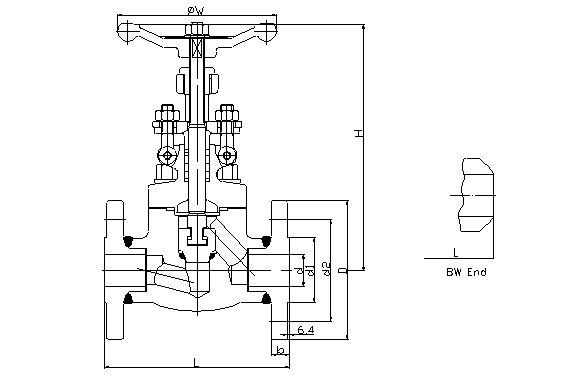
| NPS | in | 1/2 | 3/4 | 1 | 11/4 | 11/2 | 2 |
| d | mm | 13 | 19 | 25 | 32 | 38 | 51 |
| L(RF) | mm | 165 | 190 | 216 | 229 | 241 | 292 |
| L(BW) | mm | 165 | 190 | 216 | 229 | 241 | 292 |
| d1 | mm | 35 | 43 | 51 | 64 | 73 | 92 |
| d2 | mm | 66.5 | 82.5 | 89 | 98.5 | 114.5 | 127 |
| D | mm | 95 | 118 | 124 | 133 | 156 | 165 |
| b | mm | 15 | 16 | 18 | 21 | 23 | 26 |
| n-Фd | mm | 4-16 | 4-19 | 4-19 | 4-19 | 4-22 | 8-19 |
| H | mm | 198 | 215 | 245 | 306 | 400 | 420 |
| W | mm | 120 | 140 | 160 | 180 | 200 | 200 |
API Trim NO. Table
|
No |
Seat |
Gate、disc 、ball or body |
Stem |
No |
Seat |
Gate、disc 、ball or body |
Stem | |
| 01 | 13Cr | 13Cr | 13Cr | 31 | STELLITE | 321SS | 321SS | |
| 02 | 304SS | 304SS | 304SS | 32 | STELLITE | STELLITE | 321SS | |
| 03 | 310SS | 310SS | 310SS | 33 | 347SS | 347SS | 347SS | |
| 04 | HARD 13Cr | HARD 13Cr | 13Cr | 34 | STELLITE | 347SS | 347SS | |
| 05 | STELLITE | STELLITE | 13Cr | 35 | NICKEL ALLOY | 13Cr | 13Cr | |
| 06 | Cu-Ni | 13Cr | 13Cr | 36 | A105/PTFE | A105+ENP | A105+ENP | |
| 07 | 13Cr | HARD 13Cr | 13Cr | 37 | A105/PTFE | WCB+ENP | A105+ENP | |
| 08 | STELLITE | 13Cr | 13Cr | 38 | 13Cr/PTFE | 13Cr | 13Cr | |
| 09 | Cu-Ni | Cu-Ni | Cu-Ni | 39 | 304SS/PTFE | 304SS | 304SS | |
| 10 | 316SS | 316SS | 316SS | 40 | 316SS/PTFE | 316SS | 316SS | |
| 11 | Cu-Ni | STELLITE | Cu-Ni | 41 | A105/RPTFE | A105+ENP | A105+ENP | |
| 12 | STELLITE | 316SS | 316SS | 42 | A105/RPTFE | WCB+ENP | A105+ENP | |
| 13 | ALLOY 20 | ALLOY 20 | ALLOY 20 | 43 | 13Cr/RPTFE | 13Cr | 13Cr | |
| 14 | STELLITE | ALLOY 20 | ALLOY 20 | 44 | 304SS/RPTFE | 304SS | 304SS | |
| 15 | STELLITE | STELLITE | 304SS | 45 | 316SS/RPTFE | 316SS | 316SS | |
| 16 | STELLITE | STELLITE | 316SS | 46 | A105/NYLON | A105+ENP | A105+ENP | |
| 17 | STELLITE | STELLITE | 347SS | 47 | A105/NYLON | WCB+ENP | A105+ENP | |
| 18 | STELLITE | STELLITE | ALLOY 20 | 48 | A105/NYLON | 304SS | 304SS | |
| 19 | MONEL | MONEL | MONEL | 49 | A105/NYLON | 316SS | 316SS | |
| 20 | BRONZE | BRONZE | 13Cr | 50 | 13Cr/NYLON | 13Cr | 13Cr | |
| 21 | HASTELLOY B | HASTELLOY B | HASTELLOY B | 51 | 304SS/NYLON | 304SS | 304SS | |
| 22 |
| HASTELLOY C | HASTELLOY C | 52 | 316SS/NYLON | 316SS | 316SS | |
| 23 | STELLITE | 304SS | 304SS | 53 | A105/PEEK | A105+ENP | A105+ENP | |
| 24 | 304LSS | 304LSS | 304LSS | 54 | A105/PEEK | WCB+ENP | A105+ENP | |
| 25 | STELLITE | 304LSS | 304LSS | 55 | 13Cr/PEEK | 13Cr | 13Cr | |
| 26 | STELLITE | STELLITE | 304LSS | 56 | 304SS/PEEK | 304SS | 304SS | |
| 27 | 316LSS | 316LSS | 316LSS | 57 | 316SS/PEEK | 316SS | 316SS | |
| 28 | STELLITE | 316LSS | 316LSS |
|
|
|
|
|
| 29 | STELLITE | STELLITE | 316LSS |
|
|
| ||
| 30 | 321SS | 321SS | 321SS |
|
|
|
| |
Note:please indicate it directly in the
order for the internal part’smaterial uncovered in the table
 Optimized by Seraphinite Accelerator