



A pipeline strainer is the cheapest insurance you will ever buy for a pump, meter, control valve or compressor. Its job is simple: trap solids before they score a seat, block an orifice or seize a rotor. But a strainer only performs if the screen and mesh are specified for the actual particle load, installed in the right orientation, cleaned before the differential pressure runs away, and checked against the pressure-drop budget. This guide walks pipeline engineers and specifiers through strainer screen and mesh selection, field installation, cleaning intervals, and pressure-drop control—using the same rules Sedelon applies when building strainers for refinery, power and offshore service.
Key Takeaways
- Size the screen opening to about half the smallest particle you must stop—never finer than the process needs.
- Match the screen material (304/316 stainless, Monel, duplex) to the worst day of service, not the average.
- Pick the strainer type by layout and maintenance access: Y-type, T-type or basket.
- Install to the flow arrow, keep the debris pocket below the flow path, and confirm the end connection.
- Clean on differential pressure, not the calendar; keep installed ΔP under ~0.2–0.3 bar at design flow.
What a Strainer Screen and Mesh Actually Protect
A strainer sits upstream of sensitive equipment and intercepts rust, weld slag, scale, catalyst fines, debris from hydrotesting and biological fouling. The “screen” is the perforated or woven element; the “mesh” describes the weave fineness, usually stated as wires per inch (the “mesh count”). Together they define what gets caught and how much flow resistance you pay for. Choose the screen too coarse and you protect nothing; choose it too fine and you create a pressure-drop and clogging problem of your own. In a B2B plant, the strainer is a low-cost guard for far more expensive assets downstream—so its specification deserves the same discipline as the valve it protects.
Strainer Screen & Mesh Selection
1. Match mesh count to the particle you must stop
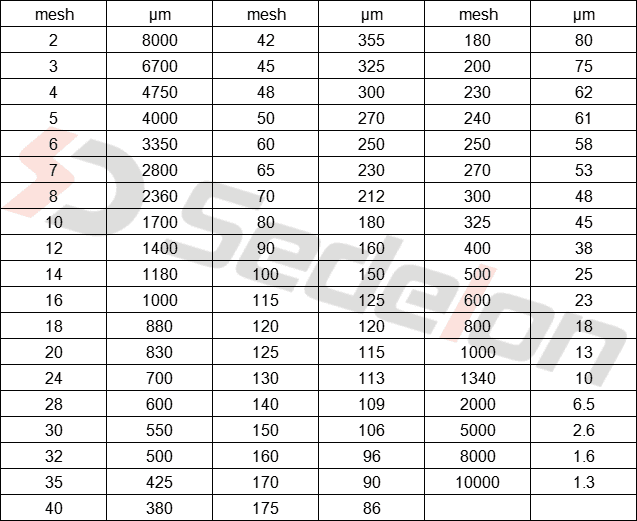
Mesh count (for example 20, 40, 60 or 100 mesh) sets the nominal opening. A 40-mesh screen has roughly a 0.42 mm opening; 100-mesh is about 0.15 mm. The rule of thumb: specify an opening about half the size of the smallest particle you want to exclude, but never finer than the process truly needs. Overspecifying mesh is the most common—and most expensive—mistake in strainer selection, because it drives both pressure drop and cleaning frequency.
| Mesh (wires/inch) | Nominal Opening (mm) | Typical Use |
|---|---|---|
| 10 | 2.00 | Coarse debris, pigging, start-up flush |
| 20 | 0.85 | General pipeline debris protection |
| 40 | 0.42 | Fine debris, pump-suction guard |
| 60 | 0.25 | Meter and nozzle protection |
| 100 | 0.15 | Tight filtration, instrument lines |
| 150 | 0.10 | Final guard before delicate equipment |
Use this table as a first-pass screen; confirm the exact opening against your mesh standard and the particle-size distribution of your media.
2. Choose the screen material for the service
Carbon steel bodies normally pair with 304 or 316 stainless screens for general duty. For seawater, sour or chloride-heavy service, 316L, Monel or duplex screens resist pitting and chloride stress corrosion. The screen is the wear part—specify it for the worst day (start-up, upset, batch residue), not the average operating condition, or you will be replacing baskets on an emergency basis.
3. Pick the strainer type by layout and maintenance
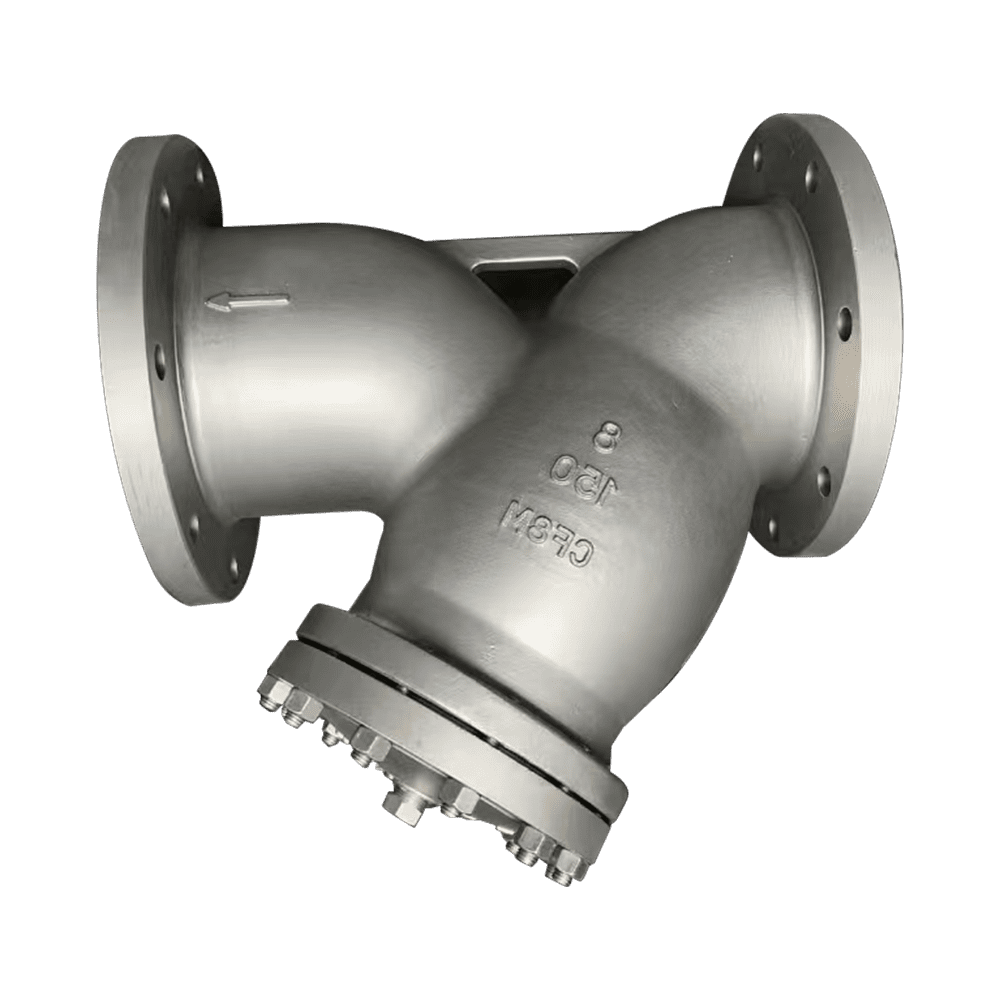
- A Y-type strainer suits compact lines and moderate debris; it installs in any orientation with the screen leg accessible and is the default for smaller bore and space-limited tie-ins.
- A T-type strainer adds a second screened leg for easier inline service on larger lines, reducing shut-down time during screen pull-out.
- A basket strainer offers the largest free area and is the standard for pump-suction and batch services where debris load is high.
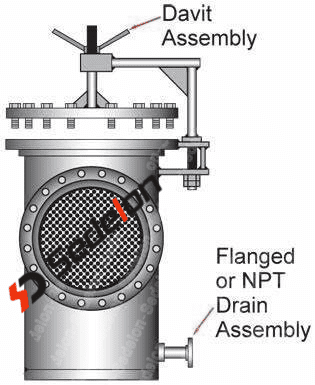
- For fast turnaround, a davit-assembly basket strainer lets a single operator swing the cover open without a crane—a real advantage during campaign cleaning.
Need a Strainer Specified to Your Line?
Send us your pipeline size, flow rate, media and the particle size you must exclude. Our engineers return a screen/mesh and body recommendation with a quote—built to API 590 and ASME B16.34.
Strainer Installation
Correct installation protects the screen and keeps pressure drop predictable. Follow four checks before you button up the line:
- Orient the strainer so the flow arrow on the body matches the pipeline; a reversed Y-type strainer strains nothing.
- Mount Y-type strainers with the screen leg pointing down (or horizontal) so collected debris settles into the pocket, never across the flow path.
- Keep basket strainers horizontal and provide clear overhead space for cover removal—especially if you plan a davit arm.
- Verify the end connection (flanged, socket-weld or butt-weld) against the line; mismatched welds cause leaks and rework during start-up.
Cleaning & Maintenance
A strainer is only as good as its last cleaning. Pressure drop across a clean screen is small; across a loaded one it climbs until flow chokes. Set cleaning intervals from differential pressure, not the calendar.
- Y and T-type: shut the line, drain, pull the screen, wire-brush or soak, and reinstall.
- Basket: open the cover (quick-open or davit), lift the basket, flush, and reseat the seal.
- A davit-arm strainer cuts basket change-out from a two-person crane job to a one-person swing—less downtime, fewer confined-space entries.
Pressure Drop Across a Strainer
Pressure drop (ΔP) through a strainer rises with flow squared and with how blocked the screen is. Estimate the clean-element ΔP from the strainer’s Cv or free-area ratio at design flow, then add the fouling penalty as the mesh loads. As a practical limit, keep the installed ΔP under about 0.2–0.3 bar (3–4 psi) at design flow; beyond that, either upsize the strainer or coarsen the mesh. A clogged strainer can cavitate a pump or starve a control valve, so treat rising ΔP as an alarm, not an inconvenience. Where the line cannot tolerate any interruption, size the free area generously rather than adding a bypass that silently defeats protection.
Common Specification Mistakes
- Specifying mesh finer than the process needs—this drives ΔP and cleaning frequency with no real protection gain.
- Ignoring the cleaning method until shutdown, then discovering there is no crane access or clearance for the cover.
- Forgetting free area: a small Y-strainer on a high-flow line chokes fast and starves the equipment it was meant to protect.
- Pairing a carbon steel screen with corrosive media, leading to premature pitting and碎片 into the line.
Frequently Asked Questions
What mesh size should I choose for a strainer screen?
Size the opening to about half the smallest particle you must exclude, but no finer than necessary. For general pipeline debris protection, 20–40 mesh is typical; for fine filtration upstream of meters or nozzles, 60–100 mesh. Always balance catch efficiency against pressure drop, because an over-fine screen loads quickly and raises ΔP.
How do I calculate pressure drop across a strainer?
Start from the clean-element Cv or free-area ratio at design flow, then add the fouling penalty as the screen loads. Keep total installed ΔP under roughly 0.2–0.3 bar at design flow; beyond that, upsize the strainer or coarsen the mesh. Most manufacturers publish a clean ΔP curve—use it, and add a service margin for the expected solids load.
How often should a basket or Y strainer be cleaned?
Clean on differential pressure, not a fixed schedule. When ΔP reaches the manufacturer’s cleaning threshold (commonly 0.2–0.5 bar), service the screen. Dirty or batch services need more frequent checks during commissioning, then settle into a stable interval once the line is clean.
Y-type, T-type or basket strainer—which do I pick?
Choose a Y-type for compact lines and moderate debris, a T-type for easier inline service on larger lines, and a basket for maximum free area and pump-suction or batch duty. See our Y-type, T-type and basket strainer product pages for dimensions and pressure classes.
Can a strainer be installed vertically?
Yes. Y-type strainers install in any orientation as long as the screen leg stays accessible and debris settles into the pocket, not across the flow path. Basket strainers are normally horizontal to allow cover removal and safe basket handling.
What standards apply to industrial strainers?
Strainers are commonly built to API 590 (general-purpose strainers), with bodies to ASME B16.34 and flanges to ASME B16.5. Screens follow the project’s filtration specification; for sour service confirm NACE MR0175 material limits. Always state the standard and pressure-temperature class on the datum sheet.
What happens if the strainer screen clogs completely?
Flow chokes, ΔP spikes, and downstream equipment can cavitate or starve. Some lines add a bypass, but a bypass defeats the purpose of protection—better to size for free area, monitor ΔP, and clean on threshold than to rely on a bypass that hides the problem.
Related Resources
- Y Strainer vs Basket Strainer: Which One Protects Better?
- What is a Strainer and How Does It Work
- Socket Weld vs Butt Weld vs Flanged Valves (end-connection selection for strainer tie-ins)
- Valves for the Petrochemical Industry (where strainers sit in a train)
A strainer is a small component with an outsized job: it decides whether your pump, meter and valves see clean flow or abrasive debris. Get the screen and mesh right, install it the right way, clean it on pressure drop rather than the calendar, and you protect the far more expensive equipment downstream. If your line has unusual media, high solids loading or tight space, talk to Sedelon’s engineering team—we build Y, T and basket strainers to spec and will size the screen, mesh and body for your exact service.
Talk to a Sedelon Strainer Engineer
Send your line data—size, flow, media, particle concern and standard—and get a sized screen/mesh/body recommendation with a quote. We manufacture to API 590 and ASME B16.34 in carbon, stainless, alloy and sour-service grades.